Designing the Wild: Nekajui and the Evolution of the Reserve Ethos
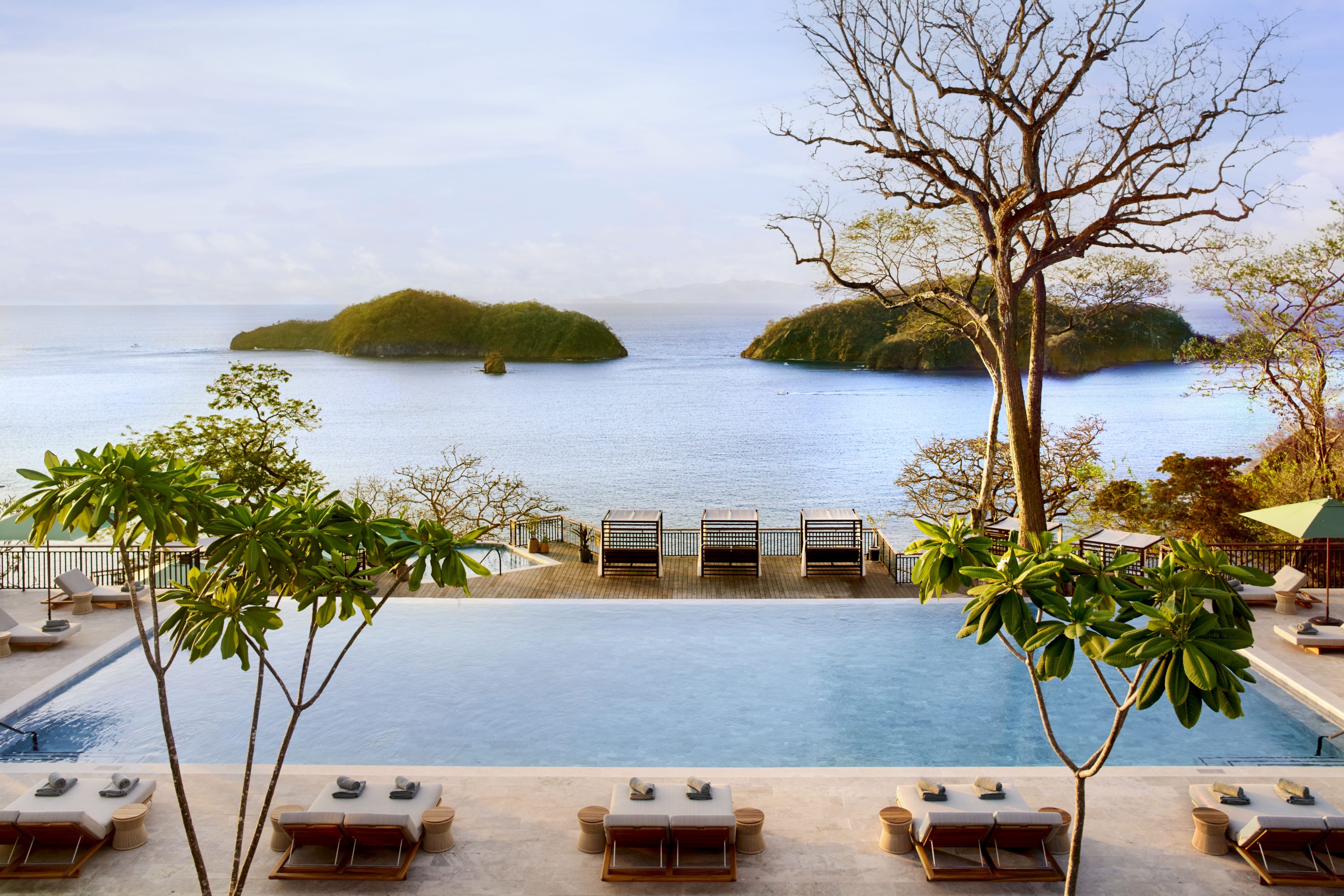
Few places on earth feel more in sync with nature than Nekajui Peninsula Papagayo, a Ritz-Carlton Reserve.
The property, which is the brand’s eighth and newest Reserve, opened in February 2025. It sits on 1,400 acres of protected tropical dry forest and borders the Área de Conservación Guanacaste, a UNESCO World Heritage site in Guanacaste, Costa Rica. As interest in biophilic travel—or travel designed around a closer connection to the natural world— grows, Nekajui offers a particularly complete expression of the concept.
“Nekajui” is the Chorotega word for “lush garden,” a concept manifested throughout the property’s verdant landscape, design, and architecture.
The connection first starts with the name of the Reserve. Chorotega is the language of the Mangue, the indigenous people who first lived in Northern Costa Rica, and “Nekajui” is the Chorotega word for “lush garden,” a concept manifested throughout the property’s verdant landscape, design, and architecture. From interiors crafted to reflect Spanish and Sabanero (the name of the region’s cowboys) cultures to accommodations facing the Pacific Ocean, there’s no shortage of ways this slice of Costa Rica feels lush. But it also doesn’t invade or intrude upon its biodiverse setting. Quite the opposite. The property wasn’t designed to impose itself upon Peninsula Papagayo; instead, Nekajui naturally emerges from it, creating a fresh model for experiential luxury in Central America.
Across each stay, Nekajui pairs privacy with a dedicated Manzu, the Chorotega word for “friend.” Across the Reserve collection, these place-specific butlers are available around the clock to coordinate each guest’s unique logistics and ensure their preferences are taken into account. This small touch shows how The Ritz-Carlton Reserve brand has transformed its iconic brand into the specific Reserve concept: the iconic Ladies and Gentlemen who serve as butlers have titles that reflect each property’s cultural heritage. As part of the broader Ritz-Carlton Reserve portfolio, Nekajui is the natural evolution of the brand’s continued commitment to sustainability while maintaining its high standard for service. We’re diving into how this Costa Rican escape is not just delivering a memorable experience for guests, but propelling the international brand toward even higher ideals.
Understanding the Origins of the Reserve Philosophy
The Ritz-Carlton Reserve philosophy is the foundation for understanding how this limited footprint differs from the Ritz-Carlton hotels that have existed for more than a century. While Ritz-Carlton hotels can be found in major cities and resort destinations across six continents, the Reserve collection has remained deliberately intimate, growing to just seven properties since the concept debuted with Phulay Bay, a Ritz-Carlton Reserve, in Krabi, Thailand, in 2011.
What unites the collection is not a shared aesthetic but a unified approach to design and service. Each Reserve is built around a destination that could not easily be replicated. For instance, in Bali, at Mandapa, a Ritz-Carlton Reserve, centuries-old rice terraces shape your stay. In Saudi Arabia, at Nujuma, a Ritz-Carlton Reserve, the Red Sea and one of the world’s largest barrier reef systems center your stay. Meanwhile, in Puerto Rico, Dorado Beach, a Ritz-Carlton Reserve, established much of the blueprint still evident throughout the collection today. This SmartFlyer favorite occupies fifty acres of the former estate developed by Laurance S. Rockefeller, who transformed the site into a resort and nature sanctuary in the 1950s with strict preservation principles, including keeping buildings below the height of the surrounding palm trees and maintaining uninterrupted access to the coastline.
Nekajui sits within Peninsula Papagayo, a conservation area that protects nearly three percent of the world’s biodiversity and approximately 235,000 species.
When imagining Nekajui, there was a natural opportunity to further evolve that philosophy in Costa Rica. Nekajui sits within Peninsula Papagayo, a conservation area that protects nearly three percent of the world’s biodiversity and approximately 235,000 species. This thoughtful approach to conservation—in a country already known for its wide array of protected wildlife—makes it one of Central America’s most biologically significant protected regions. And when creating plans to construct the property, Ritz-Carlton Reserve had an ambitious goal to build Nekajui without changing the fabric of the landscape, instead employing the most sustainable practices possible to preserve the ecosystem.
Building With the Landscape, Not on It
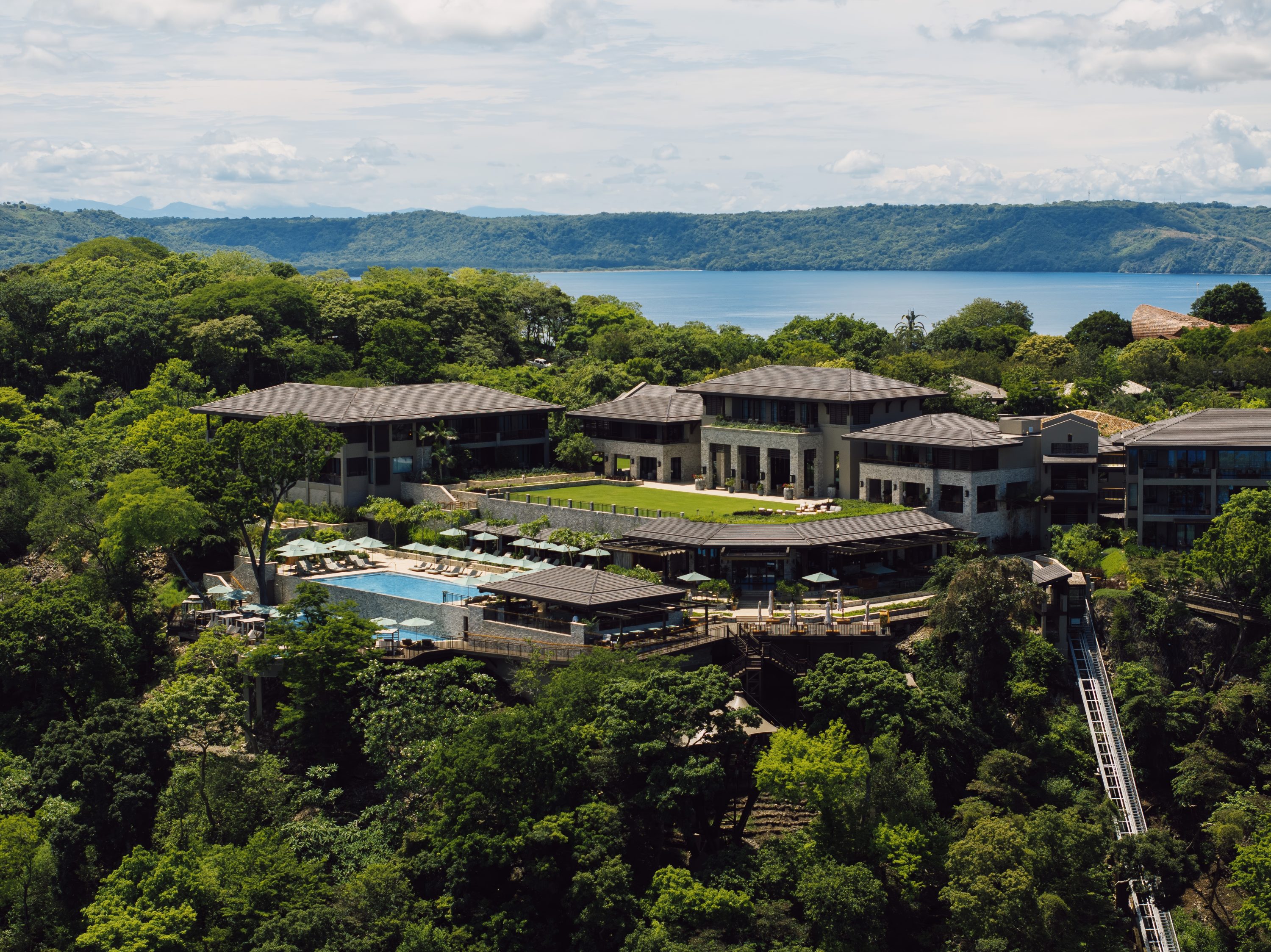
Nekajui’s vast forty-two-acre site presented an immediate design challenge. The terrain rises sharply above Pochote Bay, with limited areas level enough to support construction and a long, narrow footprint that required the resort to follow the peninsula’s contours. 10 Design, the project’s design architect, created a plan guided by the land’s existing design and was mindful of the fragile ecosystem on which they were building.
The findings shaped their master plan, with buildings, paths, and view corridors adjusted around root systems and ecologically sensitive areas.
Before determining where to place the buildings, 10 Design and landscape architect EDSA surveyed the existing trees and mapped them against animal habitats, topographical constraints, and Pacific sightlines. The findings shaped their master plan, with buildings, paths, and view corridors adjusted around root systems and ecologically sensitive areas. Some structures were relocated or reshaped in response to the survey, allowing the existing canopy to function as the project’s organizing framework. This thoughtful approach created a more limited area where building was possible and prompted even greater creativity from the team responsible for imagining what was possible.
In turn, today, the resort unfolds across three architectural zones. La Casona, its central hub, occupies one of the site’s densest buildable areas. Covered walkways extend from the open-air building to guest rooms, suites, and residences that reinterpret the region’s architecture. Floor-to-ceiling sliding doors, deep roof overhangs, cross ventilation, terraces, plunge pools, and outdoor showers make exterior spaces a functional part of each accommodation. Notably, all 107 guest rooms and suites face the ocean, while the ground-floor suites have partial views and boast private firepits. Farther into the forest, the structures become smaller and more dispersed, culminating in elevated treetop tents.
-
-
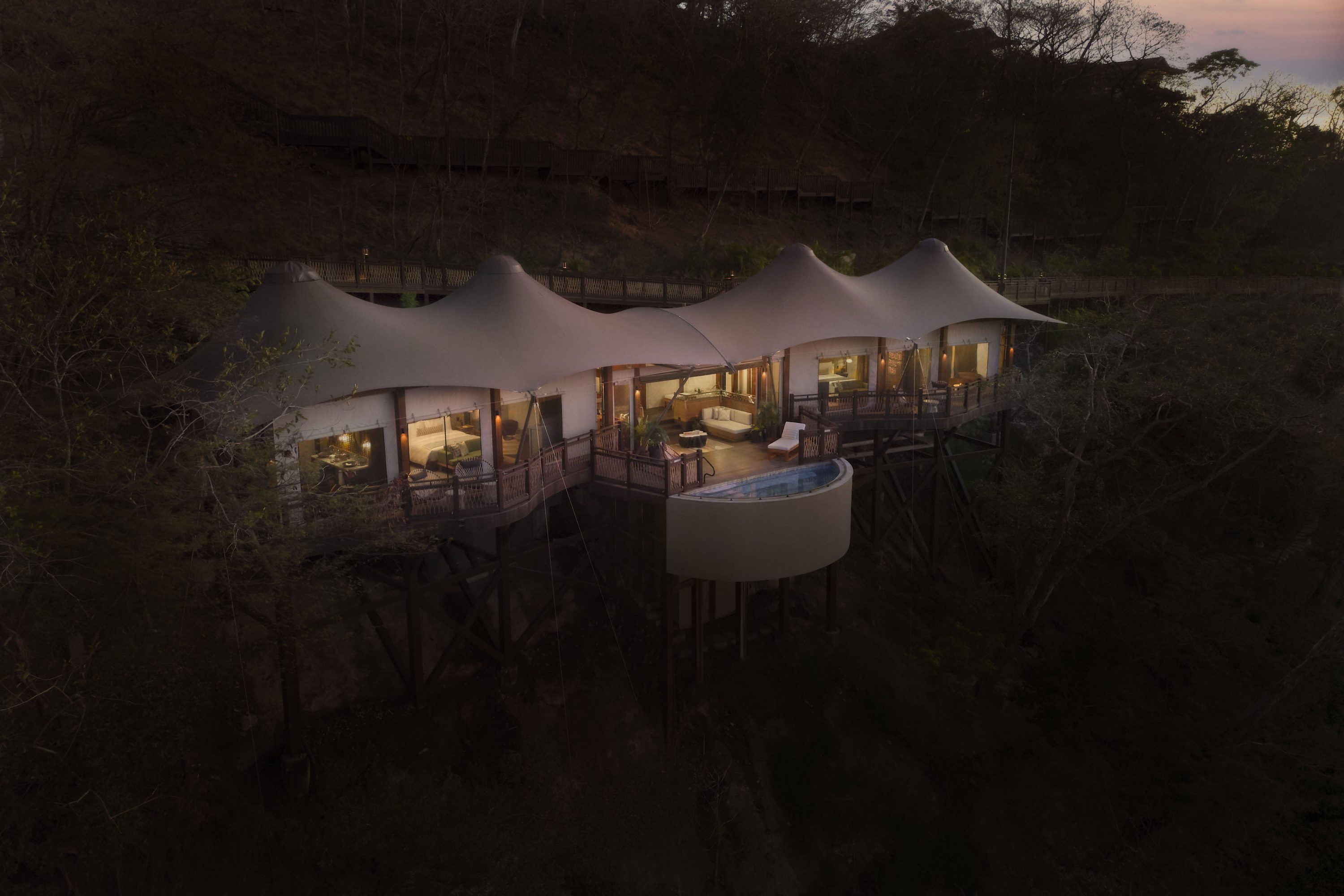
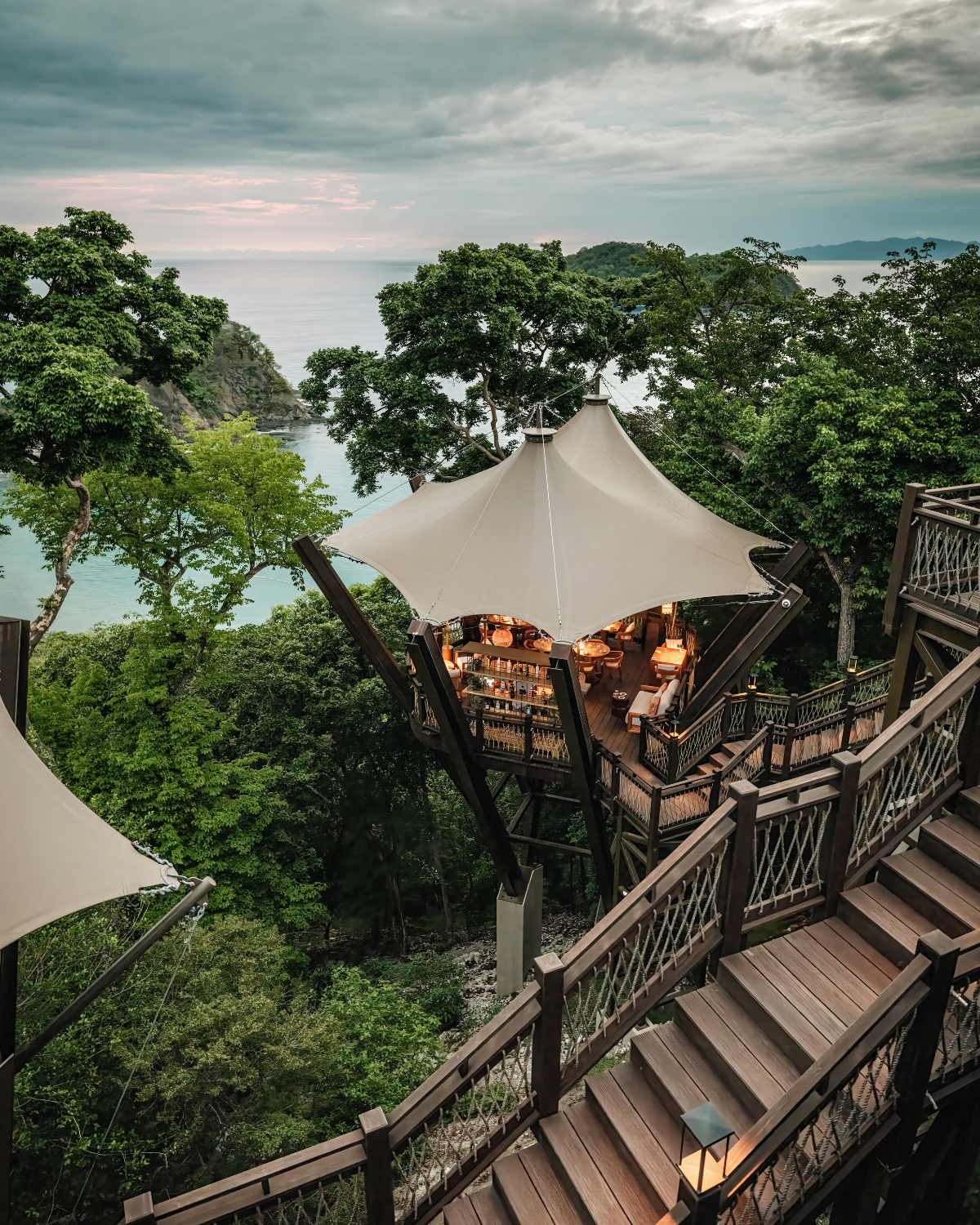
The Pacific also determined the placement of the resort’s three two-bedroom treetop tents, designed by Luxury Frontiers. Ranging from 2,324 to 2,795 square feet, the tents sit along the land’s natural contour lines and are elevated to protect the forest floor. Their lightweight components were prefabricated in South Africa to reduce on-site construction waste, while breathable canvas and roll-up mesh openings provide natural ventilation.
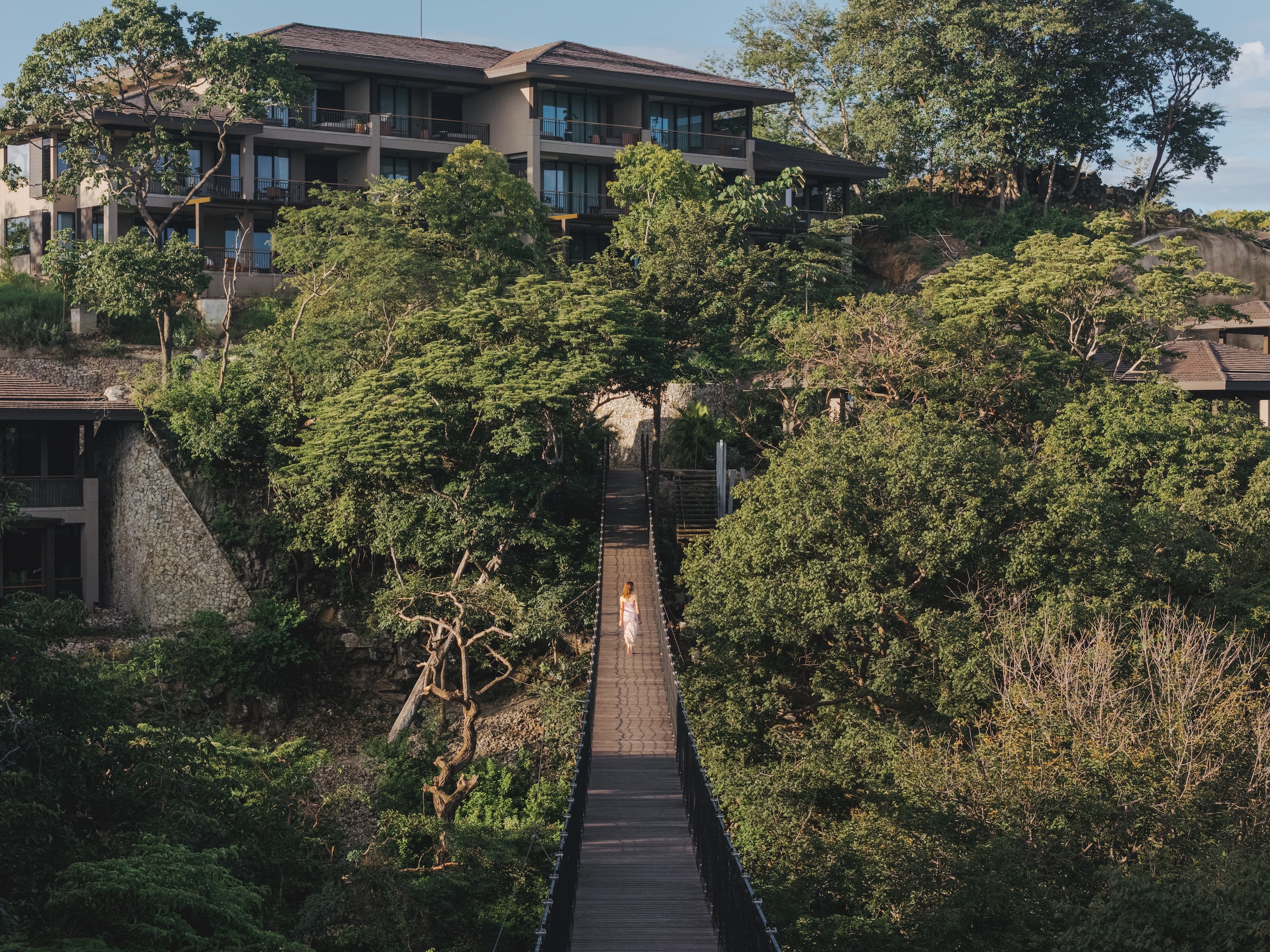
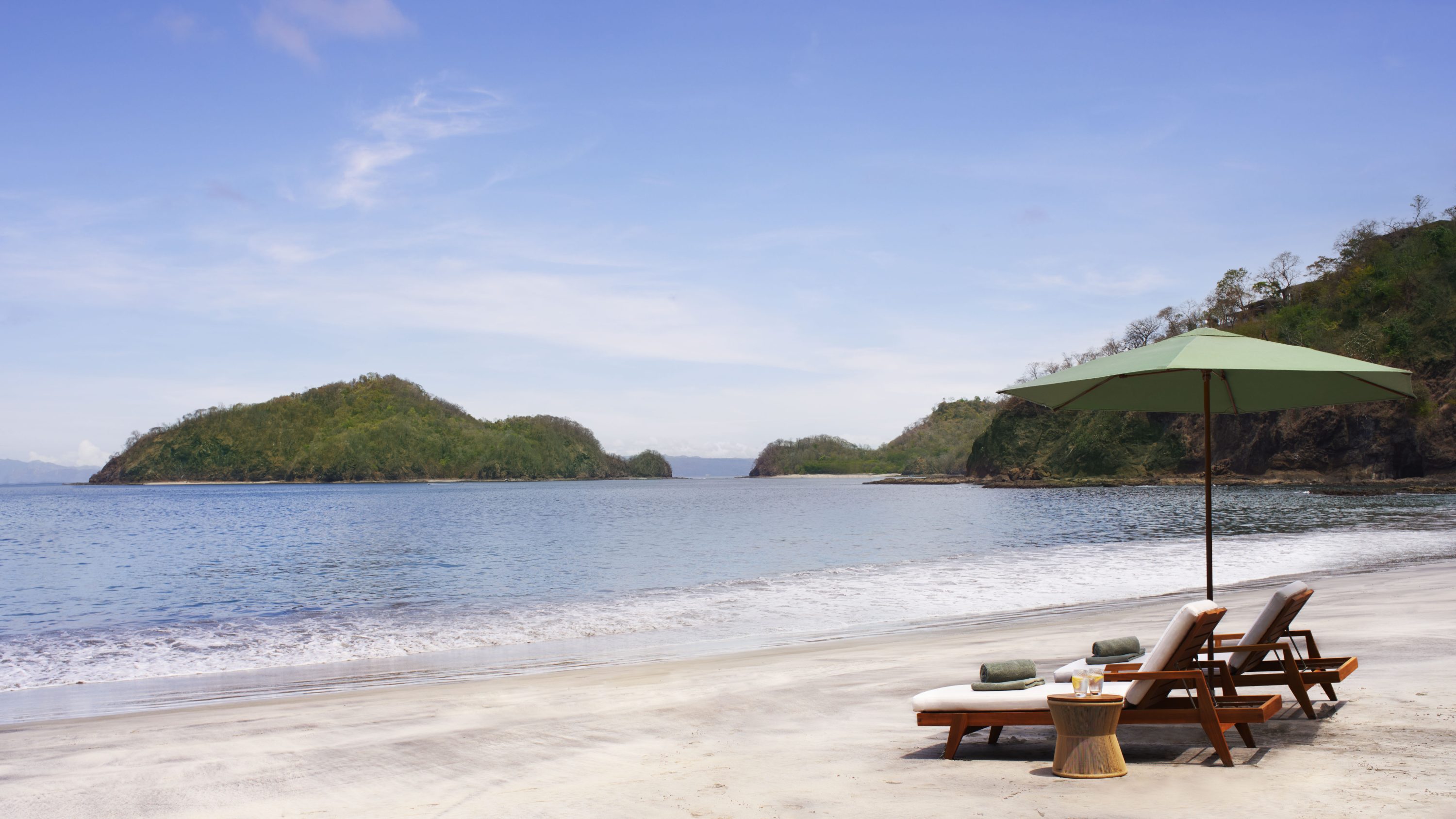
Materials removed or displaced during construction were also returned to the property. Eighty percent of the material extracted from or moved within the site was repurposed, including wooden headboards and exterior siding. The project also placed a major emphasis on local sourcing: more than seventy-five percent of the resort’s furnishings and fixtures, including custom millwork and lighting, were produced by artisans from nearby Guanacaste. The project brought together 10 Design, the design architect; Gensler as executive architect and interior designer; EDSA as landscape architect and land planner; BAMO for the public-space interiors; and Luxury Frontiers for the treetop accommodations. Their work follows the site from La Casona down the narrow peninsula through covered walkways, jogging paths, and rope bridges, ending at a funicular that descends 200 feet to the resort’s beach club.
Reinterpreting the Hacienda with La Casona
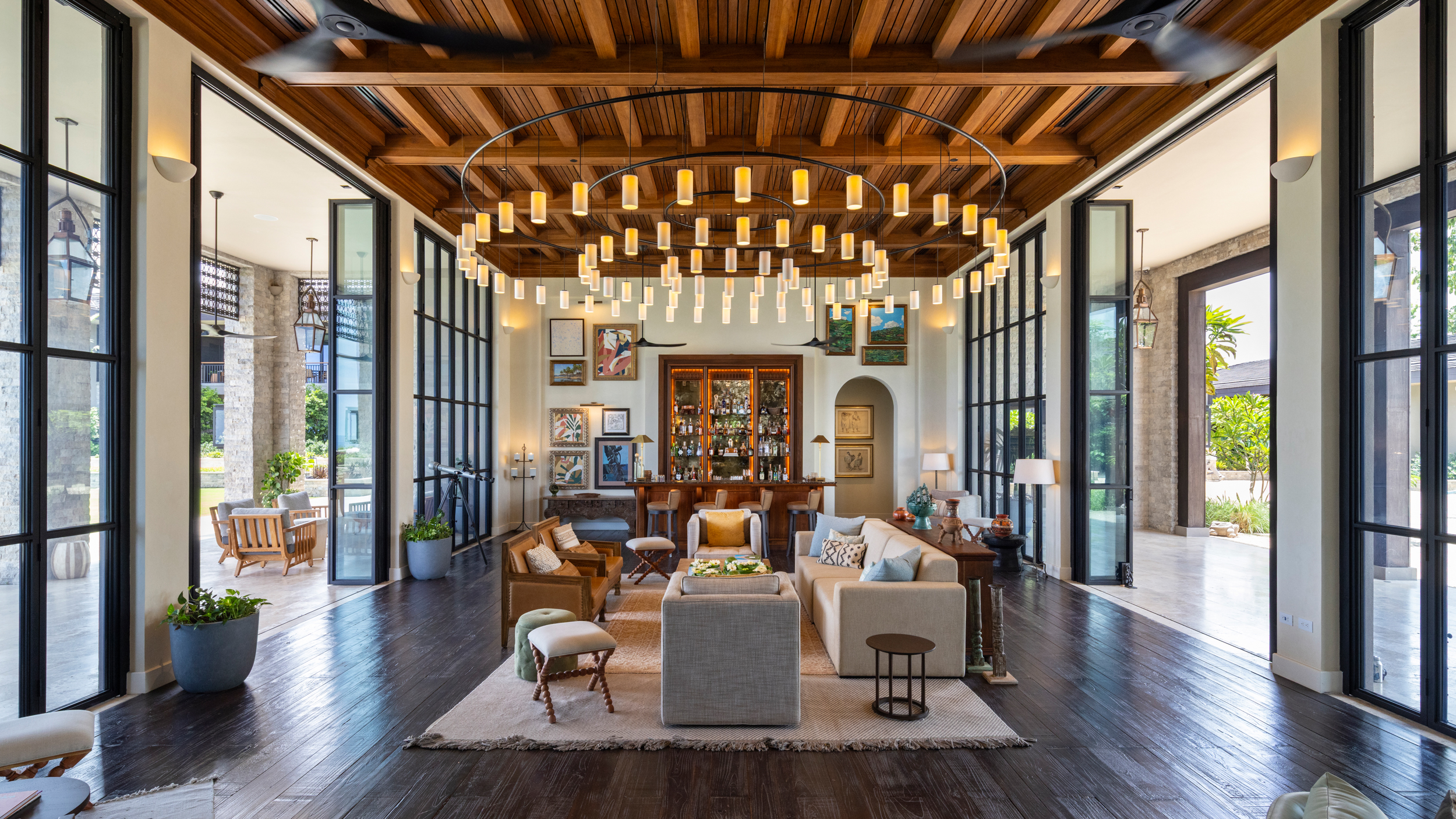
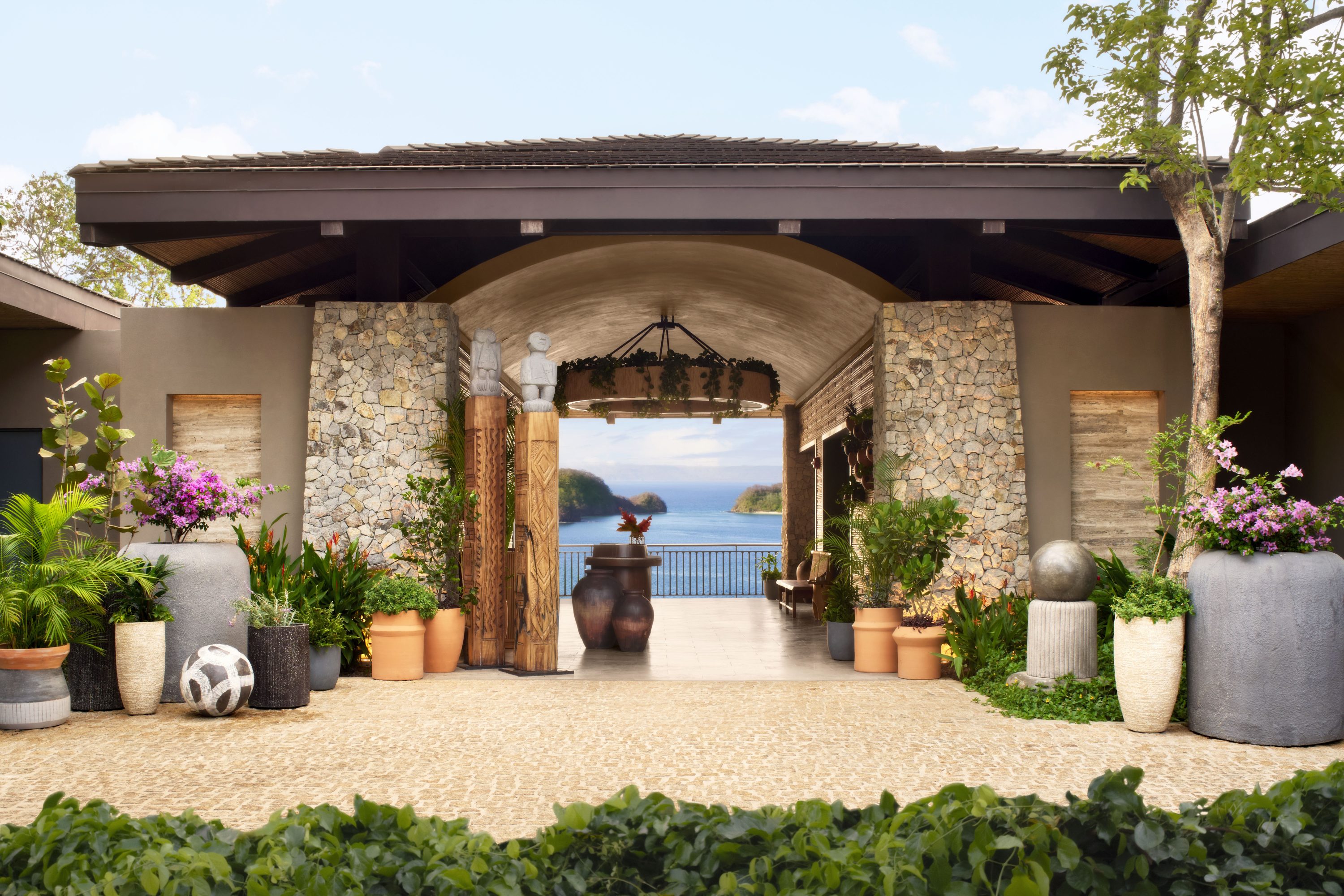
La Casona is Nekajui’s social and architectural center. Your arrival begins here, where a modest wooden entrance opens onto a courtyard organized around a ceiba tree, one of Costa Rica’s largest trees. From there, you pass through La Casona before the property reveals its tiered pools, forested cliffs, and unobstructed views across Pochote Bay.
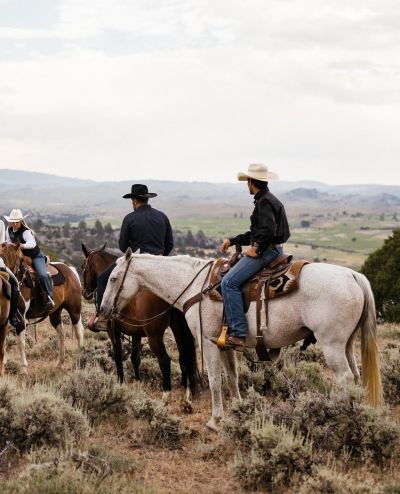
A modern interpretation of historic Guanacaste haciendas, La Casona pays tribute to the province’s Sabanero ranchers and Spanish-influenced architecture without recreating a historical building. A pitched roof, soaring wooden beams, hand-finished stonework, and covered walkways establish the structure’s hacienda-style proportions. Open sightlines and broad openings replace enclosed rooms, allowing air to circulate through the courtyards and seating areas. Deep roof overhangs provide shade, while the porous layout keeps the tropical dry forest and Pacific coastline visible from within.
More than 550 pieces are displayed throughout Nekajui, including nearly 125 original works by more than 30 Latin American artists.
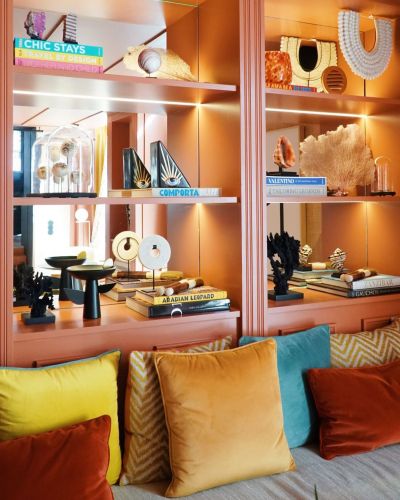
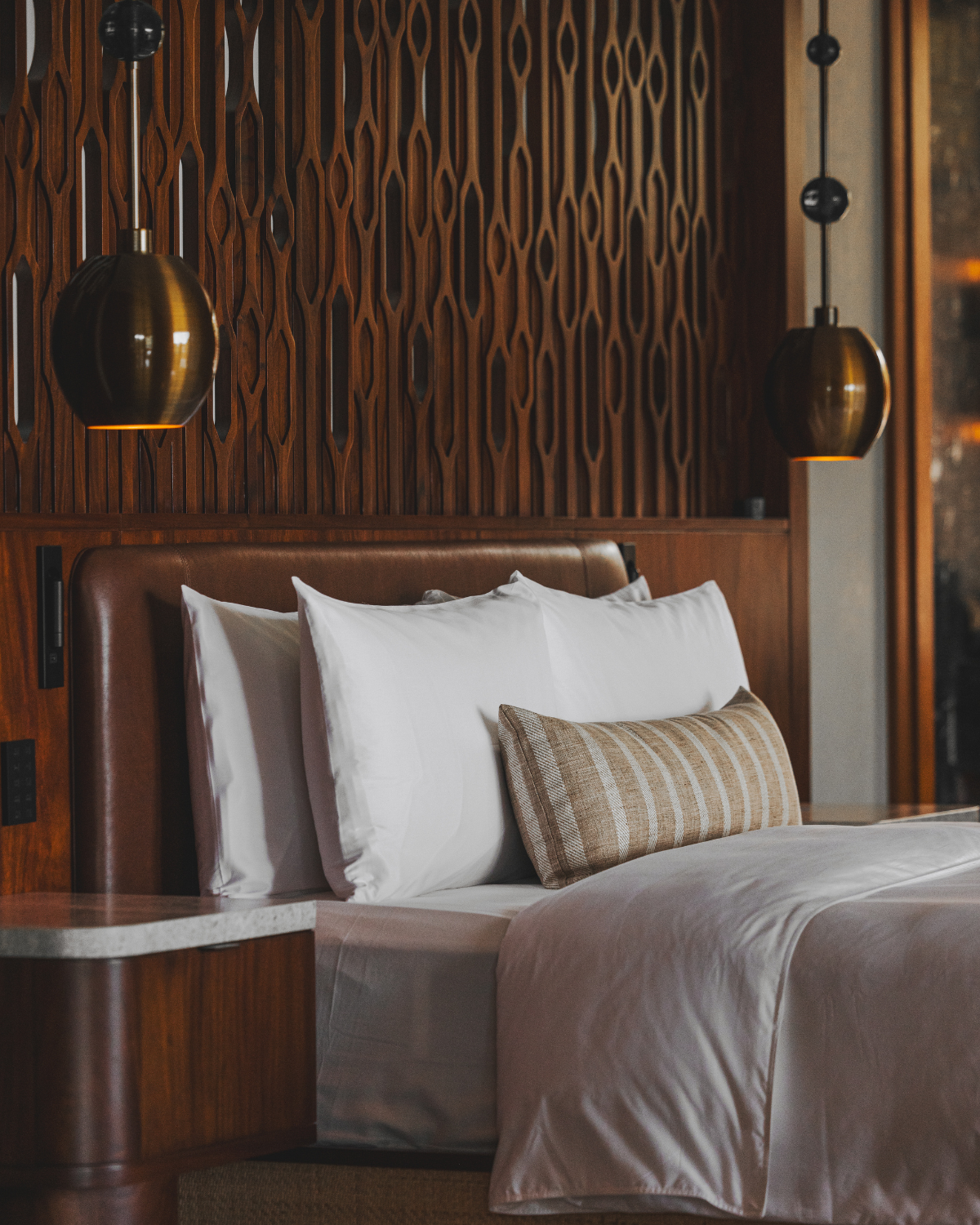
The interiors extend these regional references through specific materials and craft traditions. BAMO used hand-carved wood to recall the strength and canopy of the Guanacaste tree, while leatherwork and nail-head details reference the tack associated with the province’s sabaneros. Rhythmic mosaic patterns recall regional weaving, and a palette of jade, clay, and sun-warmed wood mirrors the colors of the surrounding dry forest. Custom woodwork, local stone, and clay pottery introduce additional references to Chorotega craft.
The property’s art collection adds another layer to this interpretation of Guanacaste and the wider region. More than 550 pieces are displayed throughout Nekajui, including nearly 125 original works by more than 30 Latin American artists. The collection appears throughout La Casona and the resort’s public spaces, placing contemporary Latin American work alongside the building’s locally sourced materials and craftsmanship.
A Stay Under the Canopy
Your stay will be defined by an endless number of design choices that make every aspect feel a little more adventurous—and that can accommodate everything from the most intimate getaways to the largest retreats. The 200-foot funicular to Niri Beach Club handles the property’s steepest descent, while suspended bridges and garden paths connect the upper resort with its more secluded spaces. The main hanging bridge spans a forested ravine, linking the resort’s two sides and providing access to accommodations built along the hillside.
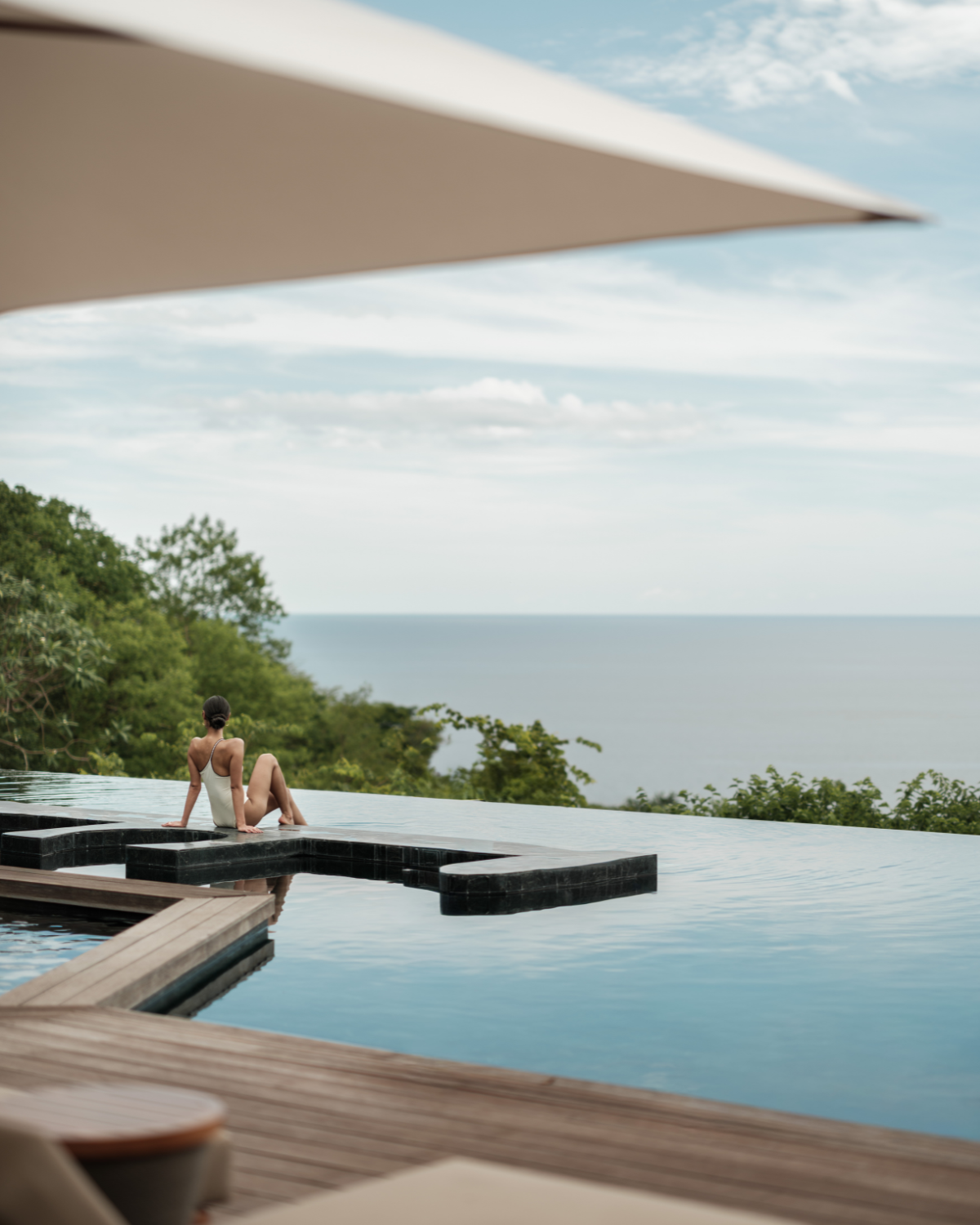
The main pool is arranged across terraces stepping down the cliff, with separate levels preserving views over the Pacific. The 107 rooms and suites carry the Spanish, Sabanero, and Chorotega references established in La Casona into a more residential setting. Floor-to-ceiling sliding doors open onto oversized balconies or terraces, many with plunge pools and outdoor shower gardens. Beds feature Frette linens, and rooms include both lightweight cotton and waffle Frette robes.
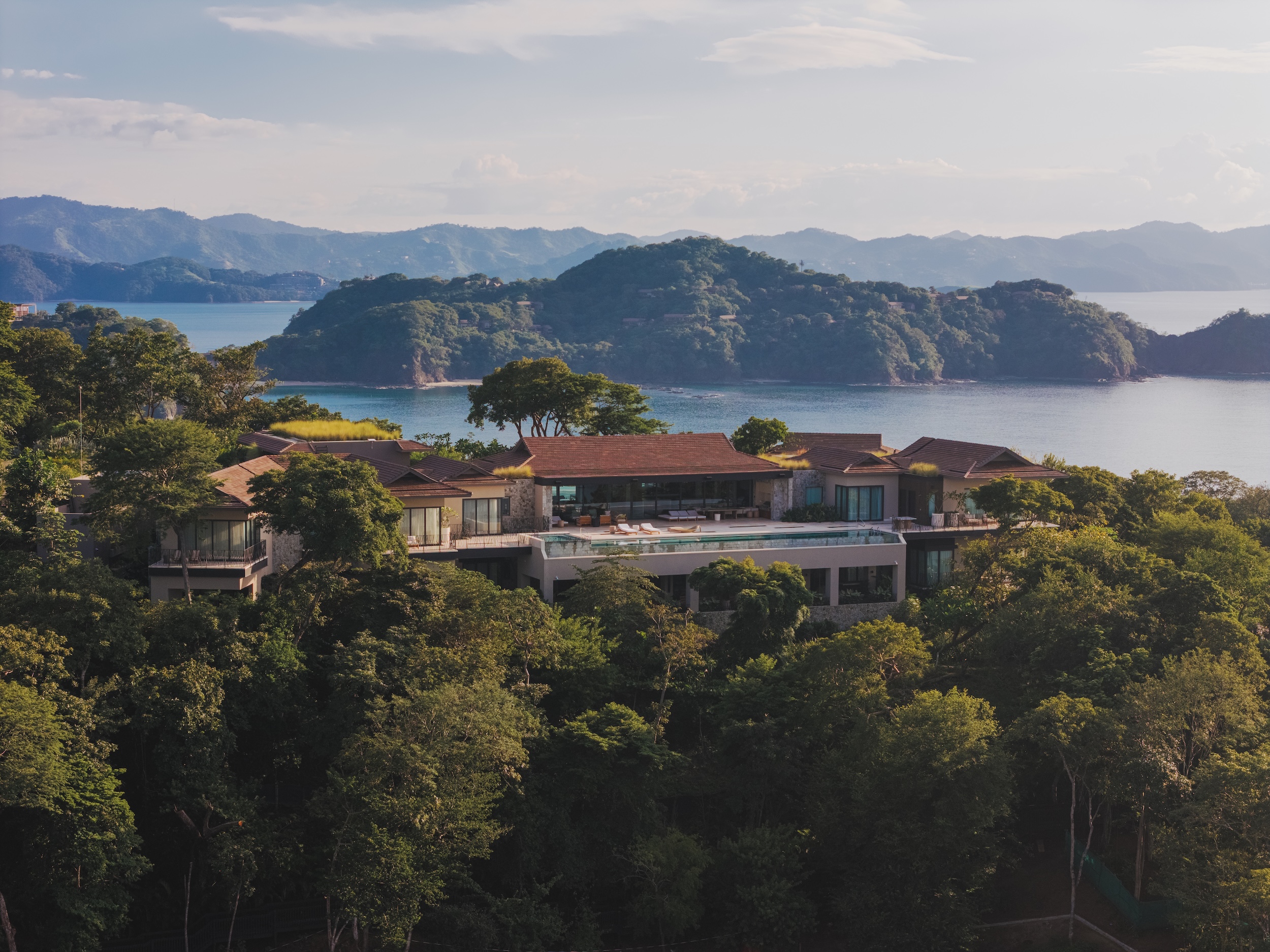
Villa Guayacán expands to 10 bedrooms and 15 bathrooms across 10,244 square feet, with an infinity-edge pool, broad terraces, original artwork, a private chef, and dedicated concierge service.
The three two-bedroom Treetop Tents occupy a secluded section of the property above the bay. They range from 2,324 to 2,795 square feet and pair two bedrooms with a central lock-off lounge, private plunge pool, and outdoor shower. Roll-up mesh openings and breathable canvas let the rooms stay open to the air without sacrificing enclosure, while one of Luxury Frontiers’ longest membrane spans stretches across a curved central beam.
For larger groups, the residences range from two to five bedrooms and use a modern Guanacaste hacienda plan with open kitchens, indoor-outdoor living rooms, private terraces, and infinity pools. The four-bedroom estates span 4,100 to 4,300 square feet and include media rooms, gourmet kitchens with butler’s pantries, outdoor showers, and private pool and Jacuzzi areas. The five-bedroom estates offer 6,290 to 6,478 square feet of air-conditioned space, a 935-square-foot pool and Jacuzzi area, and accommodations for up to 12 people. Villa Guayacán expands to 10 bedrooms and 15 bathrooms across 10,244 square feet, with an infinity-edge pool, broad terraces, original artwork, a private chef, and dedicated concierge service.
-
-
The Culinary Design That Deepens the Connection Nekajui Creates
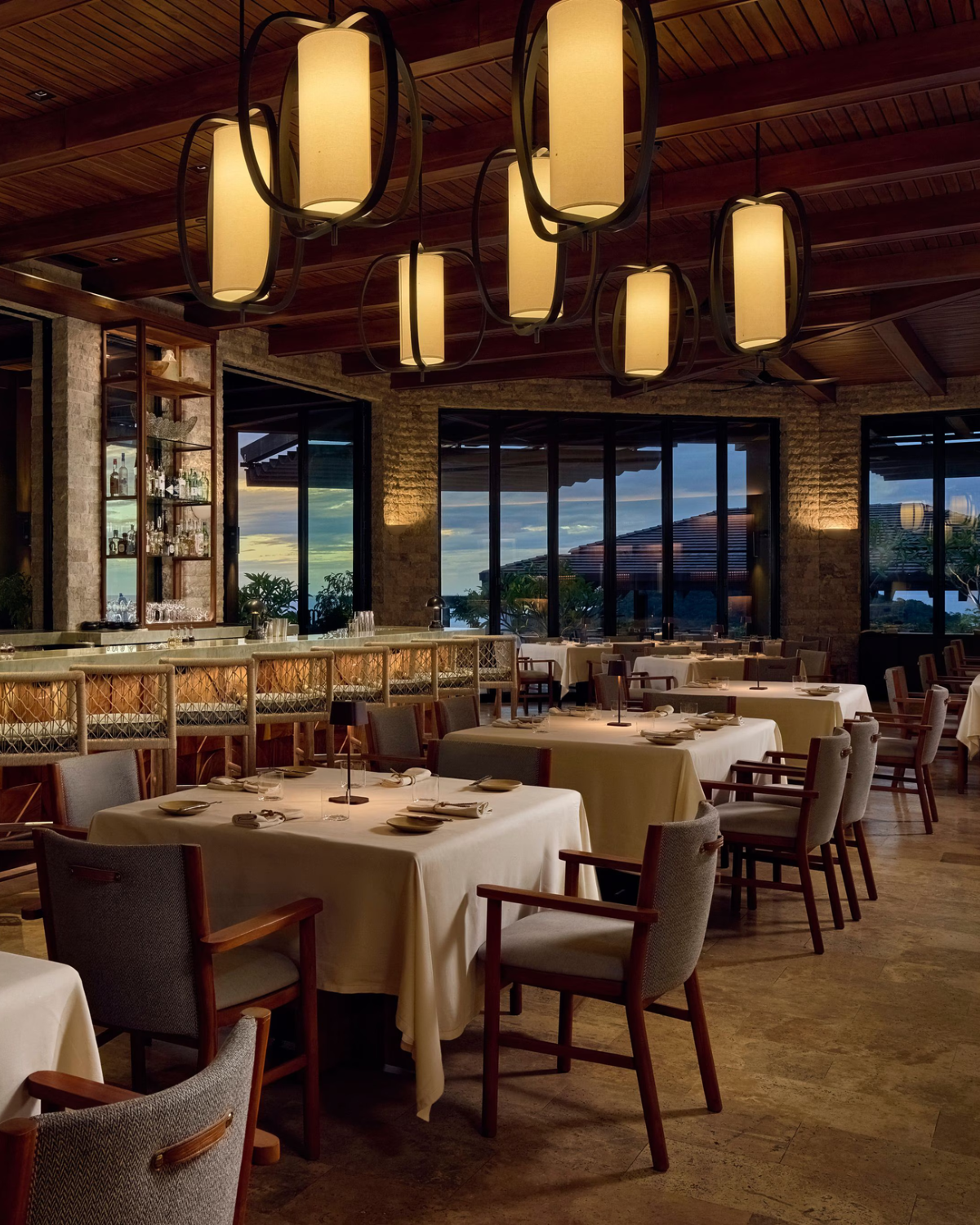
Executive Chef Lulu Elizaga oversees a culinary program that interprets Costa Rican ingredients through Peruvian, Asian, Iberian, and Latin American cooking. The clearest example is Puna, conceptualized by Chef Diego Muñoz, whose work is credited with helping shape modern Peruvian cuisine. Puna’s menu combines indigenous ingredients and global techniques, drawing connections between the Andean highlands and Costa Rica’s tropical produce. Within Puna, the six-seat Paruro counter applies the structure and precision of an omakase to Asian Peruvian cooking, with a chef-led tasting menu organized around native flavors and seasonal ingredients. At Niri Beach Club, the wood-fired oven anchors a Spanish- and Portuguese-influenced menu of Iberian dishes, agua fresca variations, and updated beach classics.
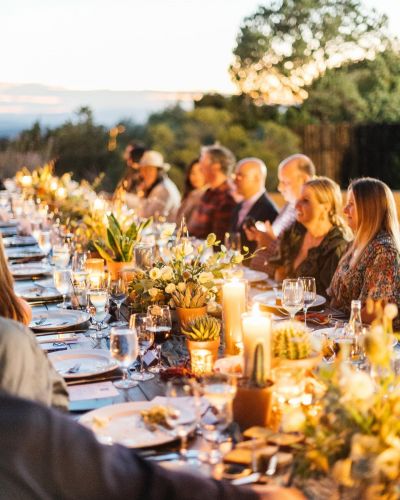
Coffee, cacao, herbs, and flowers carry the program more directly into Costa Rica’s agricultural traditions. Named for the Rincón de la Vieja volcano, Nekajui’s Café Rincón serves artisan coffee, chocolate, cocktails, and a light menu built around the country’s coffee and cacao heritage. Nekajui developed its broader beverage program with The Herball, a mixology consultancy specializing in sustainably produced drinks, tonics, and cocktails connected to local culture. Its menus use Costa Rican botanicals throughout the resort: La Casona Bar works with herbs and flowers grown in Nekajui’s gardens, while Ámbar, a suspended treetop bar named for the gemstone’s sunset-yellow color, sets its cocktails against botanical and celestial design motifs. The Dining Beyond program moves the experience outside the restaurants, arranging private meals in treetop hideaways or on a secluded section of beach, where the cuisine is served within the same forest and coastline that supply its central references.
Wellness Inspired by the Nicoya Blue Zone
Named for the Chorotega word for “water,” the 27,000-square-foot spa centers its program on native botanicals, regional materials, and water-based therapies.
Wellness at Naku Spa draws inspiration from the nearby Nicoya Peninsula, one of only five Blue Zones in the world. These Blue Zones are regions where people have been documented to live longer, healthier lives—this zone’s longevity is attributed to the strong connections people living here maintain to their families and cultural practices. Named for the Chorotega word for “water,” the 27,000-square-foot spa centers its program on native botanicals, regional materials, and water-based therapies. Costa Rica’s largest dedicated hydrotherapy pool incorporates thermal jets and underwater soundscapes, while an ocean-facing infinity pool, private spa suites, treetop treatment cabanas, outdoor showers, and saunas with panoramic water views extend the facilities across the hillside. You reach the spa by crossing a suspended walking bridge and following garden paths through the tropical dry forest—a short journey that has its own restorative qualities.
Treatments incorporate Chorotega pottery, volcanic mud, cacao, coffee, and juanilama essential oil—which is derived from a Costa Rican herb and paired with mandarin and bergamot in Naku’s aromatherapy blends. Consider booking Earth Therapy, a ninety-minute treatment inspired by Indigenous Chorotega practices that uses clay, pottery, and woodwork in gua sha-style bodywork designed to relieve pain and recenter the body. The Volcanic Lift facial combines volcanic glass and activated carbon with reflexology, while Harmonic Monochord Healing takes place in the treetops and uses sound and vibrational energy to support relaxation. Each show how the Reserve brand’s central ethos comes alive in the smallest details.
An Immersive Ritz-Carlton Reserve Experience Within Reach
At Nekajui, the defining details belong to Costa Rica. The property is shaped by the tropical dry forest that determined the master plan, with Chorotega and Sabanero references carried through the architecture, coffee and cacao rituals, native botanicals used at Naku Spa, and Pacific views preserved from every accommodation. The Reserve philosophy shows in these decisions, from mapping trees and animal habitats before placing the buildings to elevating the Treetop Tents above the forest floor. Nekajui’s architecture provides access to the peninsula without competing with the landscape that brought you here.
The beauty is that this immersive experience is easy to access. To experience it firsthand, fly into Daniel Oduber Quirós International Airport (LIR) in Liberia, approximately twenty-two miles from Nekajui. From the airport, a prearranged private transfer follows paved roads to Peninsula Papagayo, with the drive generally taking thirty-five to forty-five minutes. From there, the last stretch follows the peninsula’s ridge road to Nekajui, where the Pacific, forest canopy, and Pochote Bay come into view.