To get our planning process started, please fill out the contact form below so we can get to know you and your trip a little bit better. Once we receive your request form, we’ll be in touch to schedule a call to and learn about your goals and vision for your trip. Planning fees apply. We look forward to working together!
Traversing the Highlands of Chile and Bolivia with Explora
Share
IntroStayHighlightsitinerary
From the otherworldly landscapes of Chile’s Atacama Desert to the blinding white expanse of Bolivia’s Salar de Uyuni, Explora’s eight-day Travesía Atacama–Uyuni takes you through one of South America’s most remote and compelling corners.
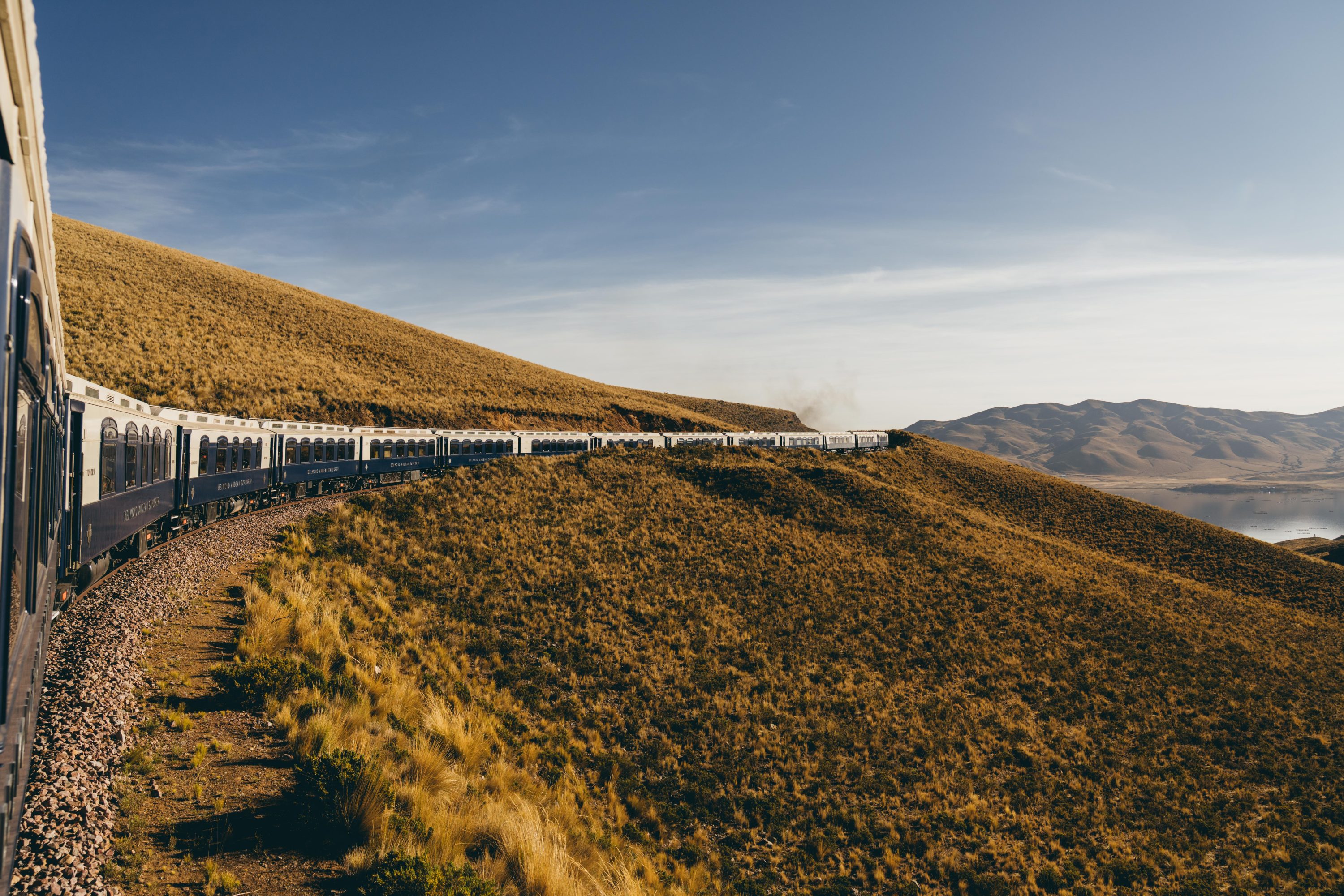
Travesía, Spanish for a long crossing, is an apt name for a route that takes you more than 300 miles across the high-altitude Altiplano, from Chile into Bolivia. The route begins at Explora Atacama, just outside San Pedro de Atacama. Days here are curated around private guided explorations, while time at the lodge invites slower forms of discovery. From Chile, the crossing continues across the border and deep into Bolivia, with the next nights spent at Explora Ramaditas Mountain Lodge, Explora Chituca, and Explora Jirira Lodge. This is where the experience culminates, and the landscape’s sheer scale becomes a defining part of the trip. As you venture, Explora’s model means you don’t have to worry about other logistics; accommodations, meals and beverages, guided 4×4 travel, national park entrance fees, and airport transfers are included. This leaves you free to focus on the experience: a rare overland expedition through the high country of the Andes.
This trip is for travelers who like to earn their views. A good level of fitness and a real appetite for the outdoors will go a long way, though it is just as rewarding for those who are happy to sit still. Above all, this is for travelers drawn to truly remote places.
What is the vibe of this trip?
Think of it as an overland expedition, with comfort quietly waiting at the end of each day. The trip will be punctuated by long stretches through the land and opportunities for challenging hikes to break up days of driving. No fixed program to keep up with, just opportunities for intimate encounters with some of Earth’s most extreme landscapes.
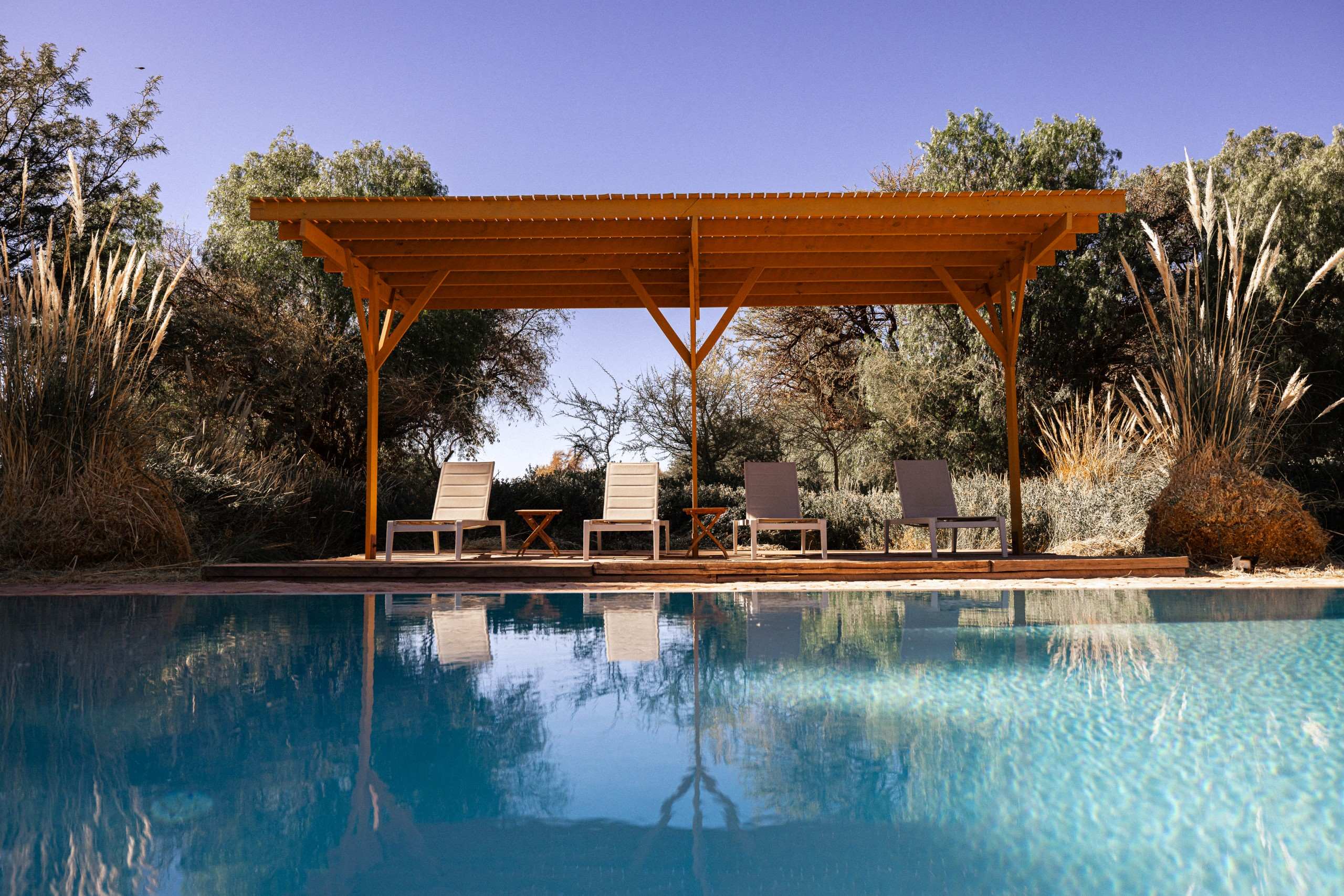
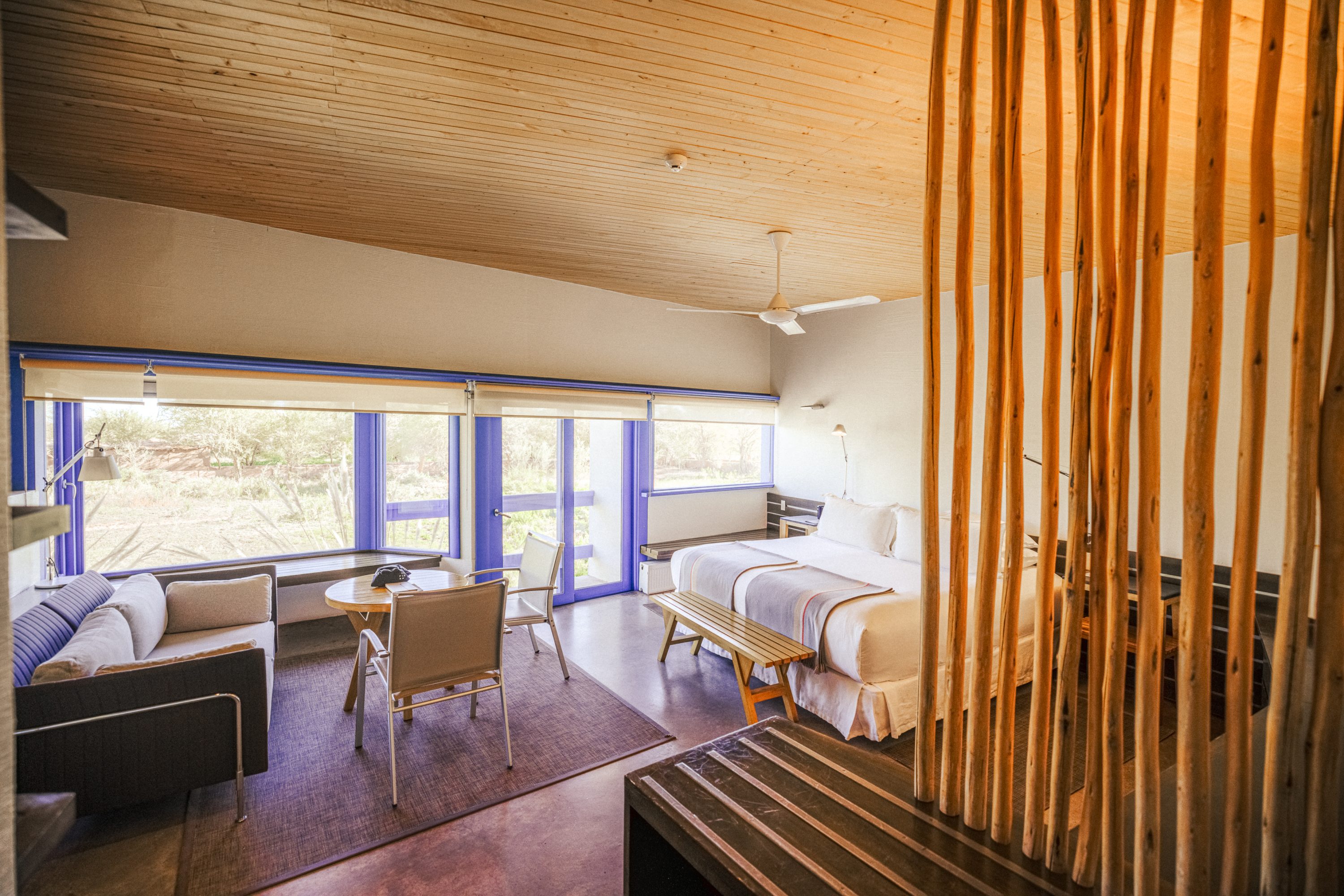
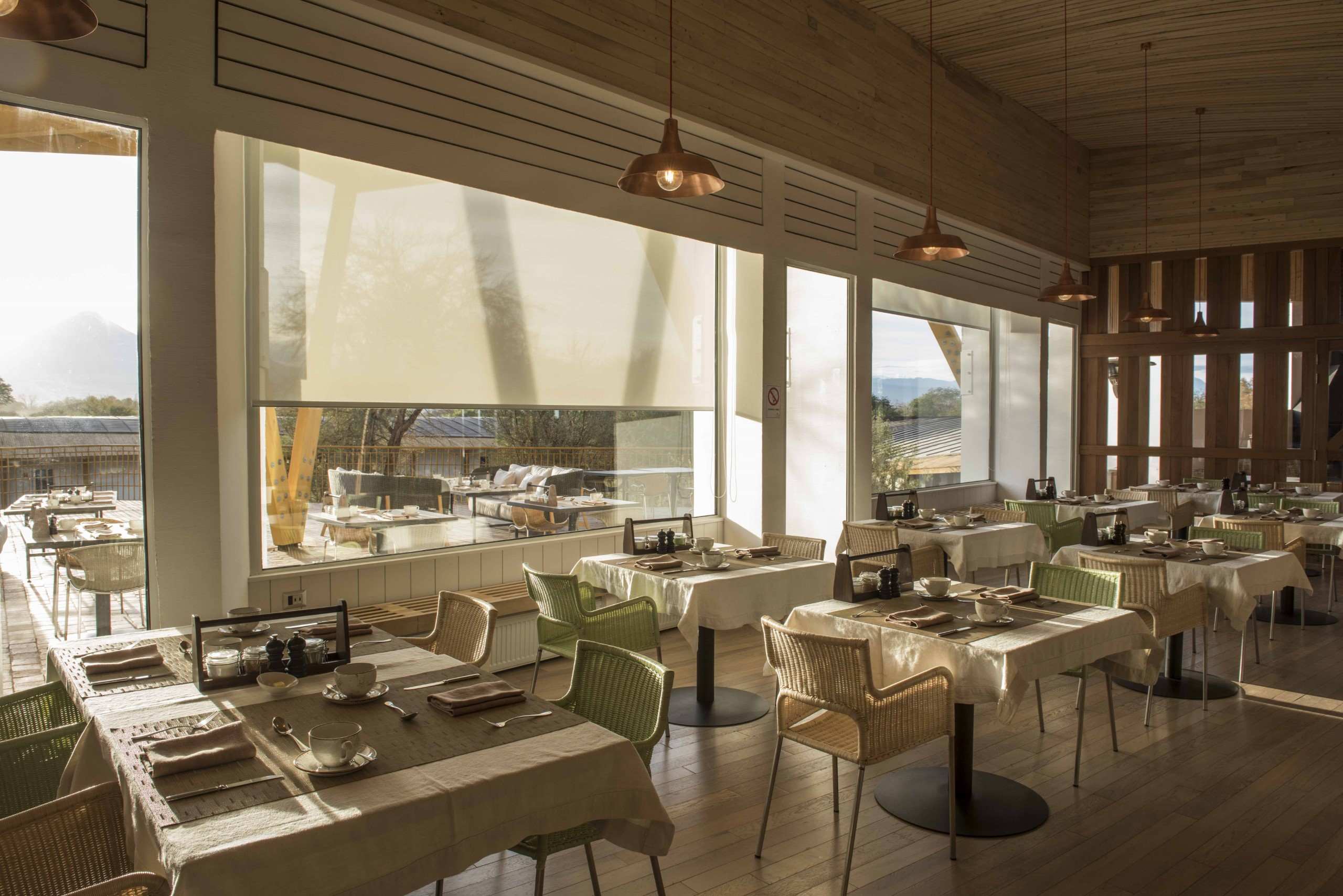
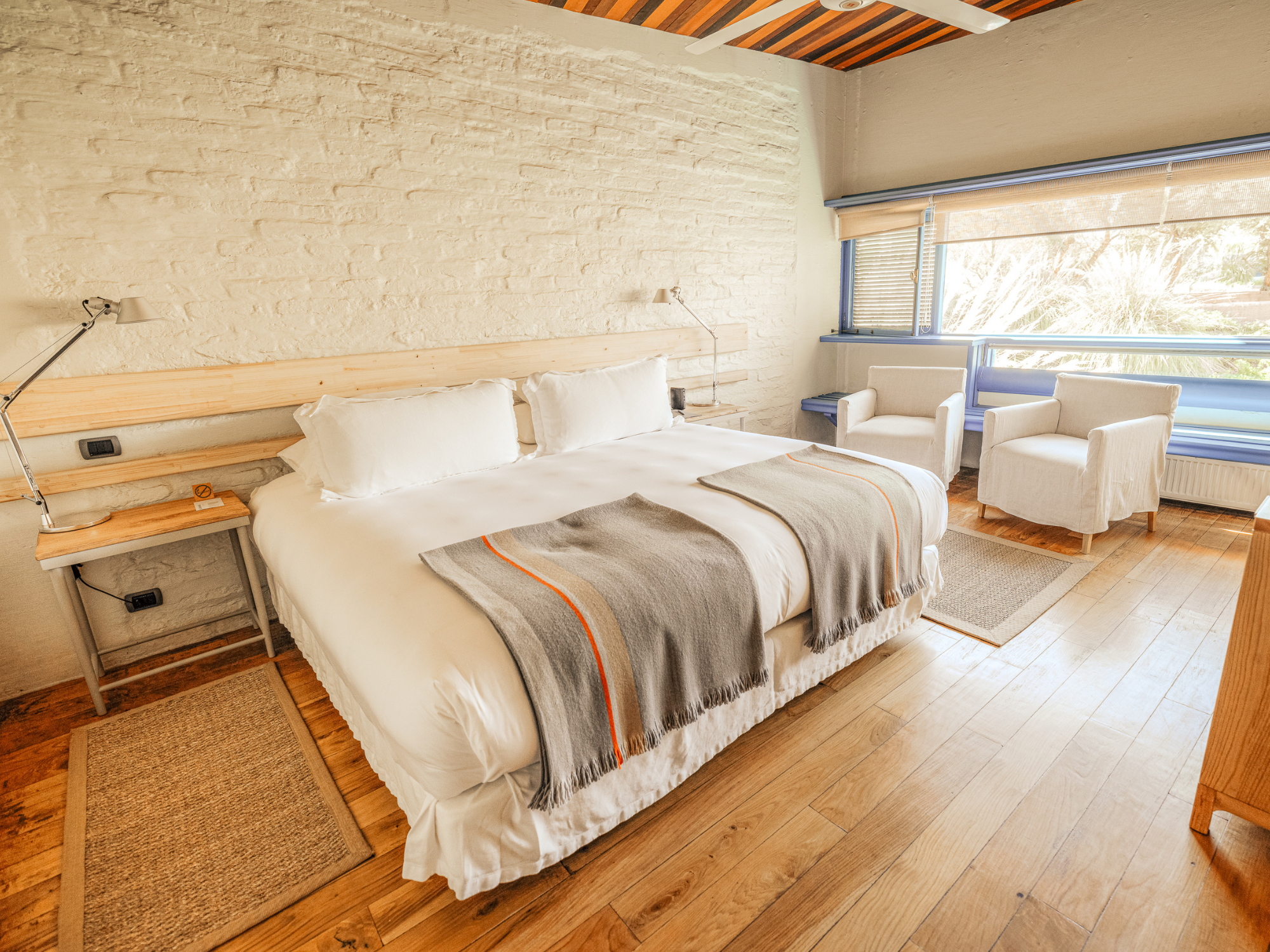
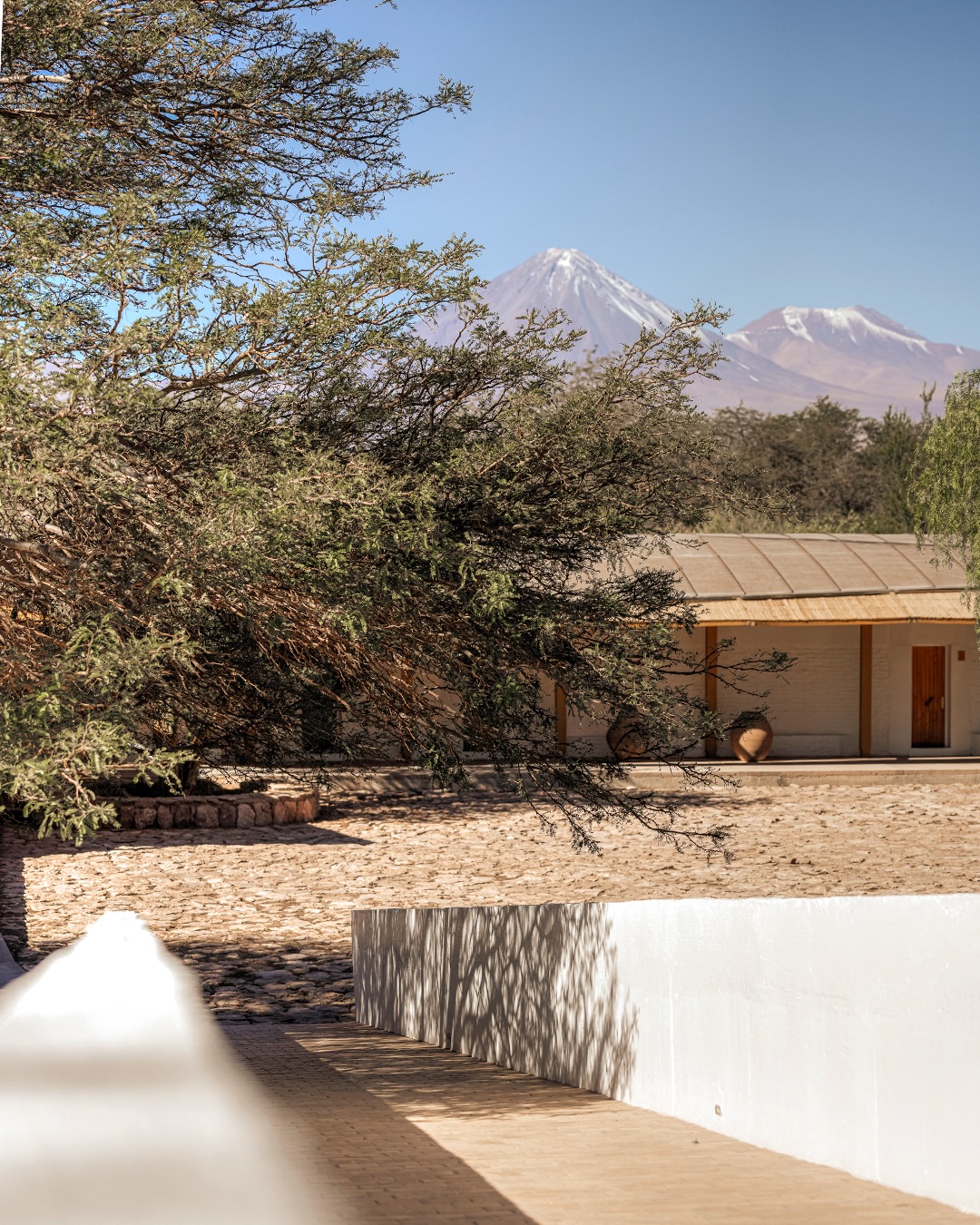
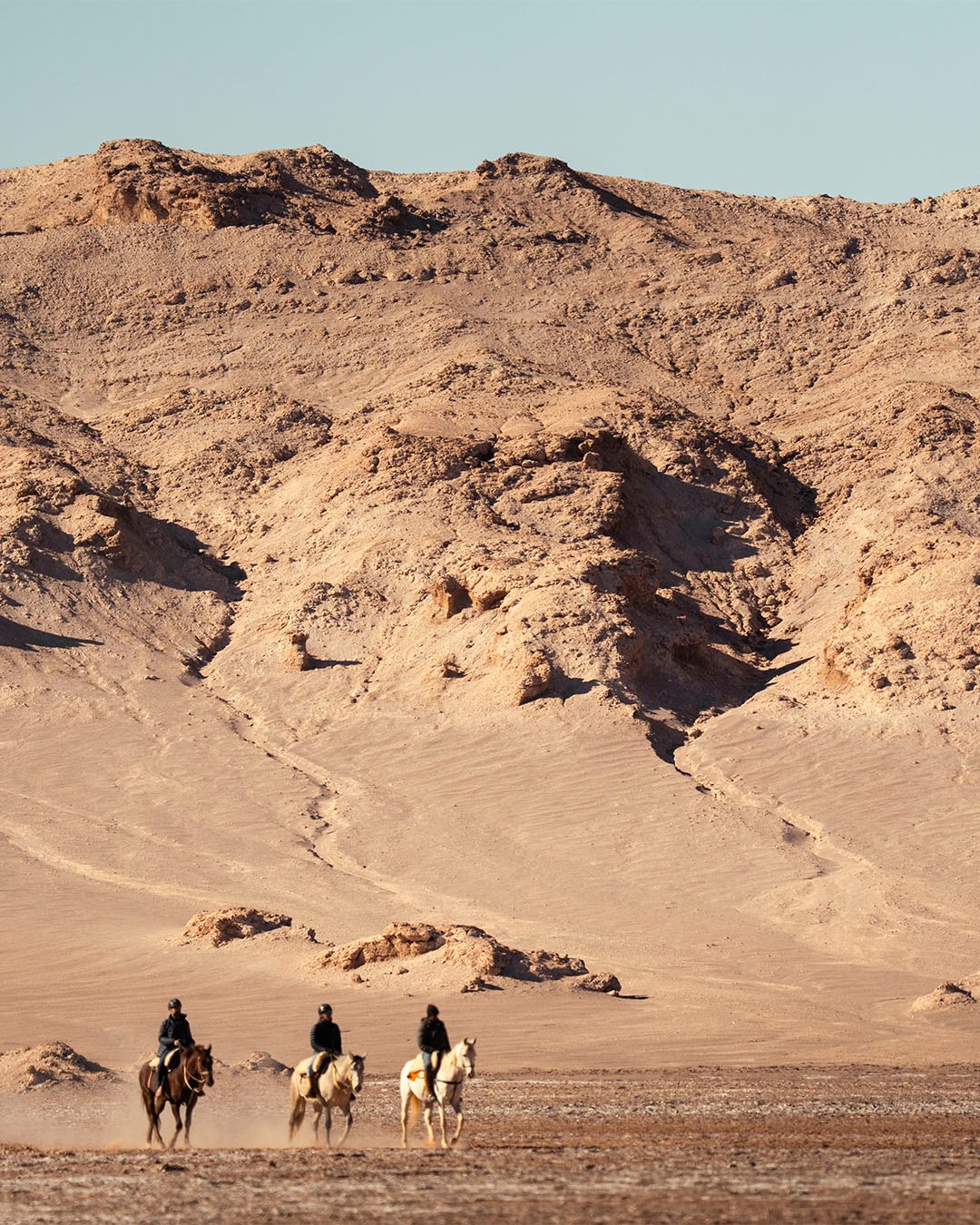
Set on a 17-hectare estate just outside San Pedro de Atacama and sitting at nearly 8,000 feet above sea level, Explora Atacama is where the crossing begins and the ideal place to acclimatize. The fifty rooms are intentionally pared back, with natural stone walls, custom woodwork, deep bathtubs, and views toward the Cordillera de la Sal or the lodge’s orchard. For more space, the four 538-square-foot Catur Suites add a separate living area and private balcony, while the dining room serves daily changing menus rooted in northern Chilean ingredients, paired with Chilean wines. After a day in the Atacama Desert, four open-air pools framed by pampas grass, plus a sauna, steam baths, outdoor hot tubs, and a spa, await. Horseback explorations leave from the lodge’s own stables, and when night falls, its private observatory brings some of the clearest skies on earth into focus. You also enjoy privileged access to the natural hot springs of Puritama, inside Explora’s own conservation reserve, where thermal pools follow a canyon lined with native vegetation.
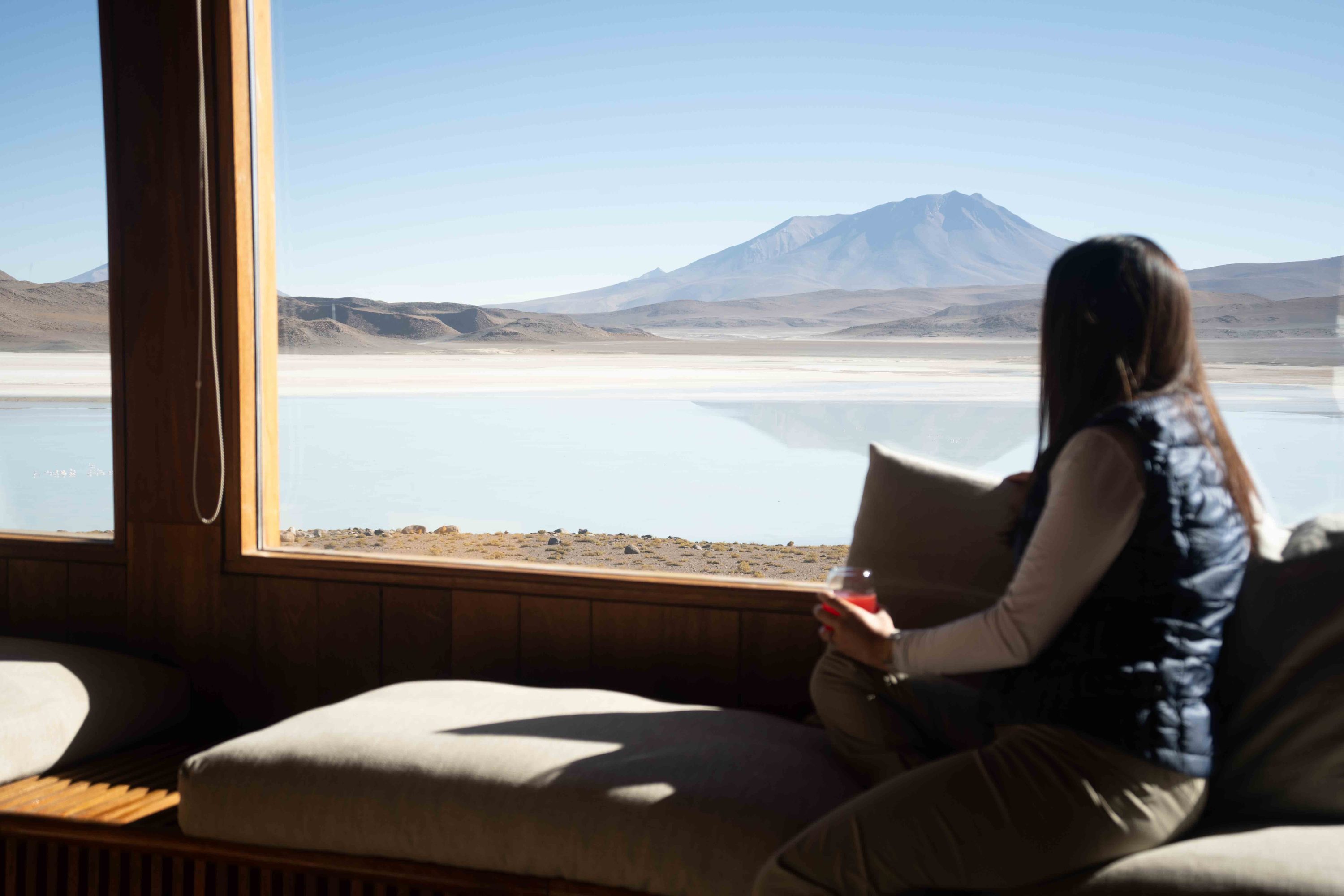
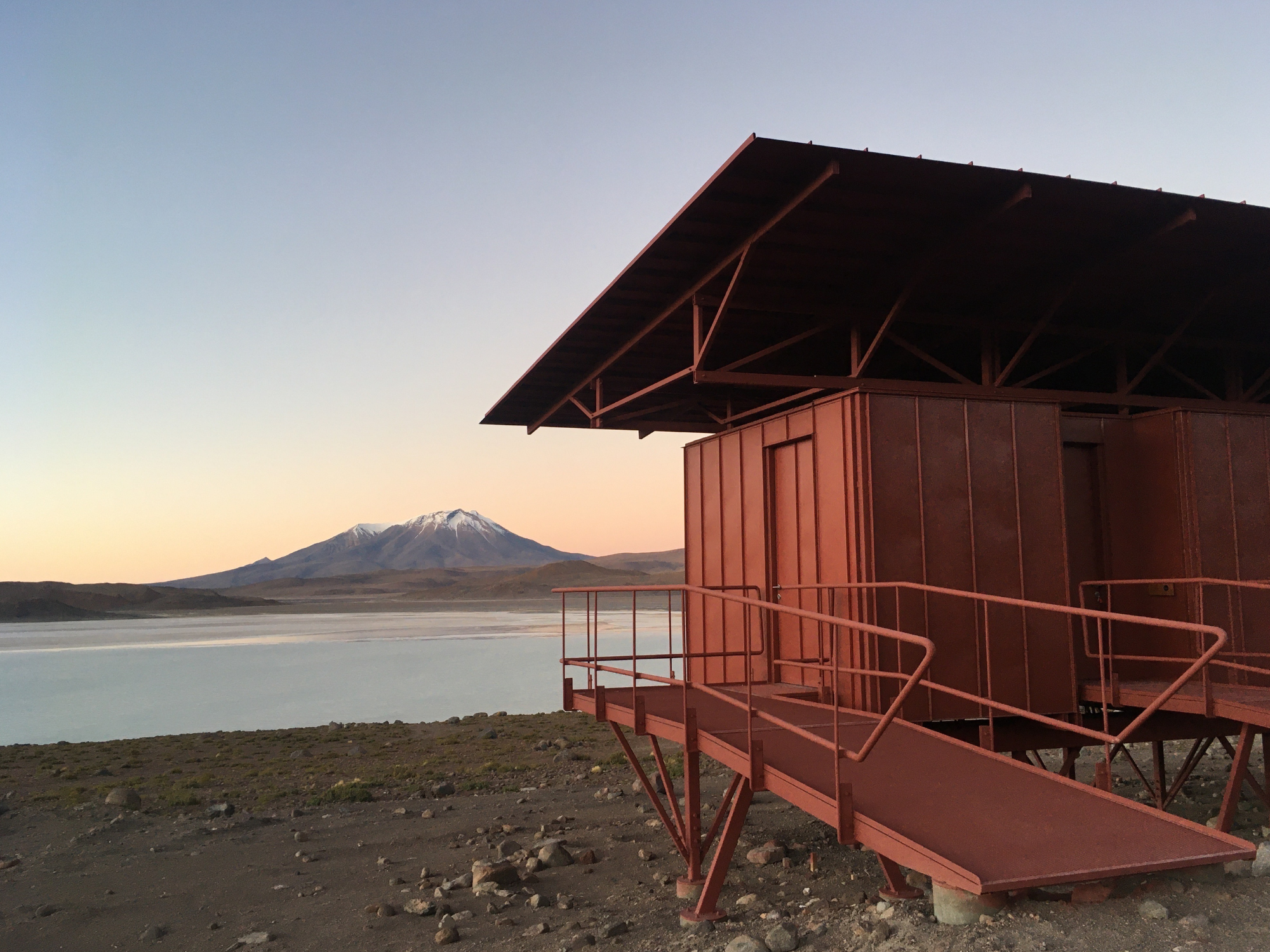
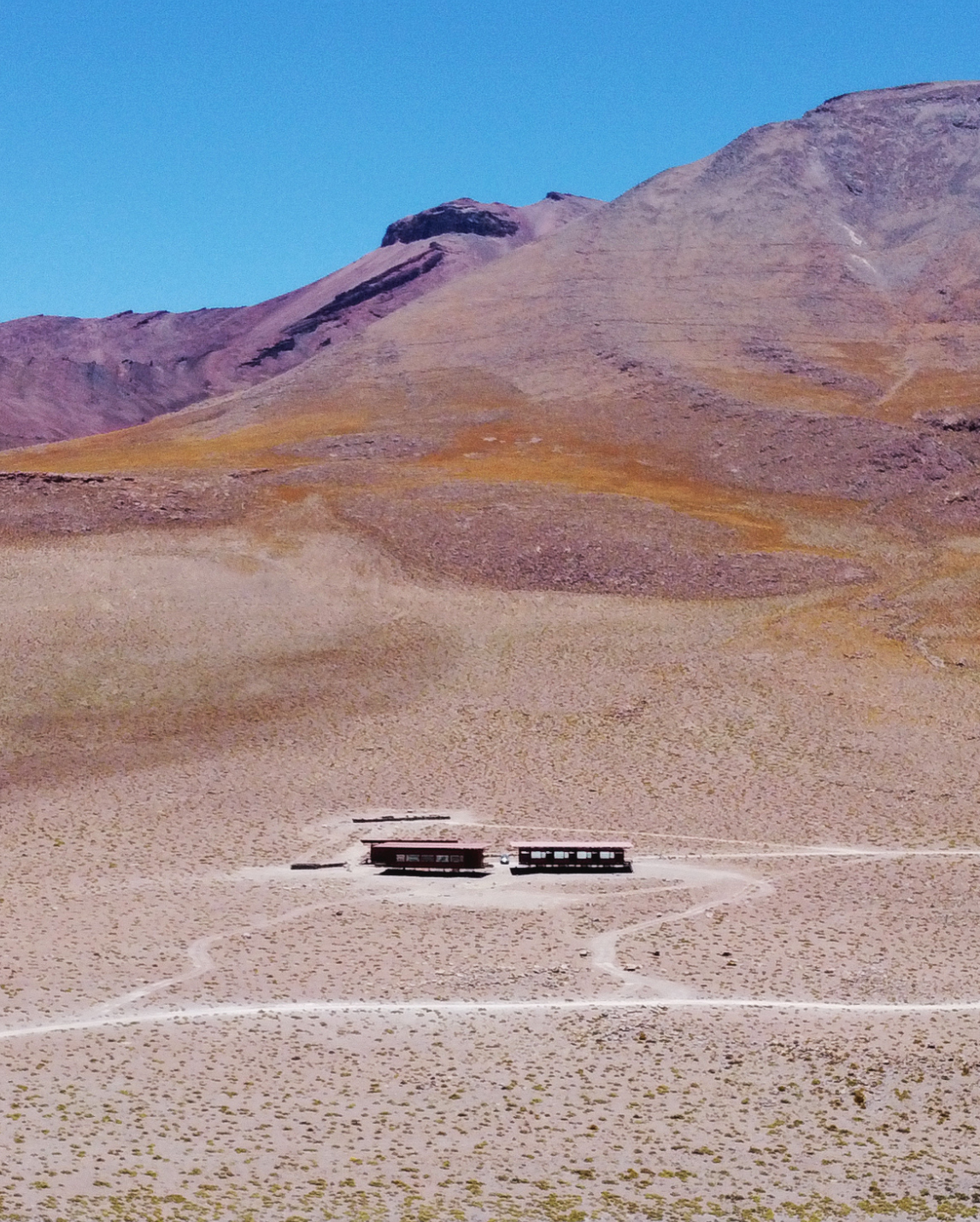
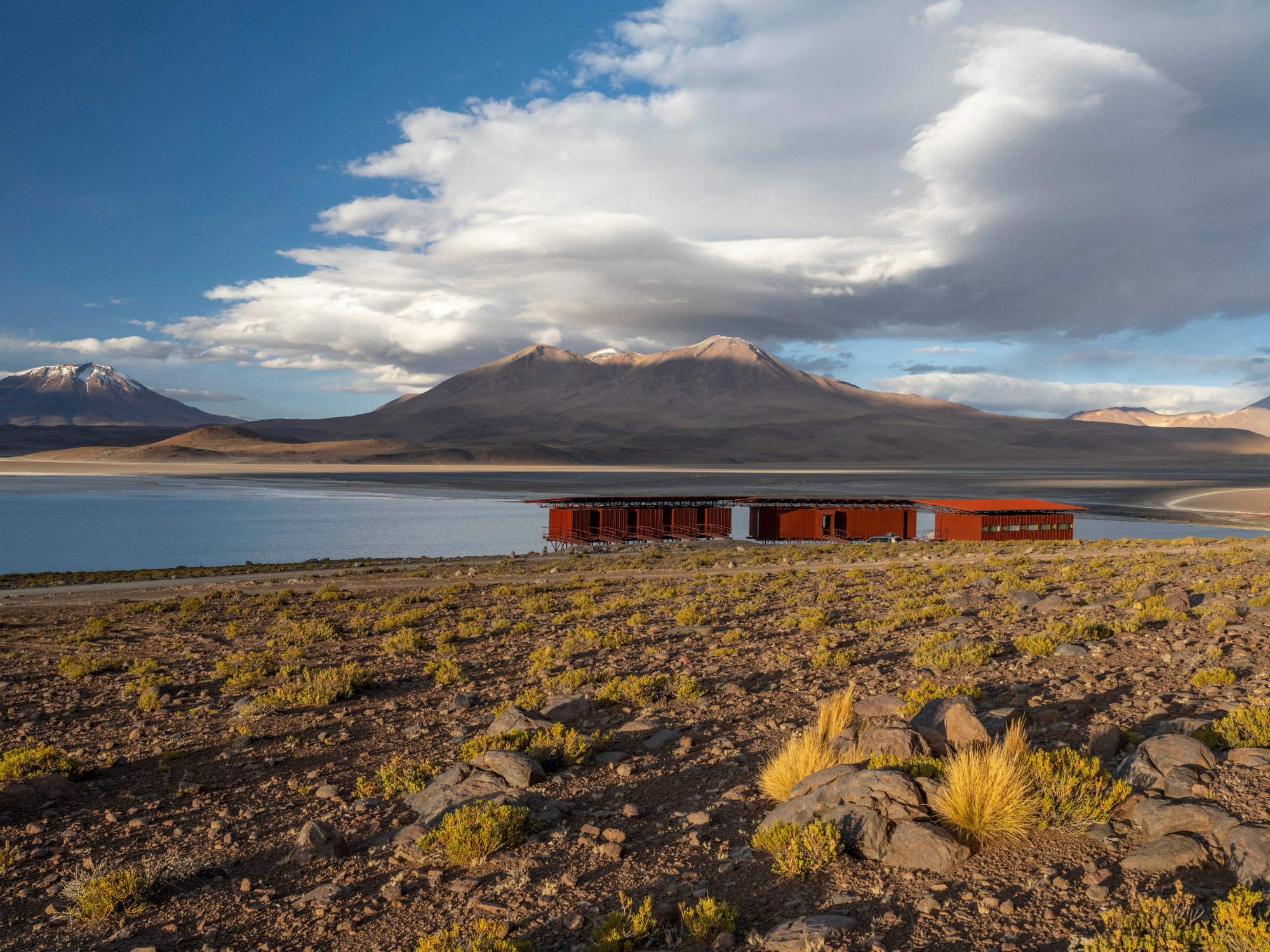
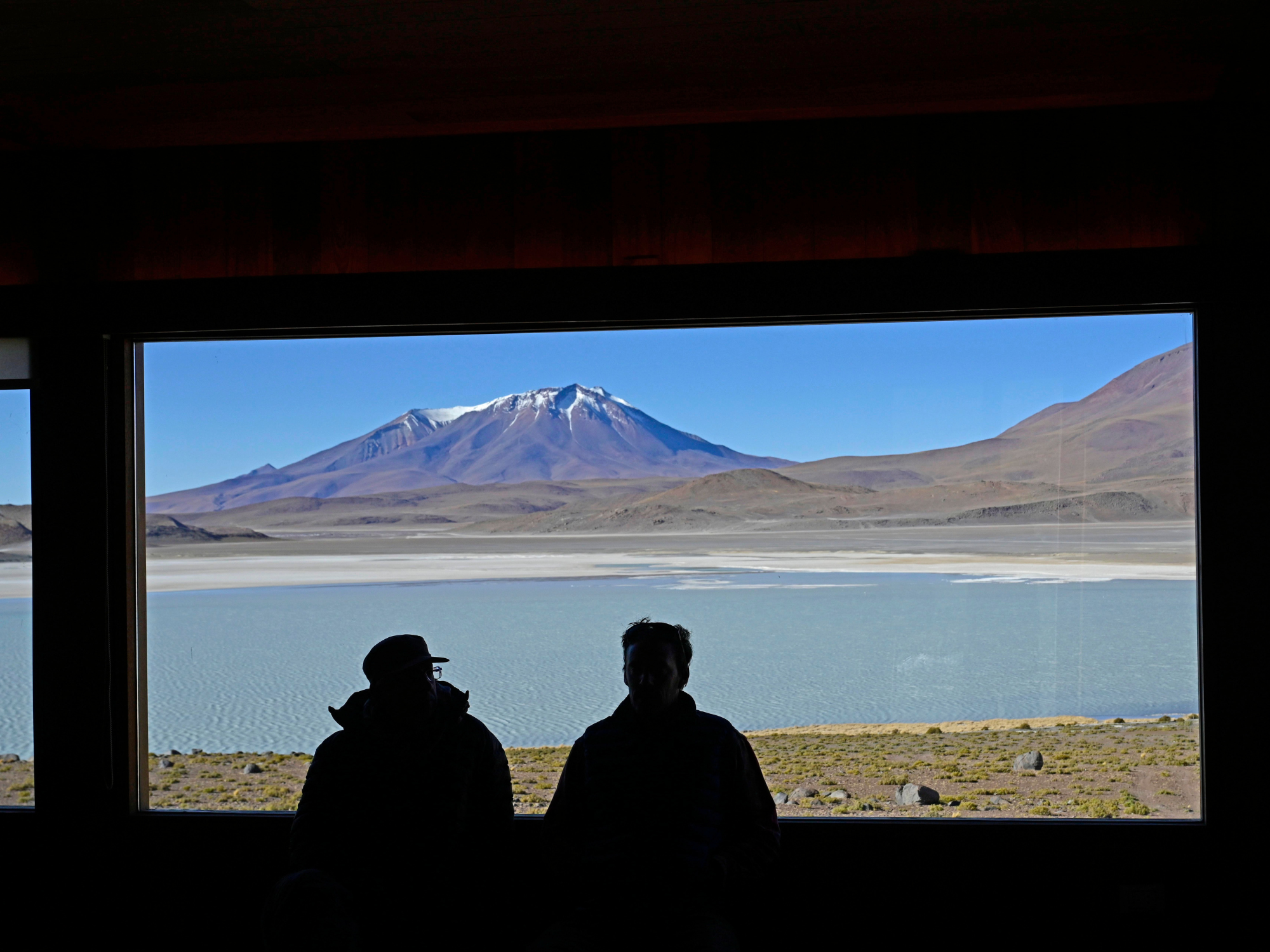
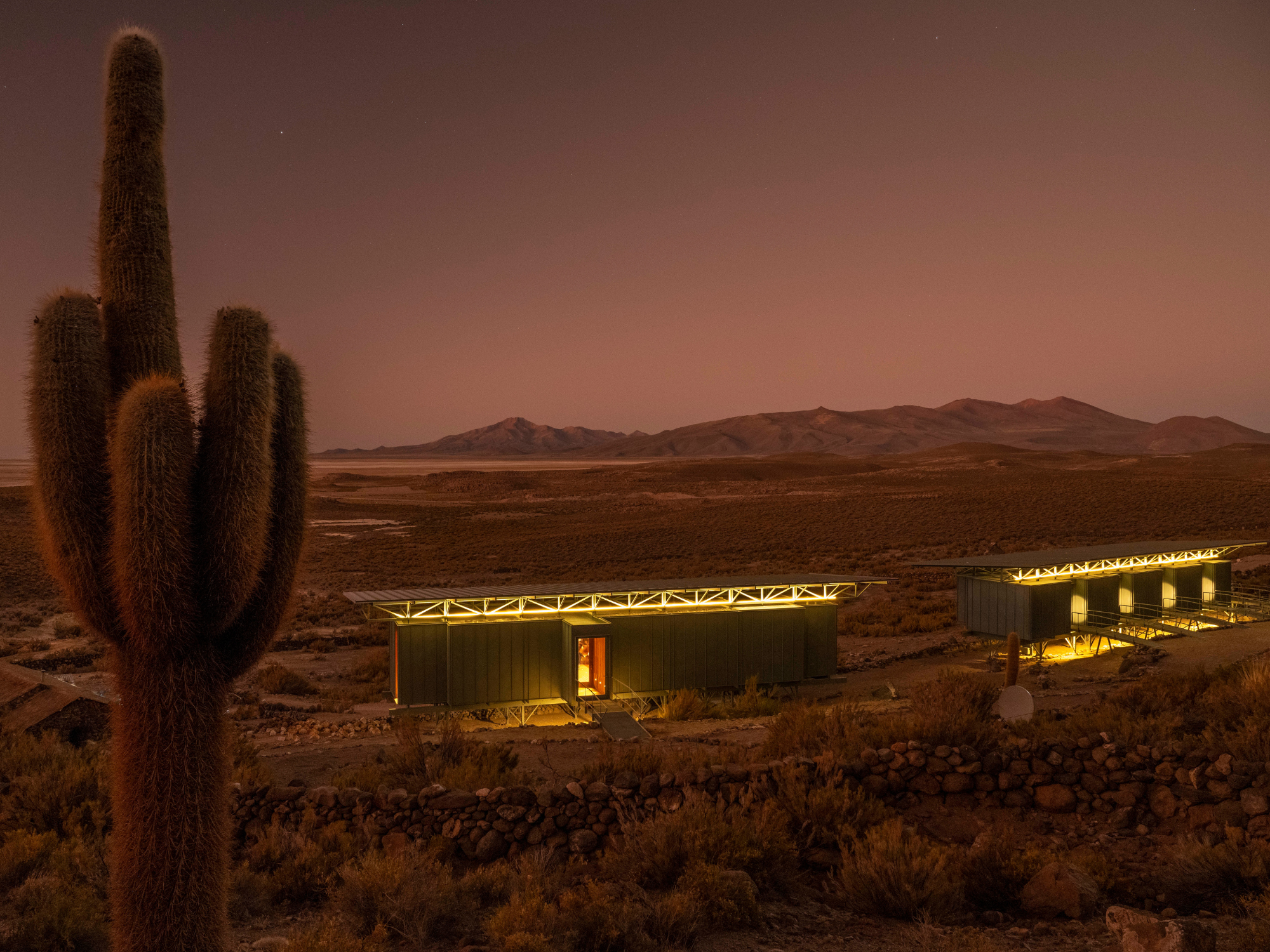
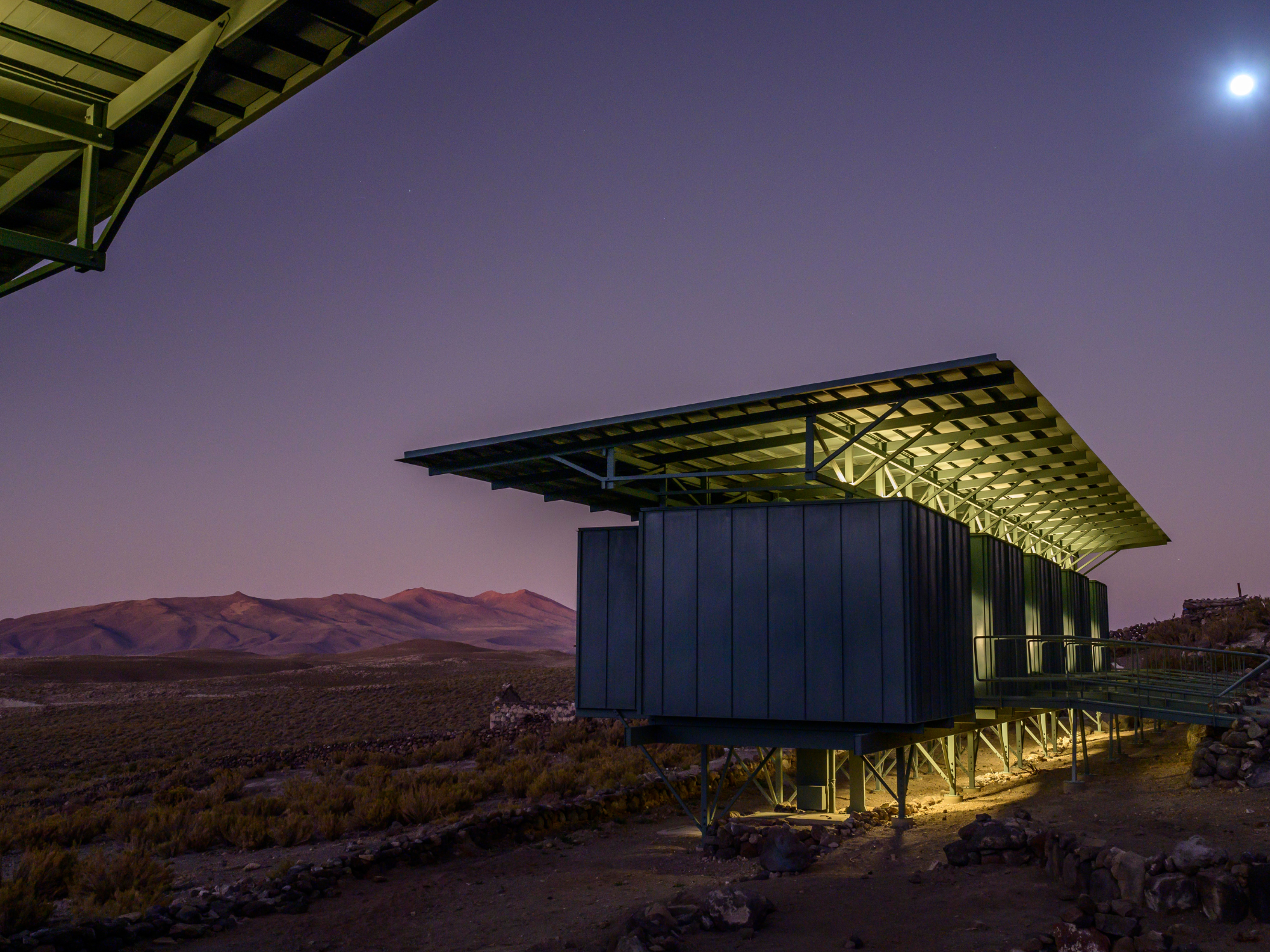
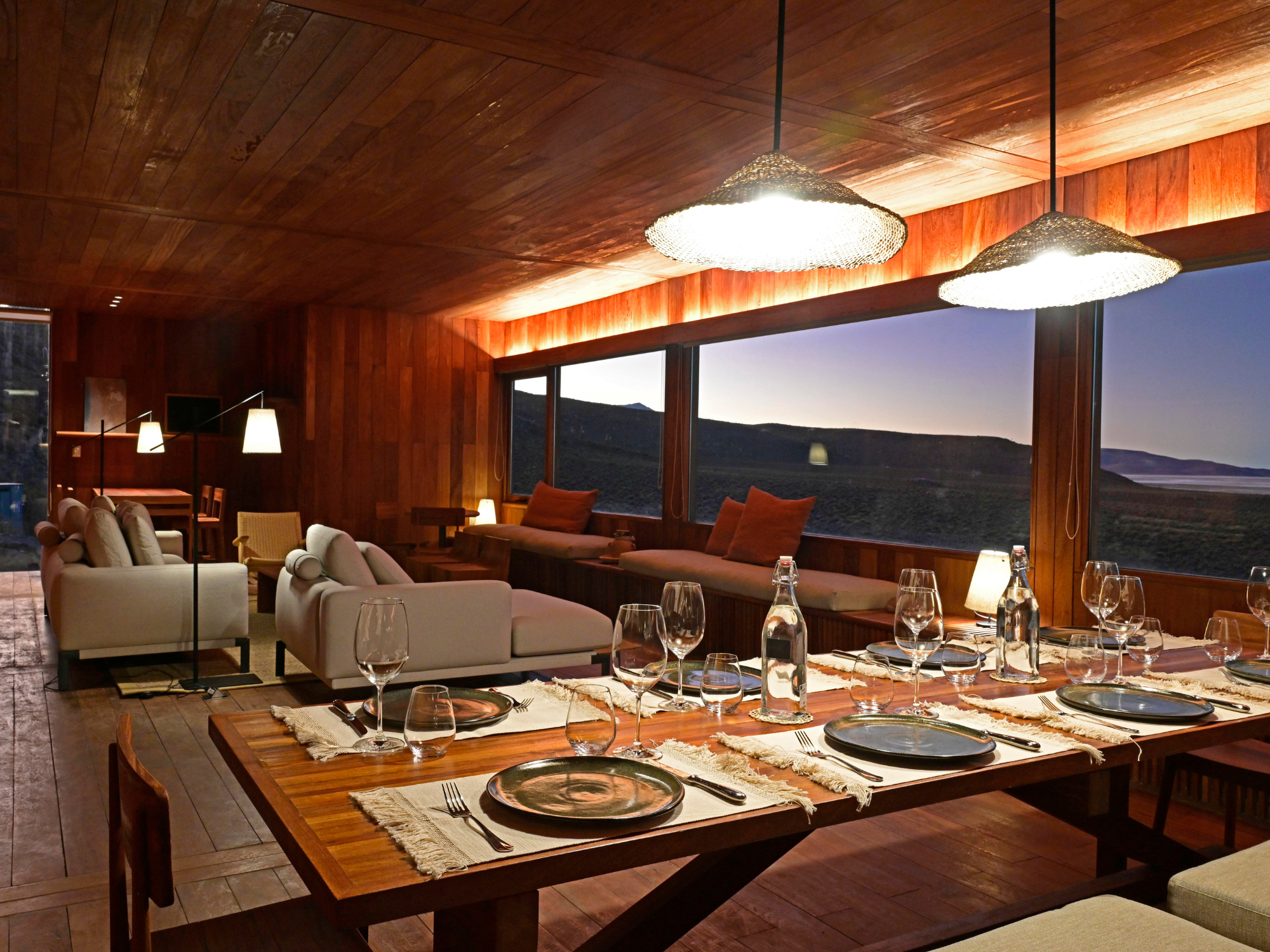
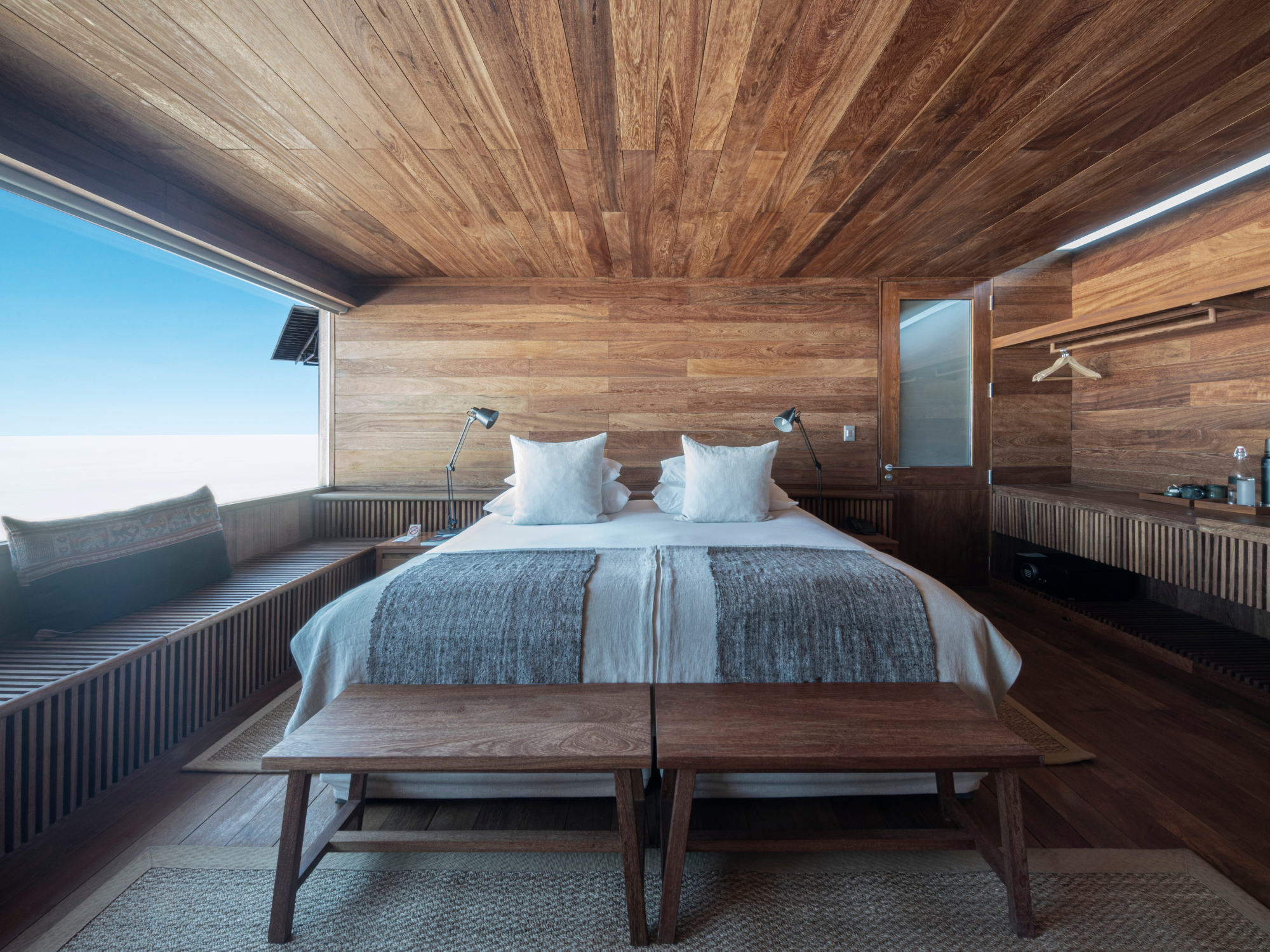
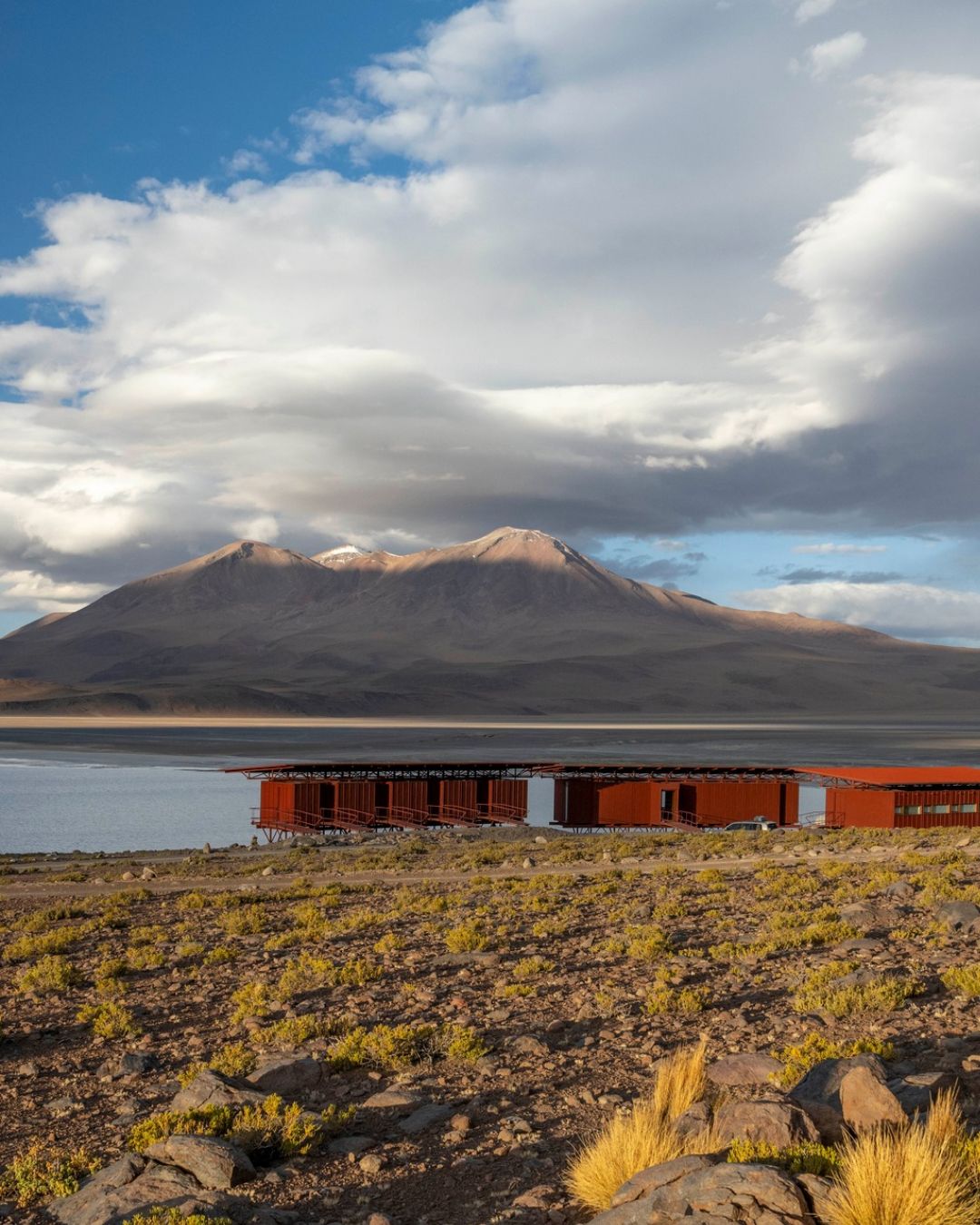
The first stop across the border and the highest lodge on the route at 13,370 feet above sea level, Ramaditas sits near the edge of Laguna Ramaditas, surrounded by volcanoes and multicolored lagoons in one of the most remote corners of the Altiplano. With just four rooms, it feels more like a private refuge than a conventional lodge. Inside, certified Bolivian mani wood covers the floors, walls, and ceilings, warming the bedrooms and shared living spaces, while craftspeople in Santa Cruz de la Sierra made much of the furniture from the same timber. The lodge’s lightweight, prefabricated structure was designed to limit its footprint on community-owned land, with a steel-clad exterior that stands up to the Altiplano’s punishing conditions and long horizontal windows angled toward Laguna Ramaditas. Wide views of the lagoon and peaks remain visible from indoors, so the landscape does not disappear when you return for dinner or settle into your room.
Built on land once used as a lookout by shepherds, Chituca is an intimate four-room mountain lodge with views extending toward the distant salt flats, located 12,244 feet above sea level. Its lounge and dining room become the evening's center, offering a warm place to share dinner and trade stories from the day before retreating to bedrooms kept deliberately simple. Outside, multicolored quinoa fields form geometric patches across the otherwise muted terrain, while old paths, abandoned settlements, and agricultural terraces reveal how generations have worked and traveled through this severe landscape. Small Quechua and Aymara communities remain part of that story, giving this stage of the crossing a more inhabited quality and a closer view of life in the Altiplano.
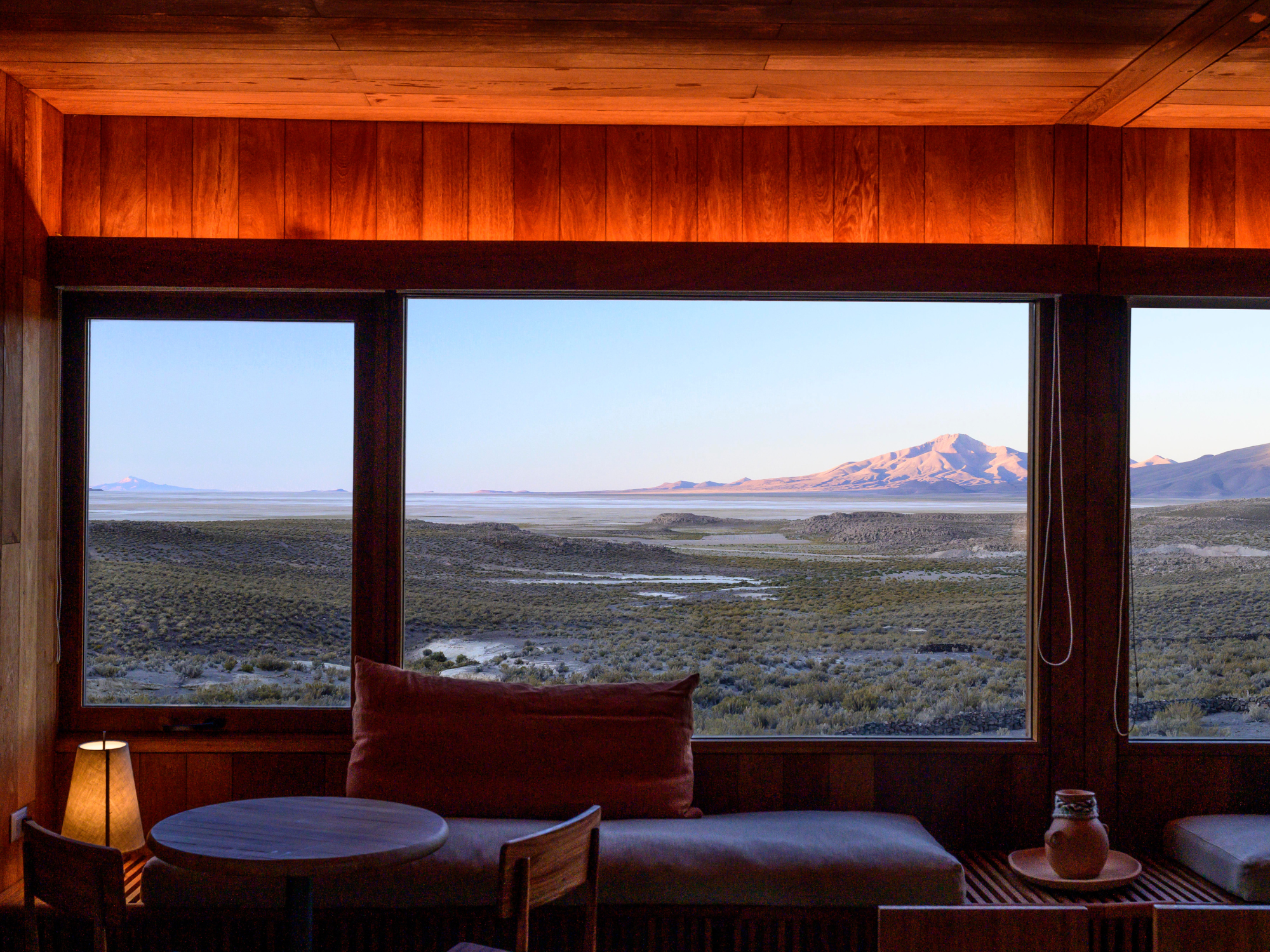
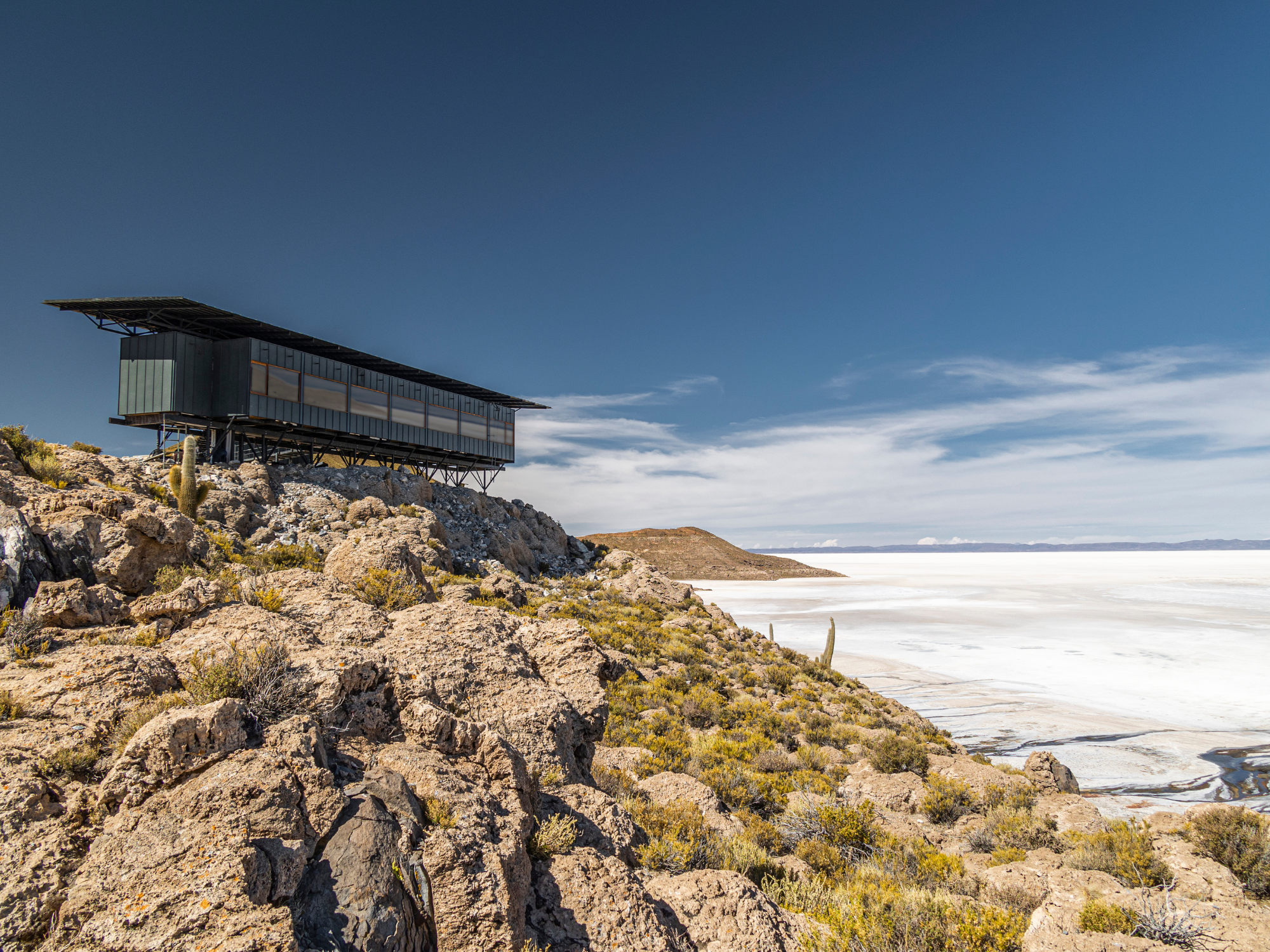
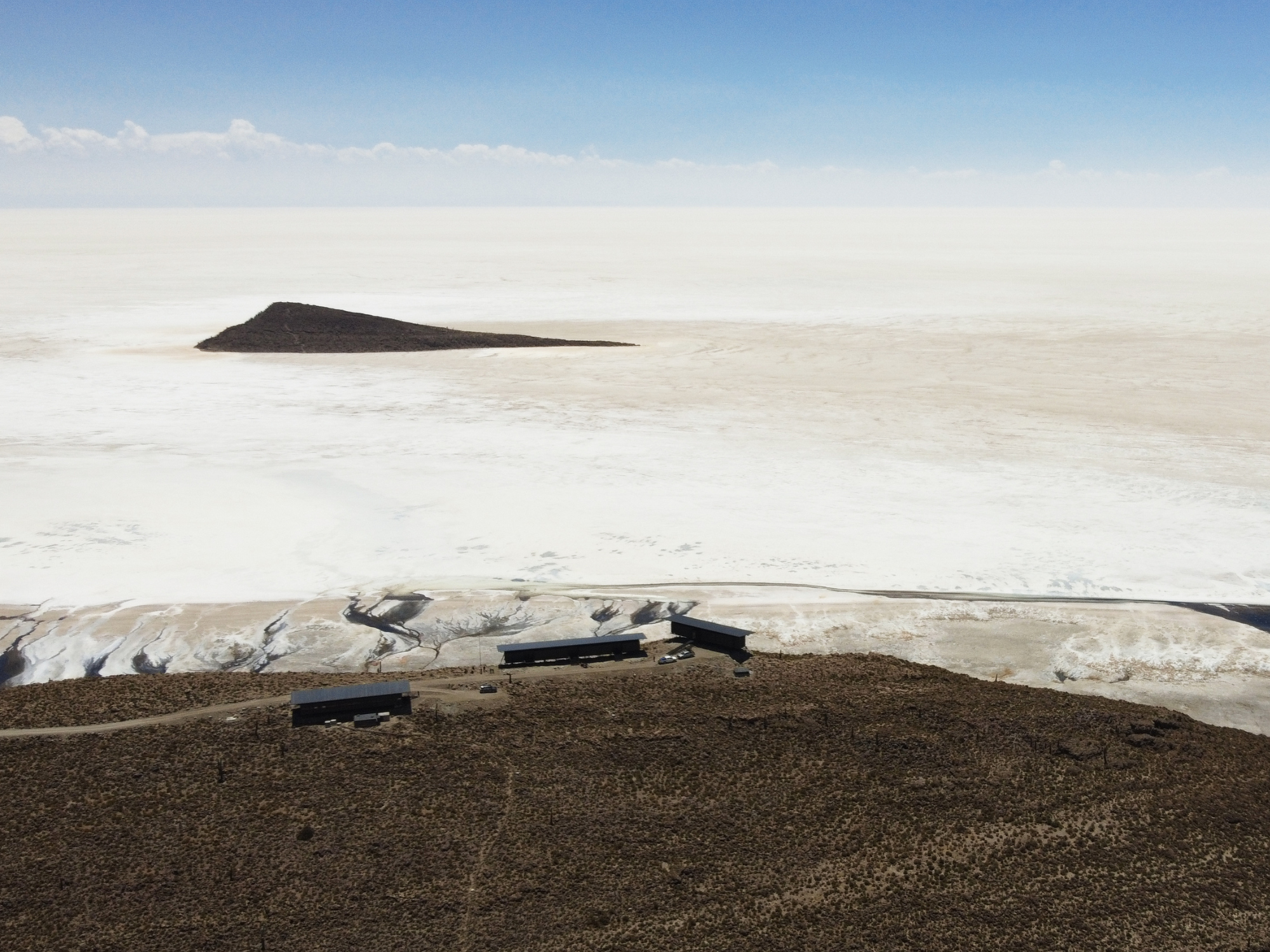
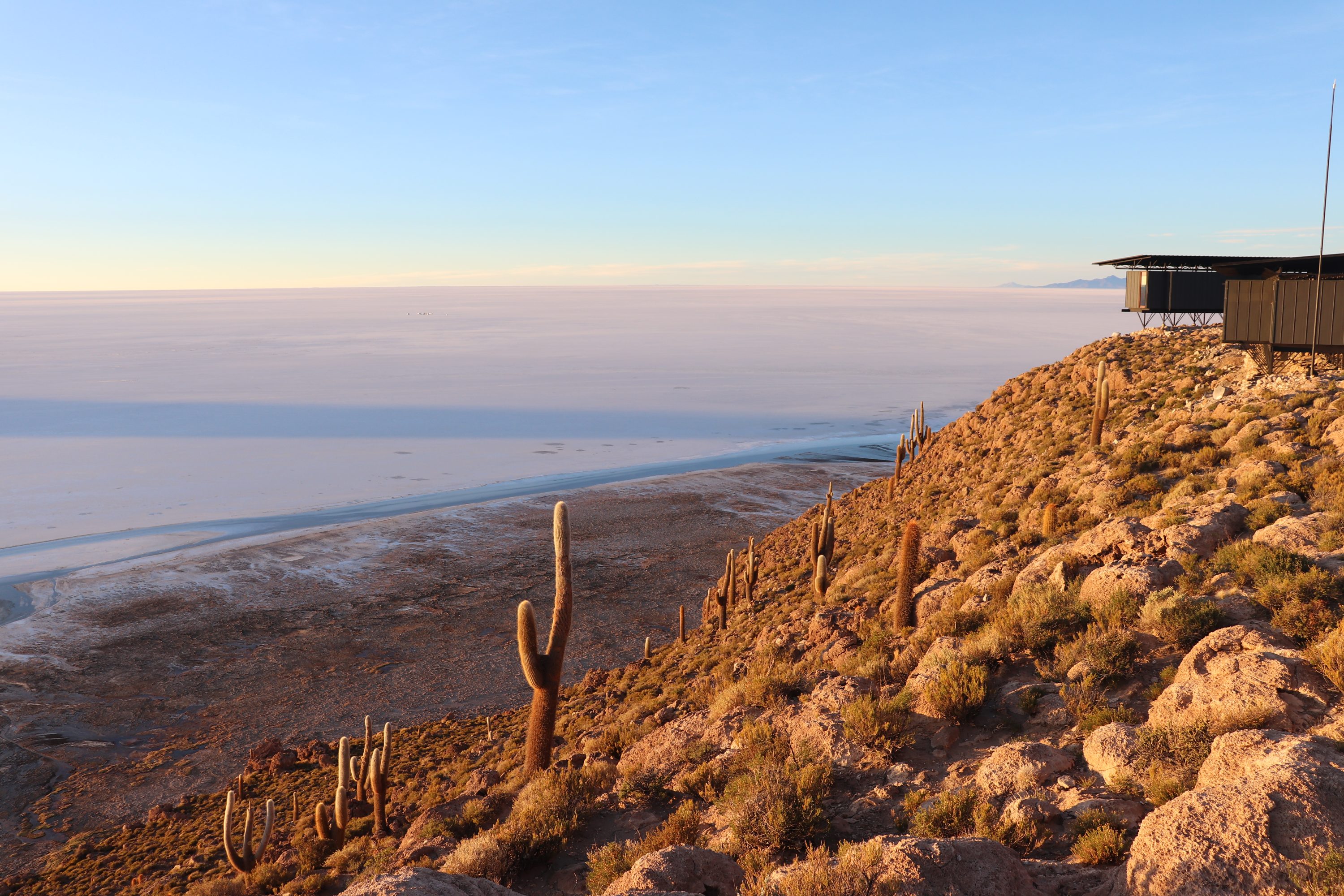
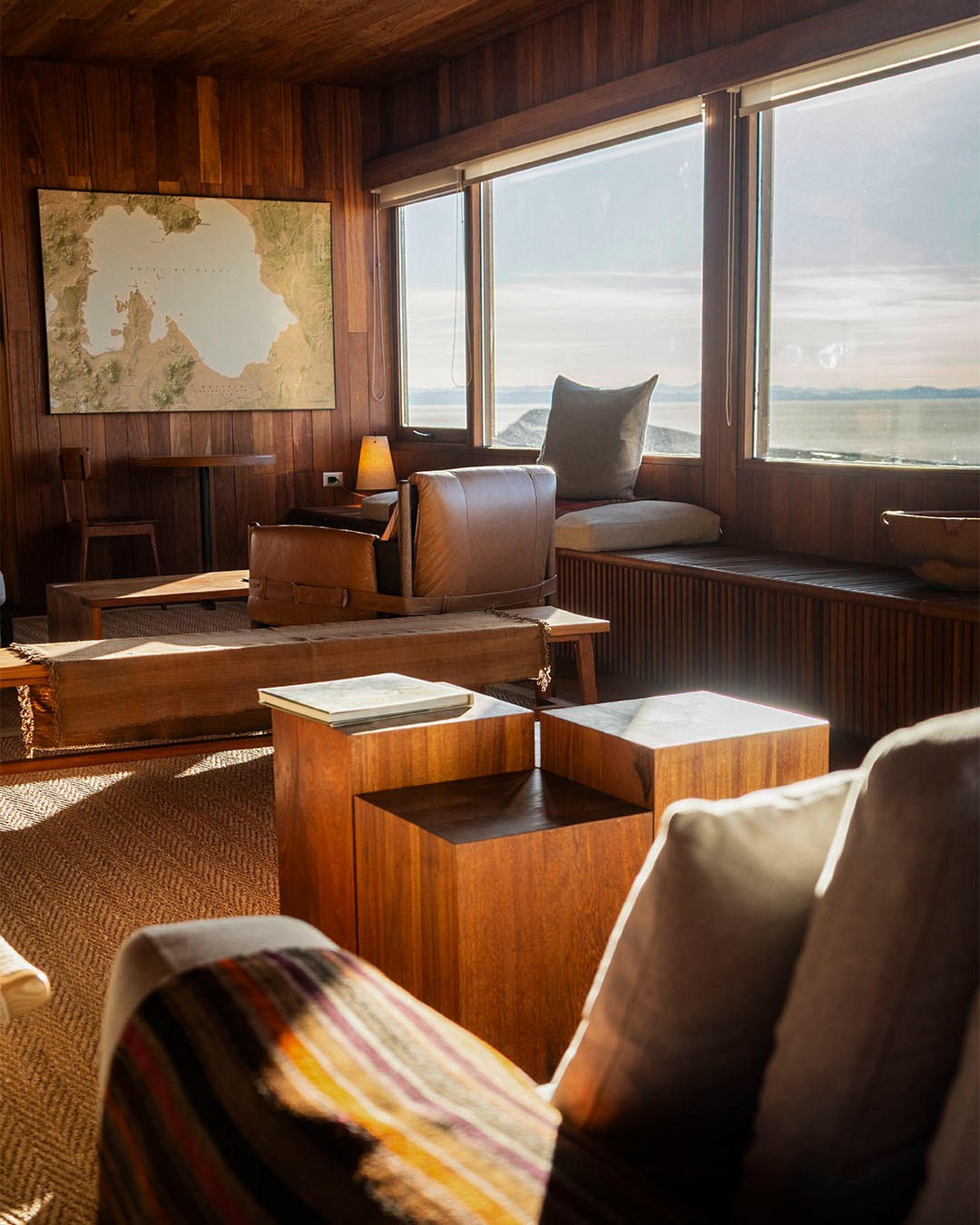
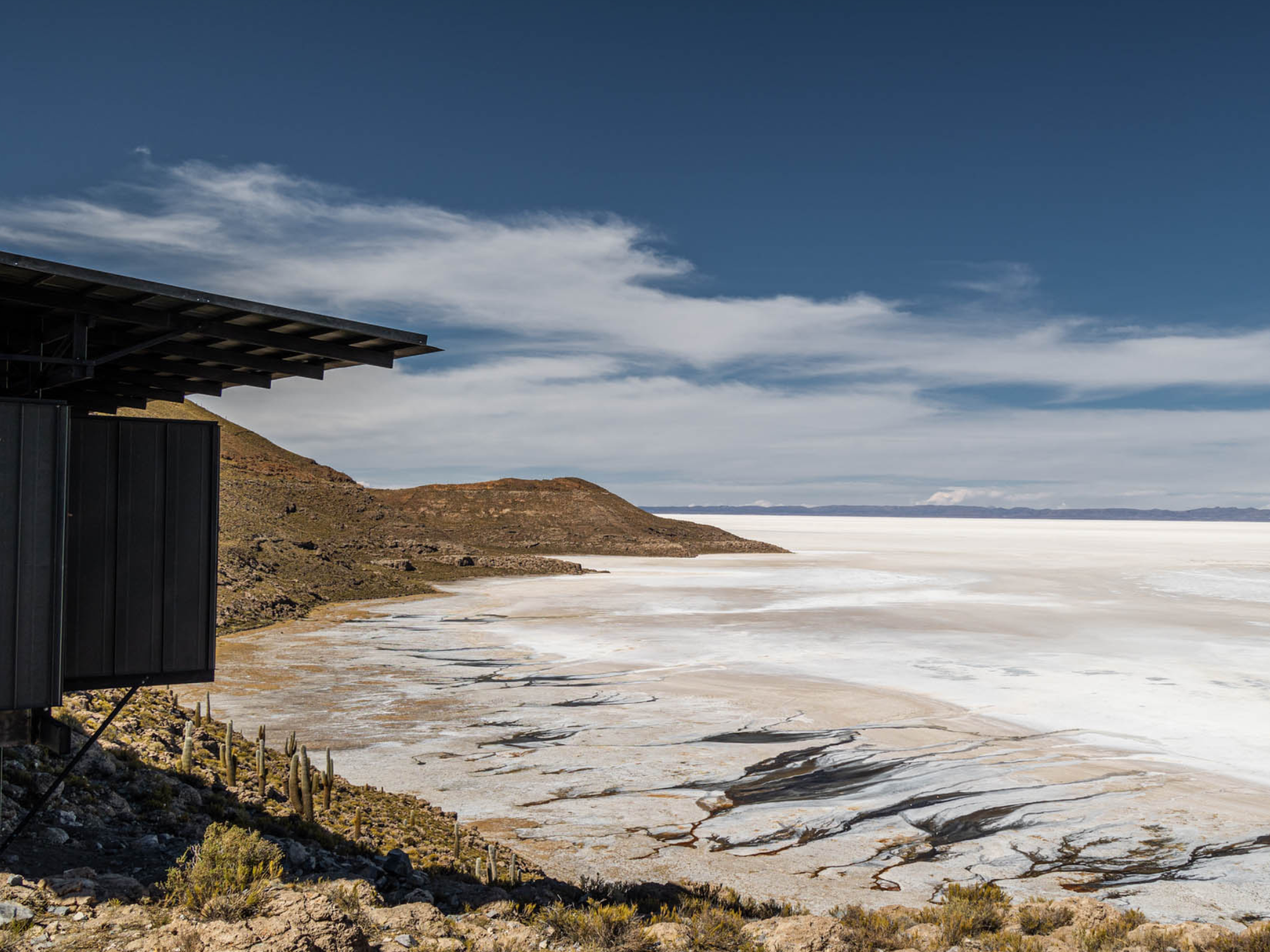
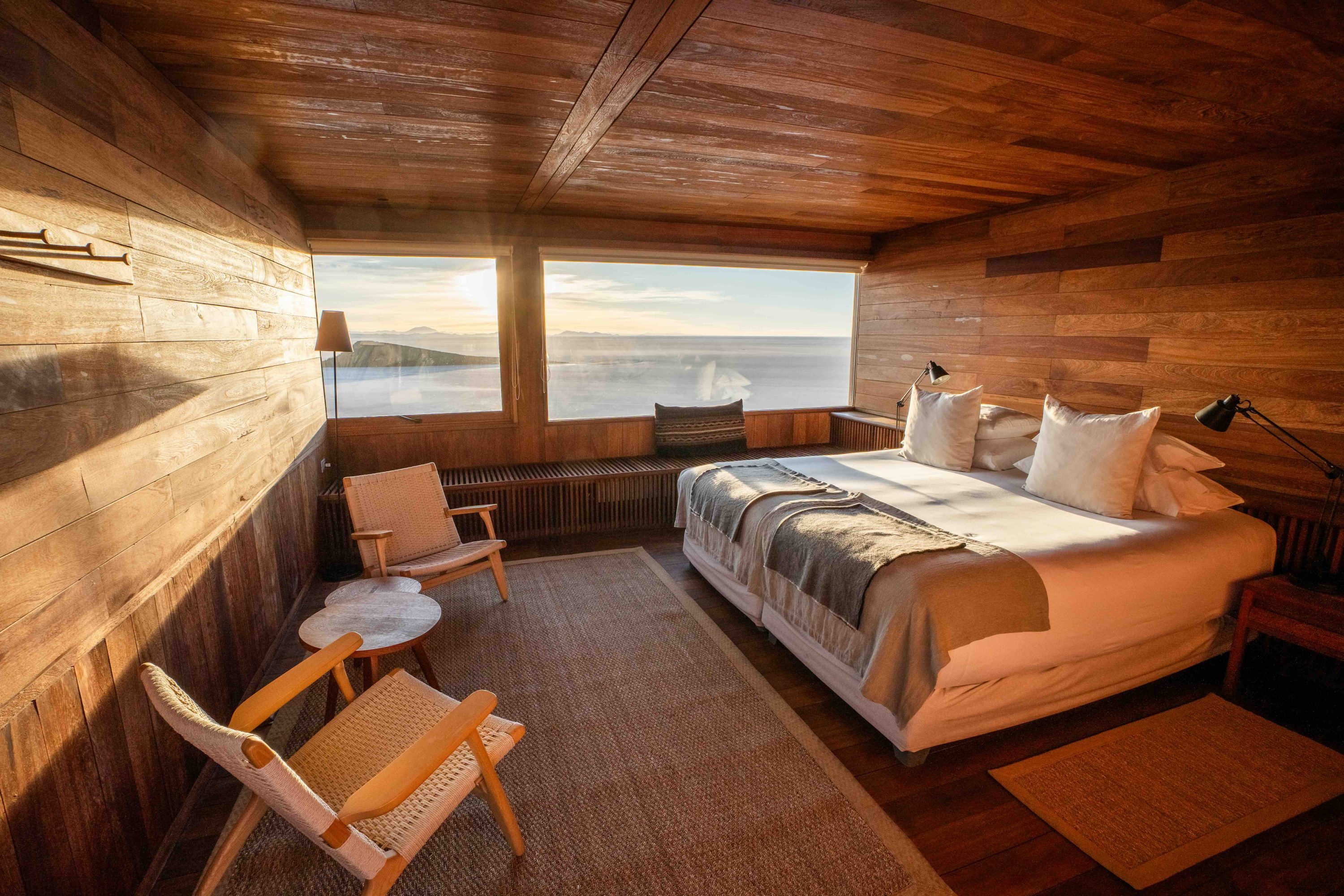
Tucked beneath the slopes of Tunupa Volcano on the northern edge of the Salar, this six-room mountain lodge sits at 12,077 feet above sea level, where the crossing reaches its most expansive horizon. Built low across the top of a rocky hill, the lodge features floor-to-ceiling windows and simple wood-paneled rooms that keep the salt flat in view, while its small scale keeps meals and evenings in the shared living spaces intimate, like a private expedition base. The salt flats are practically on the doorstep, ready to explore by e-bike, on foot, or in a four-wheel-drive vehicle with an Explora guide and local driver. At sunset, the white surface shifts through shades of blue, lavender, and pale gold; after seasonal rain, a thin layer of water can turn it into the enormous natural mirror for which Uyuni is known.
More
Highlights
See the green ribbon of the San Pedro oasis, the pale crust of the salt flat, and the Andes rising during your first hike.
Day 2
Cool off in the hot springs before spending the evening in a private observatory.
Day 3
See geothermal fields during a cross-border voyage.
Day 4
Eat lunch at Turquiri Lagoon while looking out over the high-altitude wetland.
Day 5
Have a formal meal in the middle of the world’s largest salt flats.
Day 6
Scale a volcano to take in the wild expanse of the land.
Day 7
ItineraryItinerary
1
San Pedro de Atacama, Chile
Welcome to the Atacama Desert
…the scale of northern Chile: long stretches of rust-colored earth, distant volcanic peaks, and almost no visible development between the airport and town.
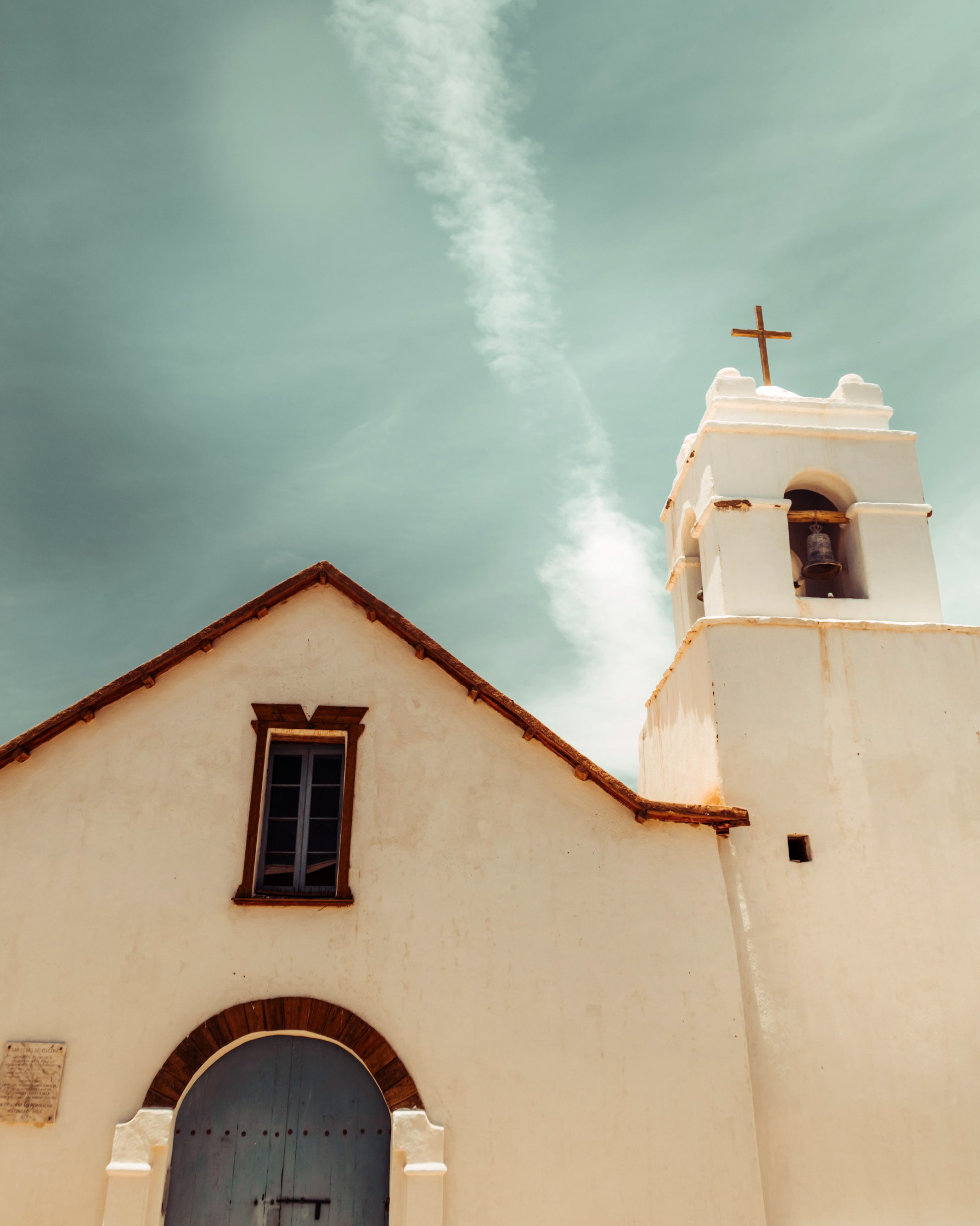
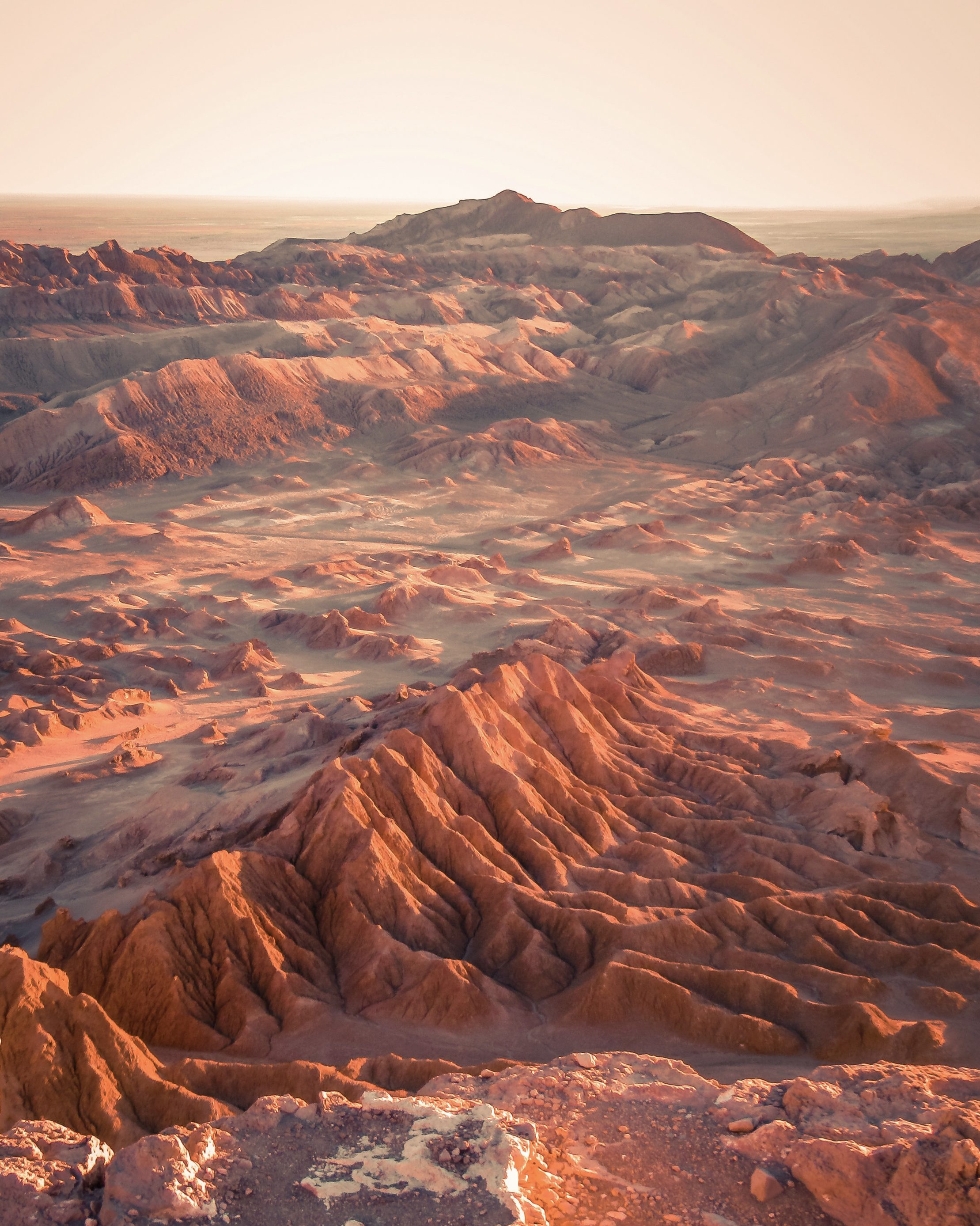
Arrive at El Loa Airport in Calama and travel roughly one and a half hours overland to San Pedro de Atacama, an adobe-built oasis set between the La Sal and Domeyko mountain ranges. The drive introduces you to the scale of northern Chile: long stretches of rust-colored earth, distant volcanic peaks, and almost no visible development between the airport and town. Explora Atacama occupies a 17-hectare estate within the historic Ayllu de Larache. Its grounds bring together twenty Indigenous parcels, and the lodge has retained timeworn pathways and existing structures rather than erasing the site’s earlier history. Among them is a restored adobe house and courtyard now used as the quincho, where shared barbecues are accompanied by Andean music and performances by local artists.
Keep the first afternoon intentionally light. Settle into the lodge, have lunch with a glass of Chilean wine, swim in one of the outdoor pools, or use the sauna and spa while your body adjusts to the elevation and dry climate. This is also a good time to pay closer attention to hydration and avoid starting with the most demanding high-altitude excursion. Later, meet your guide to review the lodge’s explorations and shape the coming days around your interests, whether that means hiking through canyons, riding across open desert, visiting salt flats, or looking for wildlife in the wetlands.
2
San Pedro de Atacama, Chile
Into the Vastness
After breakfast, your first full day begins in the Catarpe Valley with Cornisas, one of Explora Atacama’s introductory hikes, and perfect for your first full day at this higher altitude. The moderate five-mile route takes about three hours and follows the upper edges of the Cordillera de la Sal at elevations between 8,246 and 8,889 feet. From the ridge, you can see the green ribbon of the San Pedro oasis, the pale crust of the salt flat, and the Andes rising beyond it before descending across the dunes of Valle de Marte.
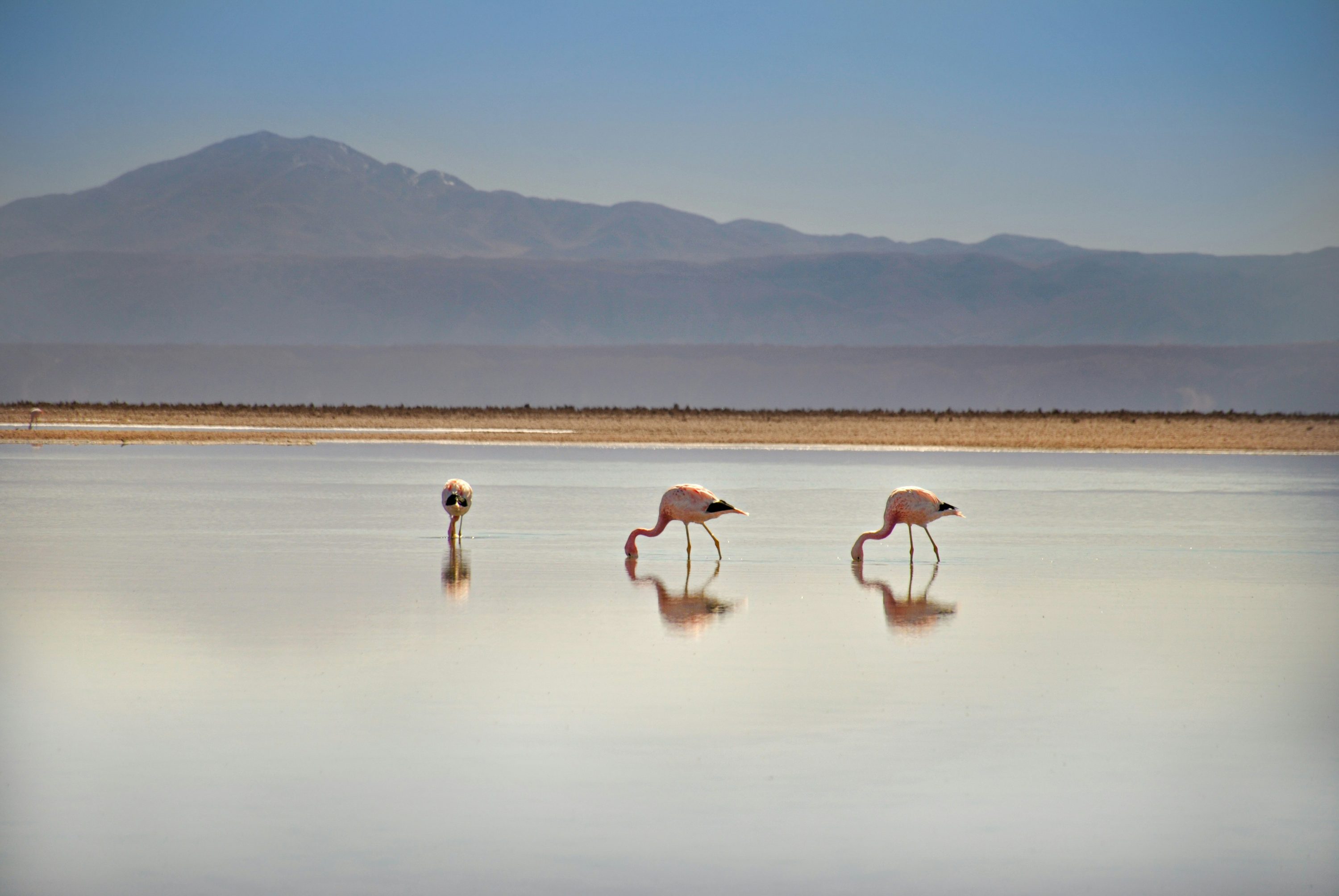
After lunch at the lodge, you can continue with the easy Gran Salar exploration, a four-and-a-half-hour excursion into the southern portion of Salar de Atacama. The drive crosses the salt basin to Chaxa Lagoon within Los Flamencos National Reserve, where a short one-mile walk follows the rough, fractured salt crust and shallow brine lagoons. Water descending from the Andes collects here because the basin has no outlet, creating feeding grounds for lizards, small birds, and flamingos. Chaxa is home to Andean, Chilean, and James’s flamingos, which wade through mineral-rich water against a backdrop of volcanoes. Finish the day with a meal looking out over the vistas you explored.
3
San Pedro de Atacama, Chile
The High Desert After Dark
After yesterday’s exposed ridges and salt basin, spend today in the narrower, greener landscape of the Puritama Conservation Reserve. The moderate Puritama hike begins at Guatín and climbs past giant cacti before descending into the river gorge, where the trail follows flowing water between steep rock walls, shrubs, and native vegetation. The route is just over three miles long, takes about four and a half hours, gains 1,073 feet, and reaches a maximum elevation of 11,608 feet. It finishes at Explora’s private Puritama Hot Springs, where a series of thermal pools follows the canyon floor and provides a natural place to stop and cool off after the hike.
After the excursion, the afternoon can remain quiet, with lunch, time beside the lodge’s pools, or a short rest before the evening’s astronomy program. When the sun sets, join Astronomía Andina, Explora’s hour-long guided astronomy exploration, held on most clear nights. The session begins outdoors with an introduction to orientation, astronomical distances, and the night sky’s place in local Atacameño culture. From there, move into the lodge’s private domed observatory, where the Meade LX200R telescope brings planets, stars, and deep-space objects into sharper focus.
4
Ramaditas, Bolivia
Crossing the Border
Leave San Pedro de Atacama before sunrise and drive to Hito Cajón, a stark border post at roughly 14,700 feet, beside Licancabur Volcano. The crossing is slow and practical: complete Chilean exit formalities, clear Bolivian immigration, and transfer from the Chilean vehicle to a four-wheel drive better suited to the unpaved tracks ahead. Keep your passport and any nationality-specific visa or entry documents within reach rather than packed in your luggage for this part of the journey. Conditions and processing times can vary, but Explora coordinates the crossing and leads the journey with an expert guide and local driver.
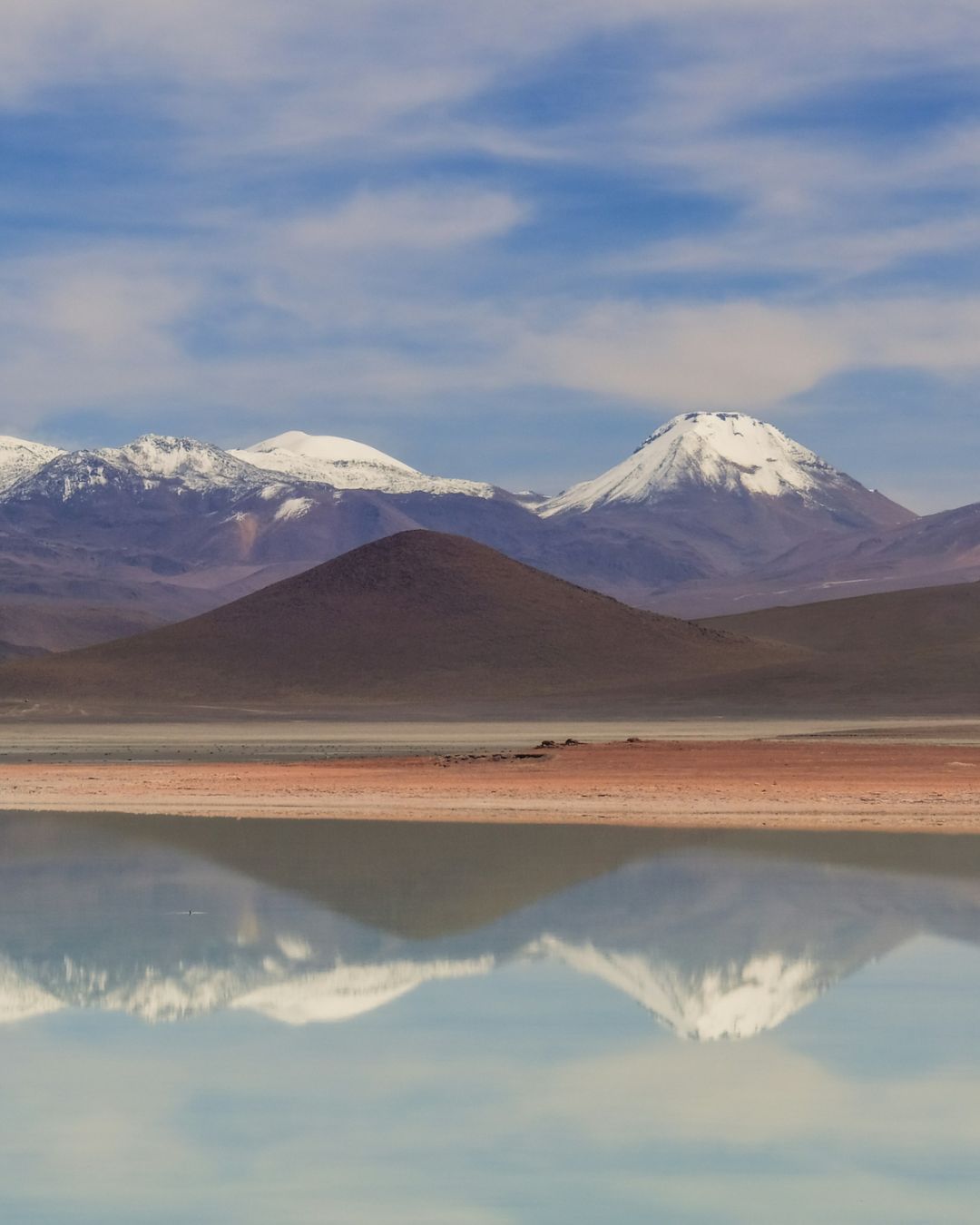
You’ll spend much of the day on the road, though “road” increasingly means gravel and tire-marked tracks across the plateau. The route enters the Eduardo Avaroa Andean Fauna National Reserve, where volcanoes rise above mineral lagoons. At Sol de la Mañana, about five hours into your drive, step out at about 16,100 feet, the day’s highest point. Spread across nearly four square miles, the geothermal field is punctuated by steam vents, bubbling mud pools, and mineral-streaked earth. Continue north to Laguna Colorada, a shallow hypersaline lake at 14,035 feet.
…the most welcome details may be the simplest ones: a hot dinner, a warm room, and no need to get back into the vehicle until morning.
Lunch is a picnic in the Altiplano, or high plain, rather than at a restaurant, allowing the route to continue without a long detour. By late afternoon, arrive at Explora Ramaditas Mountain Lodge, the highest overnight stop on the crossing at 13,370 feet. After a day reaching more than 16,000 feet, the most welcome details may be the simplest ones: a hot dinner, a warm room, and no need to get back into the vehicle until morning.
5
Chituca, Bolivia
Across the Altiplano
Leave Explora Ramaditas Mountain Lodge after breakfast for a full-day overland journey to Chituca. Plan to spend most of the day in transit, with several hours in the four-wheel-drive vehicle. The route tracks a gradual change in the Altiplano. Around Ramaditas, vegetation is sparse, and the plateau feels almost entirely uninhabited; farther north, wetlands, working fields, grazing animals, and small settlements begin to appear. Continue to Turquiri Lagoon, where the scenery becomes more sculptural. A short, guided walk follows the edge of the lagoon and an adjoining bofedal, a high-altitude wetland fed by groundwater and snowmelt. These saturated grasslands provide vital grazing for llamas and goats in an otherwise dry environment and continue to support one of the region’s traditional pastoral livelihoods.
Lunch is served above the lagoon, where the higher ground provides a broad view across the land you’ve traversed. After lunch, you’ll continue across the smaller Salar de Chiguana toward Chituca, where you’ll arrive at Explora Chituca Mountain Lodge. Multicolored quinoa plots, agricultural terraces, nearby villages, and traces of former settlements replace the largely empty volcanic plateau of the previous night. The lounge and dining room face the Altiplano and distant salt flat, becoming a communal place for dinner before everyone retreats to a heated, intentionally simple bedroom.
6
Jirira, Bolivia
The Salt Flats Come into View
Before settling into the vehicle for the day, follow Explora’s gentle two-mile walk into the hills around Chituca. The roughly ninety-minute route passes native vegetation and quinoa plots before climbing high enough to look back across the lodge’s surrounding valleys. From here, the journey continues toward San Pedro de Quemes, where the division between the village’s roofless stone ruins and newer settlement is immediately visible. Afterward, leave Explora Chituca Mountain Lodge after breakfast for the longest overland stage of the crossing, a full-day route that spans 180 miles across the southern Altiplano to Jirira. The journey takes an estimated ten hours, including stops for meals, sightseeing, and short guided walks.
After a stop at the cave, the route opens onto the Salar de Uyuni, the world’s largest salt flat. It covers about 4,086 square miles and sits about 12,000 feet above sea level.
Continue to Gruta de las Galaxias, a compact underground cave system near the community of Aguaquiza that gained wider attention after its discovery in 2003. A nearby archaeological area contains chullpas, or pre-Inca burial structures. After a stop at the cave, the route opens onto the Salar de Uyuni, the world’s largest salt flat. It covers about 4,086 square miles and sits about 12,000 feet above sea level. Explora prepares lunch and serves it in the middle of the Salar. Tables and seating are arranged directly on the salt when weather permits, creating a remarkably formal meal in a setting with no walls, road signs, or development in sight.
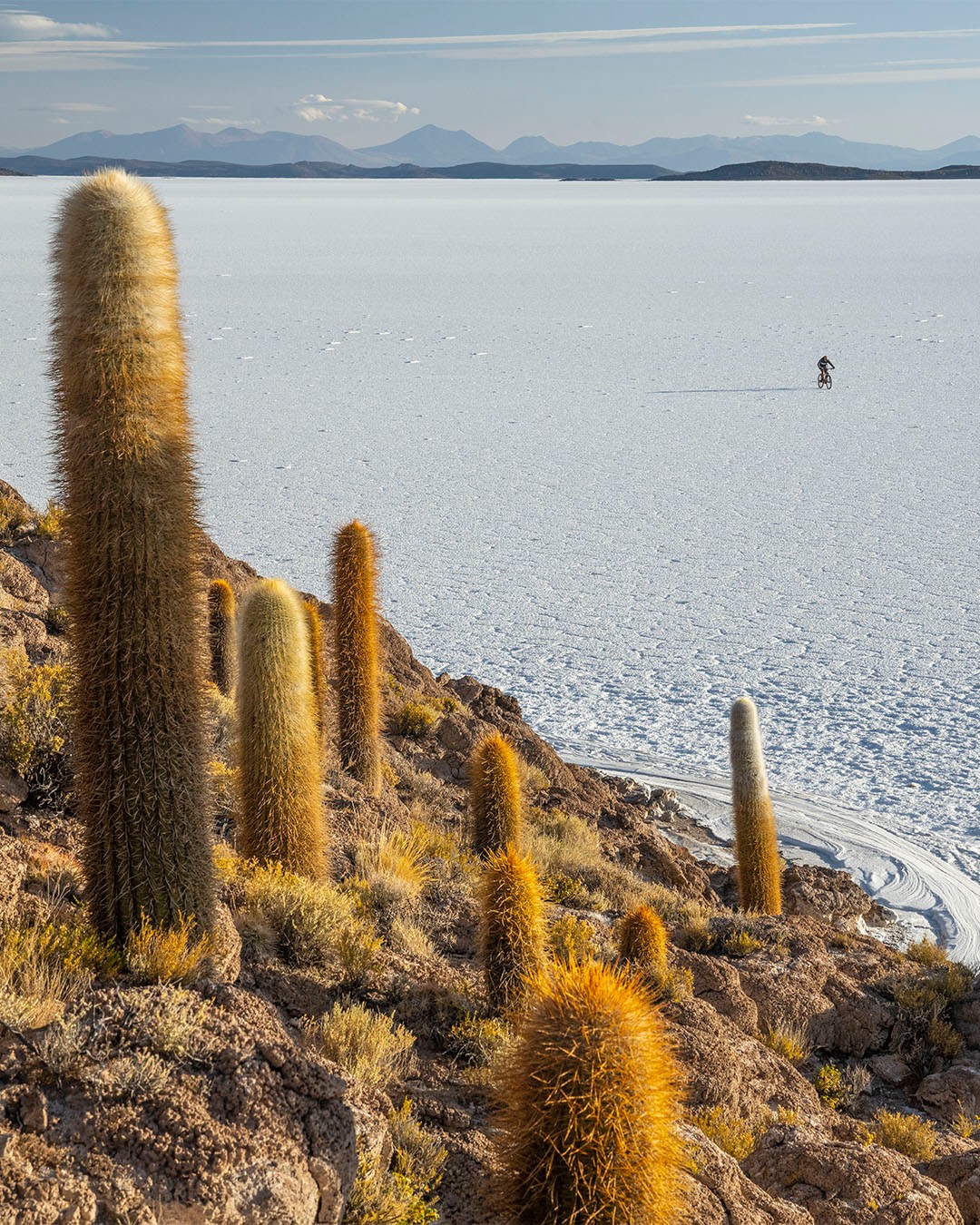
You’ll then head to Isla del Pescado for a walk across one of the Salar’s cactus-covered volcanic outcrops. By late afternoon, reach Explora Jirira in Uyuni, positioned on a rocky hill beneath Tunupa Volcano along the Salar’s northern edge. The lodge partners with local families, and its location near Jirira provides access not only to the Salar but also to surrounding villages, quinoa fields, wetlands, archaeological sites, and Tunupa’s slopes. After spending most of the day traveling nearly 180 miles across the Altiplano, dinner is served at the lodge, with the salt flat directly below and the volcano rising behind it.
7
Jirira, Bolivia
Beneath Tunupa
Wake to the Salar de Uyuni spread below the lodge, then set out for Colores del Tunupa, a full-day excursion with no time in a car. Ascend
the volcano Tunupa, which rises directly behind Jirira. The advanced seven-mile hike takes approximately nine hours and requires prior acclimatization. The route reaches roughly 16,700 feet, although Tunupa’s summit rises higher, to approximately 17,822 feet. This is a significant high-altitude outing, so the final distance and turnaround point depend on the group’s pace, physical condition, and the day’s weather.
This adds an important cultural layer to the hike: because the trail crosses communal land and a culturally sensitive burial area, the presence of the local guide is integral to the experience.
Begin in the village of Coquesa, where an Explora guide is joined by a local guide for the climb along a communal trail. The route rises through Tunupa’s lower slopes before entering bands of exposed volcanic rock in rust, ochre, violet, and pale green. The ascent also passes through burial chambers built into natural caves that preserve tomb systems. This adds an important cultural layer to the hike: because the trail crosses communal land and a culturally sensitive burial area, the presence of the local guide is integral to the experience. Lunch will be served on the go during this hike. For travelers who do not want to undertake the full ascent, the moderate Wila Khollu hike offers a more manageable but still detailed look at the area around the lodge. The nearly three-mile route takes about four hours.
Return to Coquesa and continue to Explora Jirira in the late afternoon. Back at the lodge, Tunupa’s colors deepen as the sun lowers, while the Salar gradually shifts from bright white to pale gold, blue, and lavender. After the climb’s physical demands, dinner and an evening in the lodge’s shared living room offer a simple end to the day.
8
Uyuni, Bolivia
One Last Look at Uyuni Before Departure
Your SmartFlyer travel advisor will ensure that you have a later flight so that you can use the morning for one final look at the landscape around Explora Jirira. For hiking lovers, you can take a short Jirira hike that begins at the lodge and descends toward the Salar before circling the peninsula beneath Tunupa Volcano. The two-mile trail passes cacti and exposed rock formations, with views toward K’ajchi Island and occasional flamingos along the wetlands. For a more relaxed final day, remain at the lodge for breakfast with Tunupa behind you and the salt flat filling the windows.
Because the drive from Jirira to the Uyuni airport covers roughly 120 miles of remote terrain, allow at least three and a half hours in favorable conditions—it can take up to five hours. Depart from Joya Andina Airport (UYU), the small domestic airport serving Uyuni. Current nonstop service is limited to La Paz (LPB), with a flight time of approximately one hour; international journeys require an onward connection. Your advisor will ensure you have time to reach the airport for your flight in each season.
From Singapore’s gleaming skyline to Bali’s sun-drenched coastline and Ubud’s forested interior, this nine-day itinerary reveals three distinct sides of...
Peru’s many iterations reveal themselves through dramatic changes in altitude, landscape, and pace. Over twelve days, this customizable journey moves...