Undersung Asia: Alia’s Guide to the Extraordinary
The most memorable Alila stays begin with a connection to the carefully selected surroundings.
Across Asia, each Alila address is shaped by its setting, with architecture responding to topography and interiors drawing from regional materials, craftsmanship, and traditions. The brand’s roots in the continent spans five distinct landscapes: Alila Kothaifaru Maldives among the coral reefs of Raa Atoll, Alila Ubud above Bali’s rainforest, Alila Fort Bishangarh within a restored eighteenth-century fortress in Rajasthan, Alila Shanghai beside the historic Zhangyuan neighborhood, and Alila Villas Uluwatu along the limestone cliffs of the Bukit Peninsula. Together, the collection offers distinct ways to experience Asia in culmination with the places and people that define it.
Founded in Bali in 2001, Alila built its philosophy around three principles: design anchored in local culture, preservation of regional heritage, and environmental responsibility. Today, those steadfast commitments are reflected in practical operational systems across the portfolio, from climate-responsive architecture and habitat conservation to water stewardship and partnerships that support surrounding communities. But it’s the nature that surrounds them that makes it all possible—a notion evident when you examine details down to how the morning dew rises from the Ayung River Valley, granite fort walls stand above the Aravalli Hills, and restored shikumen lanes sit tucked into Shanghai’s Jing’an District.
-
-
At Alila Ubud and Alila Villas Uluwatu, which are thirty-five miles apart, closed-loop waste systems divert organic waste through composting while glass, plastic, and other materials are repurposed on site. Local and reclaimed materials appear throughout the architecture, alongside passive cooling strategies such as natural ventilation, energy-efficient windows, and green roofs where appropriate. Programs including the Giving Bag, which redistributes clothing and everyday essentials donated by guests through local charities, extend that philosophy beyond the buildings themselves.
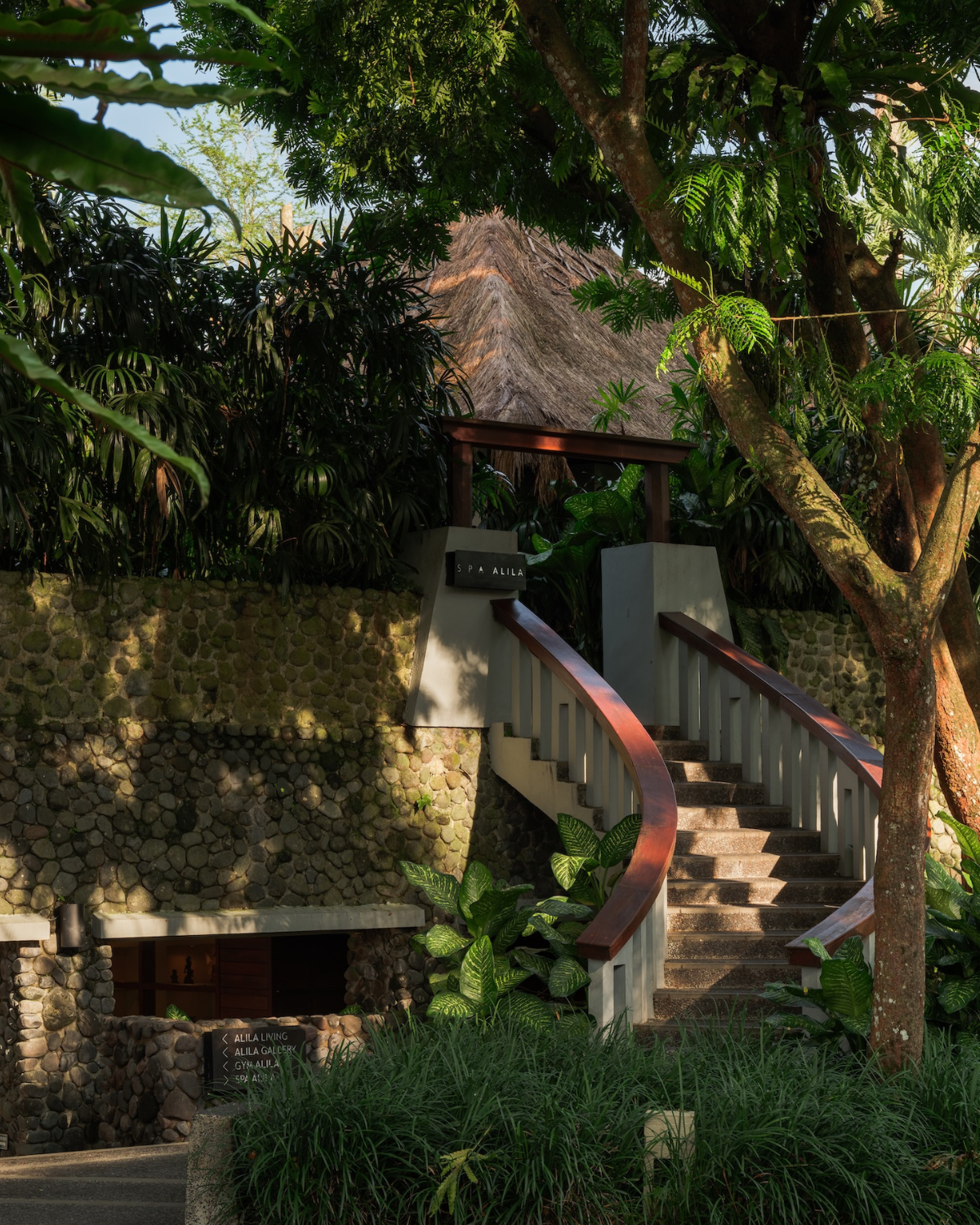
At each property across the brand, treatments at Spa Alila and the culinary offerings draw from the traditions, ingredients, and knowledge of each property’s surroundings. Treatments incorporate regional healing practices, native botanicals, and locally inspired techniques, while dining reflects the landscapes beyond the table—whether through island-grown produce, traditional recipes, or partnerships with local farmers and producers. Together, these experiences offer another way to understand a destination, connecting wellness and cuisine to the history, culture, and resources of each locale.
…these experiences offer another way to understand a destination, connecting wellness and cuisine to the history, culture, and resources of each locale.
The brand’s signature Alila Moments follow the same approach, drawing on local practices—whether learning coconut leaf weaving from Maldivian artisans, following ancient irrigation channels with Balinese guides, or meeting craftspeople whose skills have been handed down through the generations. Those drawn to Alila aren’t usually looking to collect passport stamps for country count’s sake alone. They’re looking to understand them—through the rhythm of a reef, the history of a hillside village, or conversations with the people who’ve called these landscapes home for generations.

Alila Kothaifaru Maldives
Arrival at Alila Kothaifaru Maldives begins with a seaplane flight from Malé, tracing the coral formations of Raa Atoll. From above, the archipelago resolves into reef rings enclosing shallow lagoons, shifting sandbanks, and densely vegetated islands scattered across the Indian Ocean. Occupying a secluded island in the atoll, the property comprises eighty villas—forty-four on the beach and thirty-six over the water. The Sunrise and Sunset villas each offer their own private pools, steps directly into the lagoon, and outdoor decks for lazing on. The architecture follows the island’s natural contours, placing beach villas among native coastal vegetation and extending overwater villas across the lagoon. Pale timber, woven textures, and natural stone mirror the surrounding landscape, while every villa opens onto a private pool and ocean views.
Life here revolves around the reef. Paddleboards skim across morning water before snorkeling and diving on the house reef, where coral shelters hawksbill turtles, reef sharks, moray eels, eagle rays, and schools of butterflyfish and fusiliers. Beyond the island, seasonal excursions allow guests to visit manta ray cleaning stations and deeper channels frequented by larger pelagic—or anything living in deep water—species.
The Maldives’ cultural traditions are equally present during your stay at Alila Kothaifaru Maldives. Bodu Beru, the country’s centuries-old drumming and dance tradition, accompanies evenings on the island, while the “Art of Coconut” Alila Moment explores how one of the archipelago’s most abundant natural resources is transformed into baskets, ornaments, and everyday objects using techniques refined over generations. Another signature experience, “Living Like a Local,” includes spending a day on a neighboring inhabited island, introducing you to family homes, community life, and customs beyond the postcard image of the Maldives.
The architecture follows the island’s natural contours, placing beach villas among native coastal vegetation and extending overwater villas across the lagoon.
A short boat ride leads you to The Shack, a private sandbank surrounded by views of the Indian Ocean, where lunch is served near crystal-clear water. Back on the island, Spa Alila sits among the treetops; its treatment rooms are surrounded by tropical foliage for true nature-led restoration. As evening approaches, be sure to keep an eye out to the ocean to spot spinner and bottlenose dolphins who often appear offshore. Under the right conditions, nearby Vaadhoo Island glows with the celebrated Sea of Stars, as blooms of bioluminescent phytoplankton illuminate each incoming wave with electric-blue light—a phenomenon that’s impossible to schedule and unforgettable when witnessed.
Alila Ubud
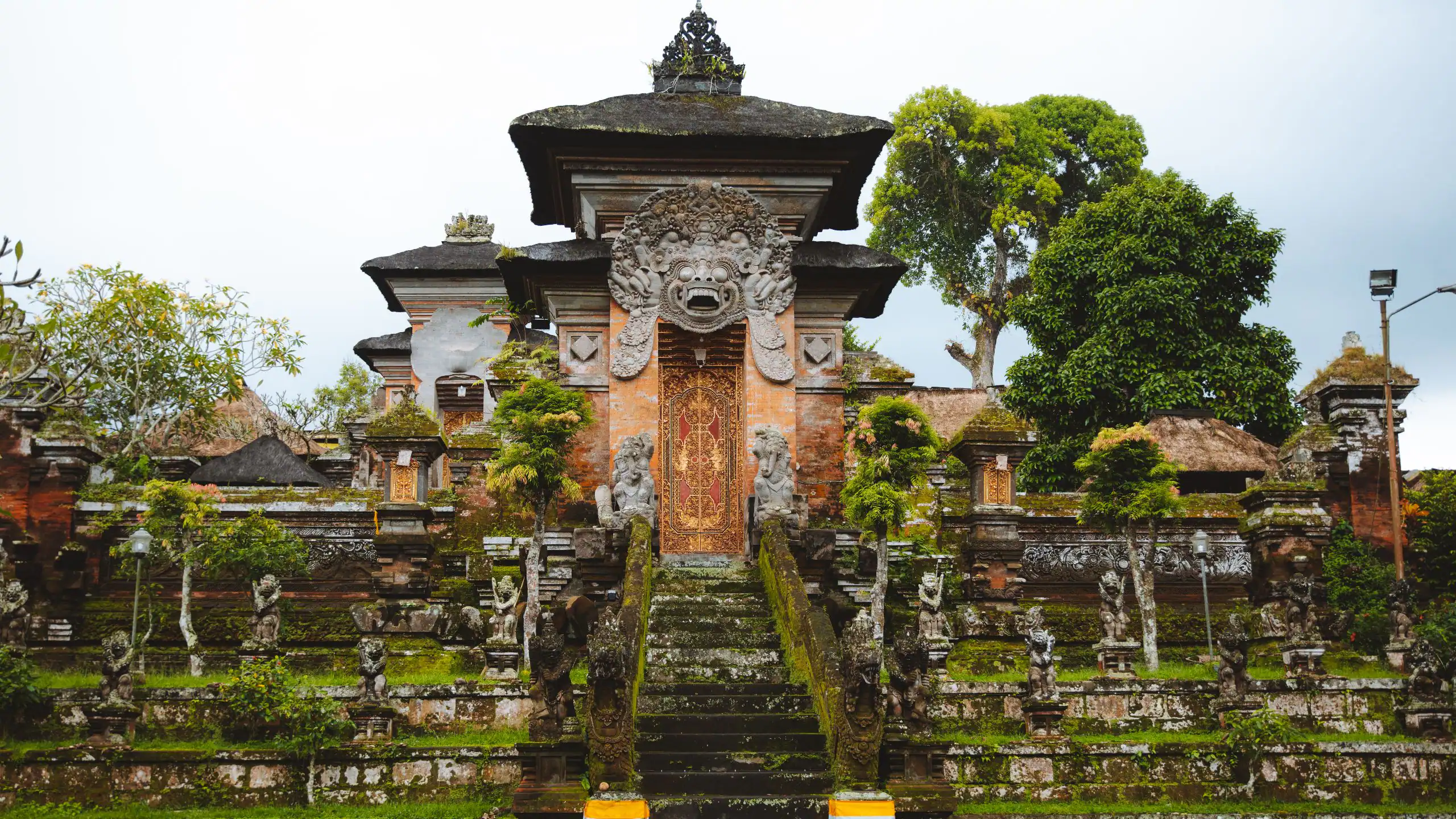
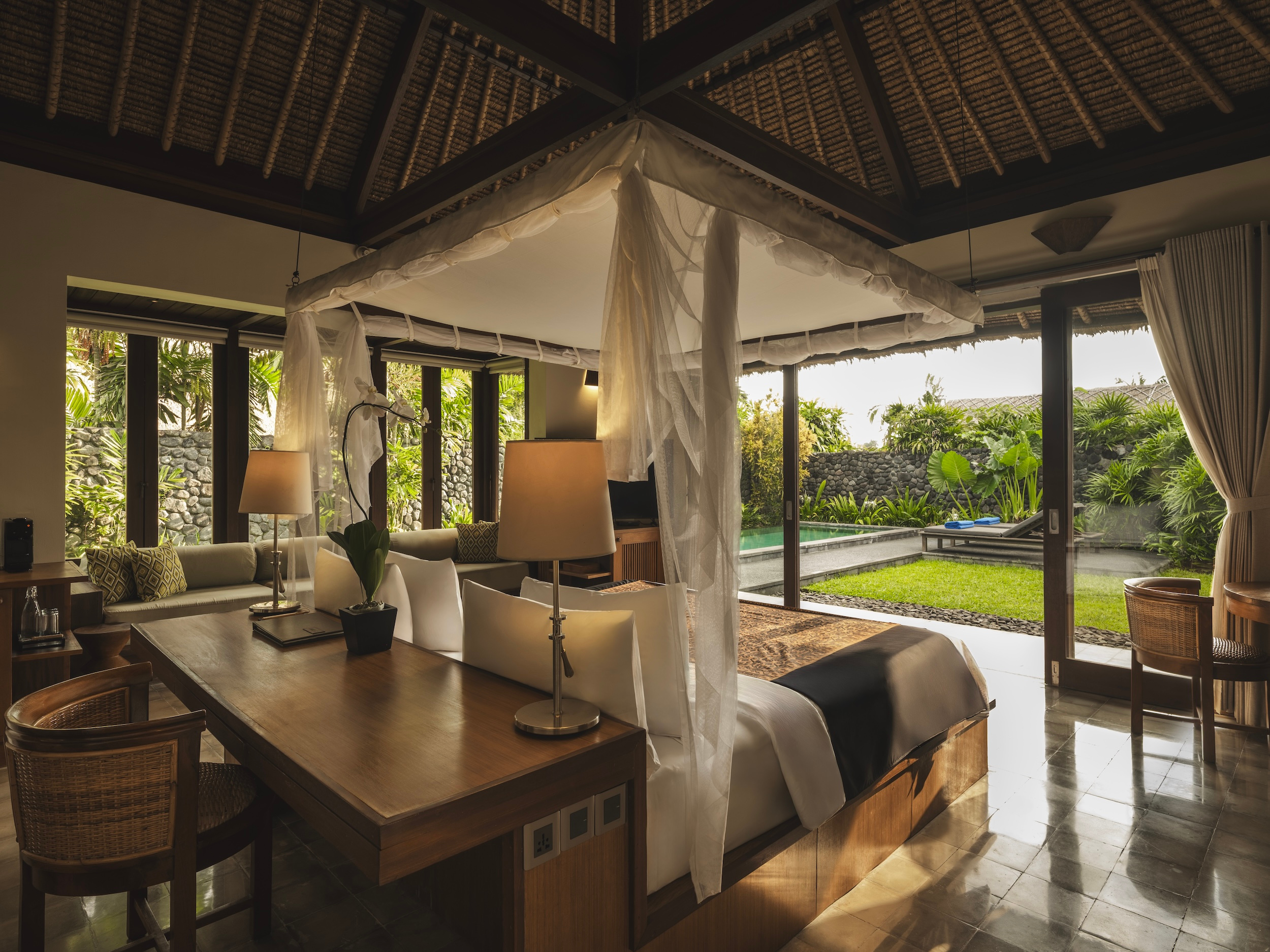
From the coral reefs of the Maldives, we move to Bali’s volcanic interior. Set above the Ayung River, Alila Ubud comprises seventy-four rooms and villas surrounded by rainforests, rice terraces, and nearby villages where temple ceremonies and canang sari offerings remain part of everyday life. Your arrival will wind through bamboo groves, coconut palms, and roadside shrines before you reach the hillside retreat.
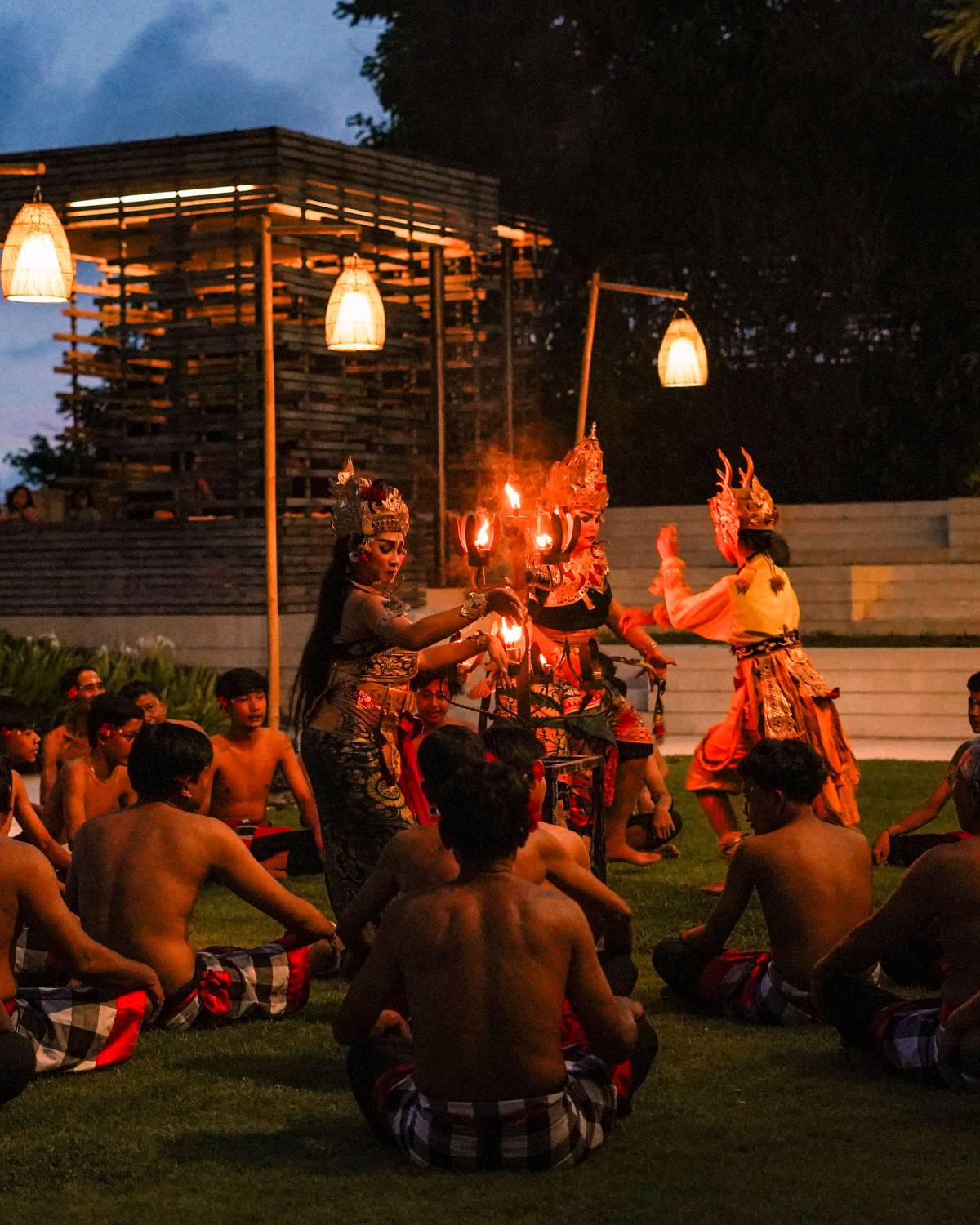
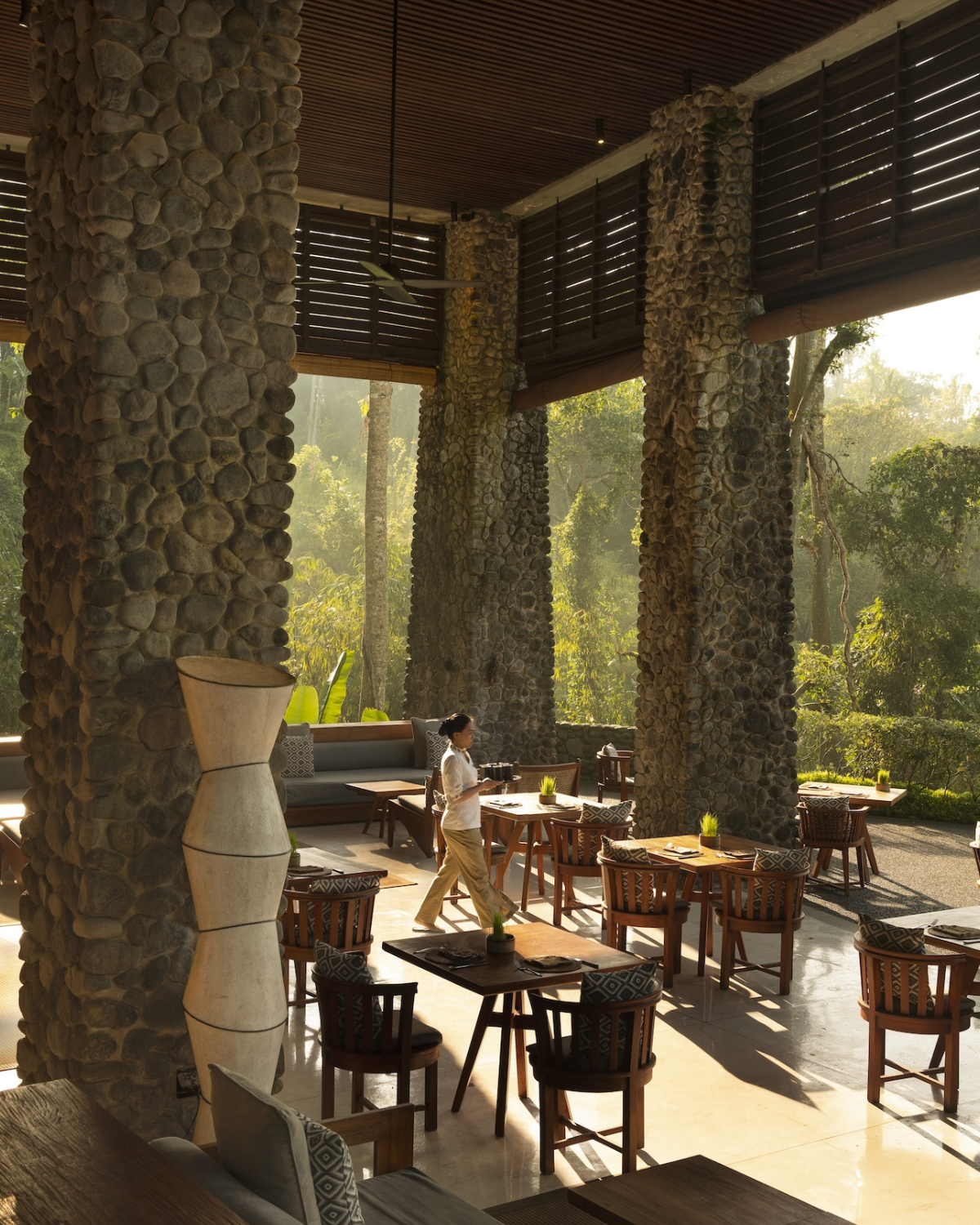
Designed as a contemporary interpretation of a Balinese village, the architecture follows the natural contours of the ridge through thatched pavilions, open-air walkways, locally quarried stone, and teak. Rooms and villas are oriented toward the valley, allowing jungle canopy, drifting dawn haze, and the river below to define the experience rather than overdone interiors. The largest suite, the 2,045-square-foot Two-Bedroom Villa, has its own water garden and infinity pool. Beyond the property, southern Bali offers a landscape shaped by both surf culture and Hindu tradition. Padang Padang Beach and Bingin Beach draw surfers to their reef breaks, while nearby Pura Uluwatu, an eleventh-century sea temple dedicated to Acintya, remains one of Bali’s most important spiritual sites. Each evening, the temple’s cliffside amphitheater hosts the Kecak fire dance, where performers create rhythmic chants and movement as the sun sets over the ocean.
-
-
The surrounding countryside is the heartbeat of why Ubud was solidified as Bali’s cultural center long before Eat Pray Love lore sparked droves of visitors to the region. Guided walks follow a subak irrigation system—a UNESCO-recognized network of cooperative waterways that’s sustained the island’s rice cultivation for more than a thousand years. Walking these pathways with a local guide organized by your SmartFlyer travel advisor reveals how water temples, farming practices, and community life remain interconnected across the valley. Nearby villages continue traditions in woodcarving, silverwork, weaving, and painting, while temple compounds remain active places of worship rather than historic monuments.
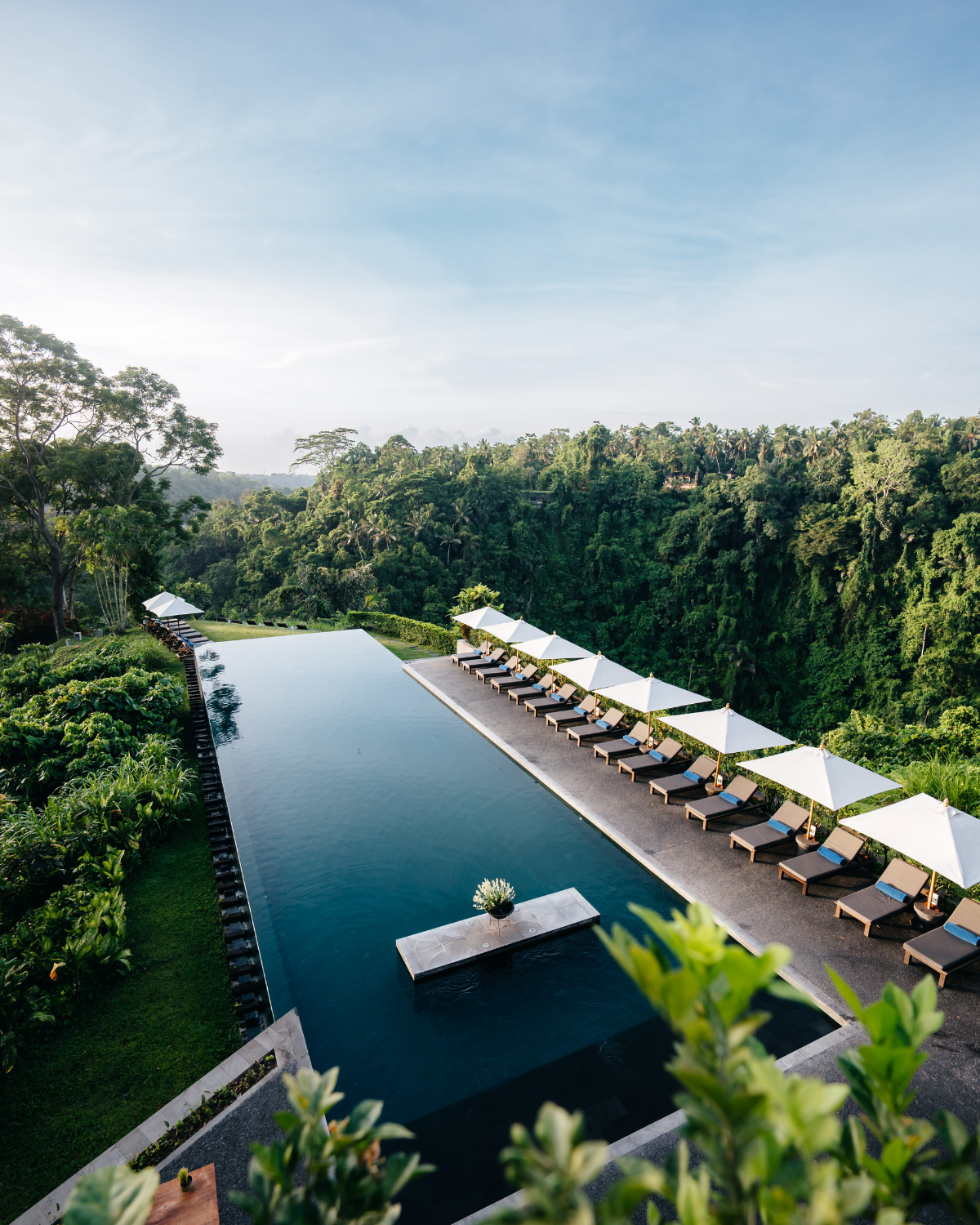
Alila Ubud’s infinity pool extends toward the forest canopy, creating one of Bali’s most recognizable views. Beyond the confines of the property, Alila Moments remain closely tied to the surrounding foothills. A hands-on Balinese cooking class begins with locally sourced ingredients before exploring recipes passed down generations, while the Rijsttafel dining experience showcases produce from Payangan’s farms through a traditional Indonesian feast served across multiple courses.
Depending on the season, your visit may coincide with Galungan, when elaborately decorated bamboo penjor line village roads as Balinese Hindu communities gather for prayers, offerings, and family celebrations. Throughout the valley, the sound of gamelan rehearsals drifts between villages, incense rises from temple courtyards, and artisans continue practices that have shaped central Bali for centuries. These time-honored traditions—not just the scenery—define what makes this part of Indonesia unlike anywhere else.
Alila Fort Bishangarh
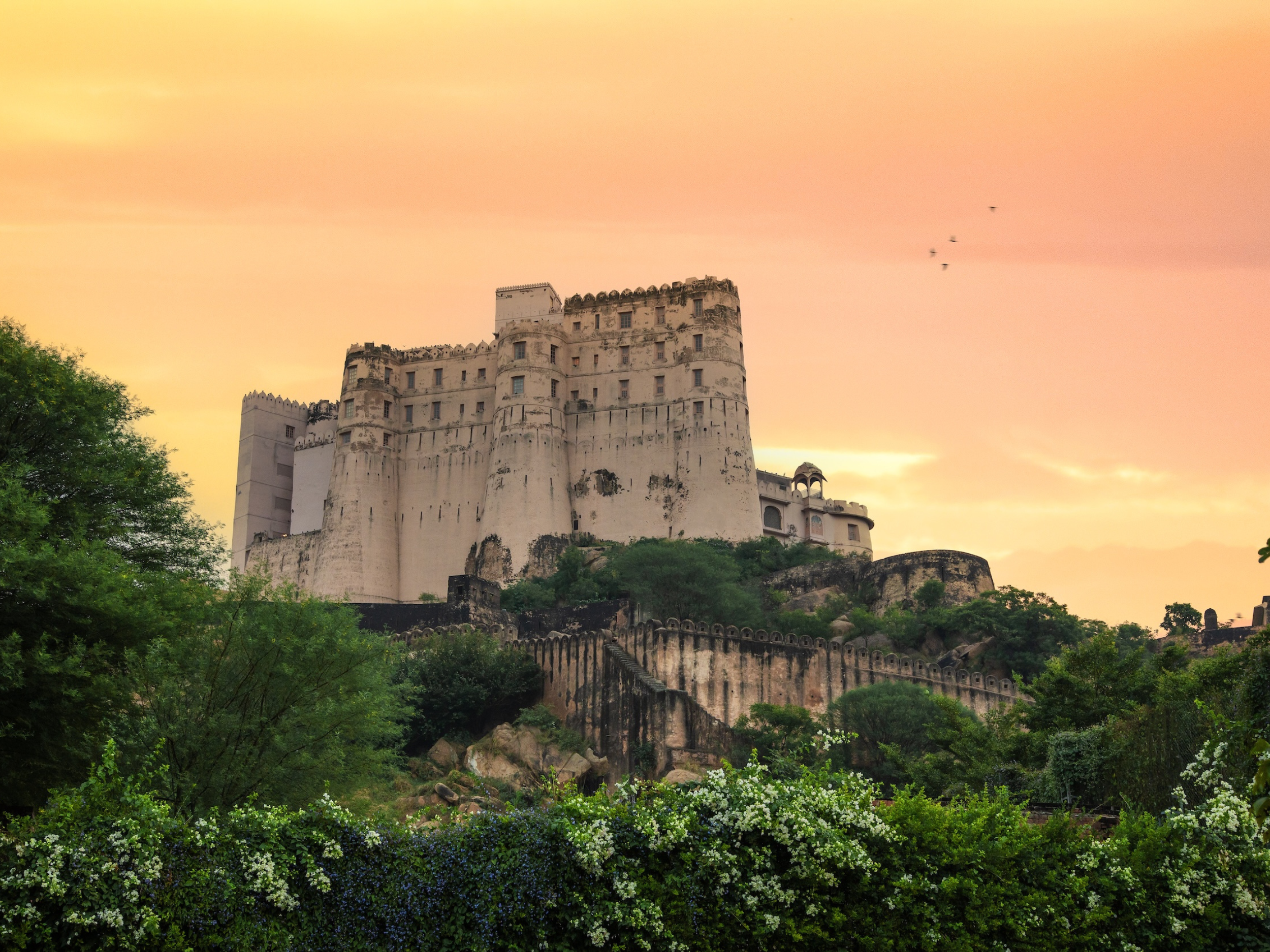
Positioned between Delhi and Jaipur, Alila Fort Bishangarh makes a natural addition to India’s Golden Triangle route. Even so, its appeal resides beyond its location: the opportunity to stay inside a restored hilltop citadel where architecture, history, and the surrounding landscape remain closely connected. Set among the world’s oldest mountain ranges within the Aravalli Hills, Alila Fort Bishangarh occupies an eighteenth-century fort built for the Shekhawat clan, a Rajput dynasty that once controlled trade routes across northeastern Rajasthan. Its stone ramparts still overlook the villages and caravan roads they were built to protect. The drive climbs past millet and mustard fields, shepherds crossing rocky hillsides, and villages constructed from the same warm granite as the fortress itself. As the road ascends, watchtowers emerge above the ridgeline much as they would have more than two centuries ago.
Today, the property’s fifty-nine suites occupy the restored citadel.
Today, the property’s fifty-nine suites occupy the restored citadel, where barrel-vaulted ceilings, carved stone archways, narrow passageways, and interior courtyards remain intact. Heritage suites feature deeply recessed windows and carved jharokhas—the projecting stone balconies that developed into a defining element of Rajasthani architecture. Below the fort, private villas and luxury tents are built down the hillside while managing not to compete with the historic structure above. The region’s history continues beyond the storied walls. Guided walks explore former guard passages and defensive bastions before continuing into nearby villages, where families still practice hand block printing, stone carving, metalwork, and textile weaving techniques handed down from one generation to the next.
One of Alila Fort Bishangarh’s most exciting Alila Moments is “Daya ki Rasoi,” which involves travelers preparing and sharing a traditional Rajasthani meal with a local village host, offering an intimate introduction to regional hospitality and familial recipes. Evenings will find you lingering under the stars at Nazaara, where Shekhawati culinary traditions linked to vast warrior dinners involve food prepared over sandpits and open fire pits paired with views across the Aravalli Hills.
Alila Shanghai
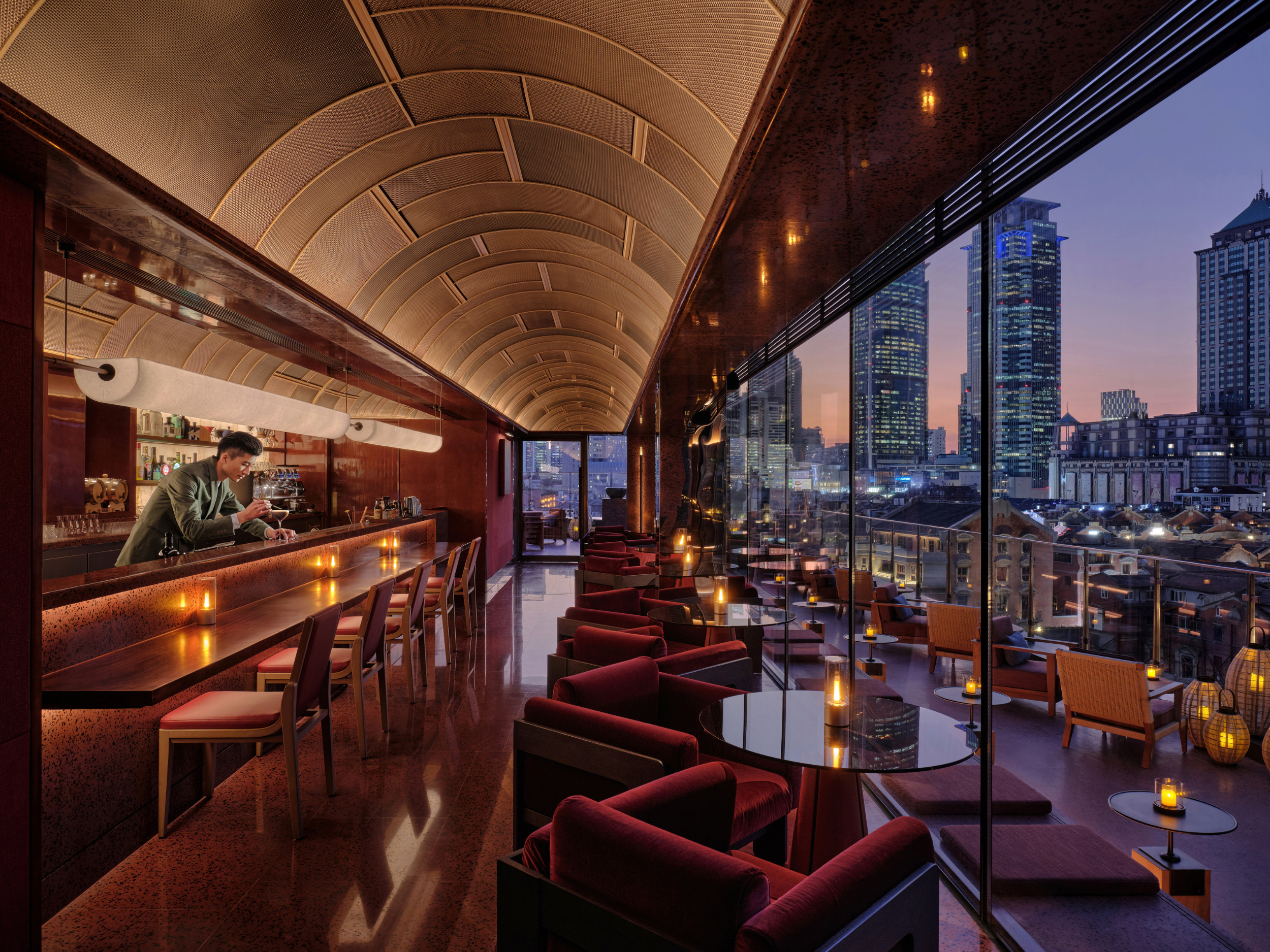
From a hilltop fortress in Rajasthan, the journey continues to one of the world’s most sprawling and populated cities. In Shanghai’s Jing’an District, Alila Shanghai sits beside Zhangyuan, a restored neighborhood of shikumen lane houses—stone-gated residences that blend traditional Chinese layouts with Western architectural influences dating back to the late nineteenth and early twentieth centuries.
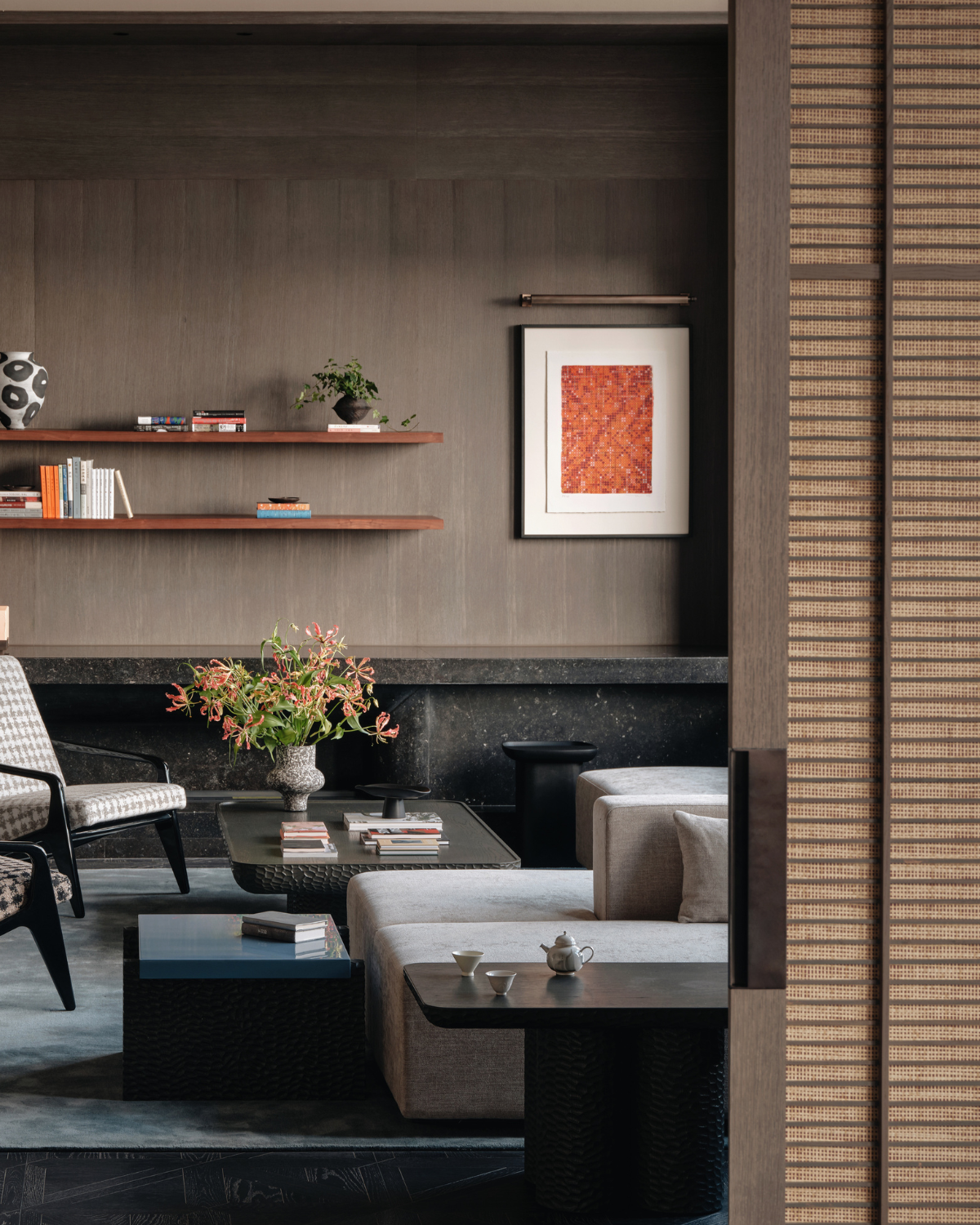
Designed by Ju Bin, the hotel draws from the surrounding architectural language through dark timber, textured stone, ceramics, and finely curated artwork. At its center sits Gathering, a sculptural installation by Shanghai-based visual artist Oscar Wang featuring a stainless-steel trunk and ceramic leaves that reinterpret nature among a dense urban environment. The hotel’s 186 rooms and suites carry on this dialogue between preserving the past and honoring the present. Salvaged blue bricks reclaimed from historic shikumen buildings, woven rattan, and muted finishes reference the neighborhood’s past, while floor-to-ceiling windows highlight the skyline of contemporary Shanghai. The standout stay is the 2,626-square-foot Penthouse Suite, located on the thirty-seventh floor, with views of Shanghai and a striking marble-lined bathroom with an elliptical bath.
-
-
Outside, Jing’an reveals the many layers of the city. Zhangyuan’s restored alleyways now house independent boutiques, galleries, cafés, and design studios within former residences, while nearby Nanjing West Road remains one of Shanghai’s most established shopping destinations. One of the property’s most distinctive Alila Moments is a guided architectural walk through Zhangyuan, exploring how historic homes have been adapted for contemporary life while preserving the neighborhood’s original layout, including its communal courtyards.
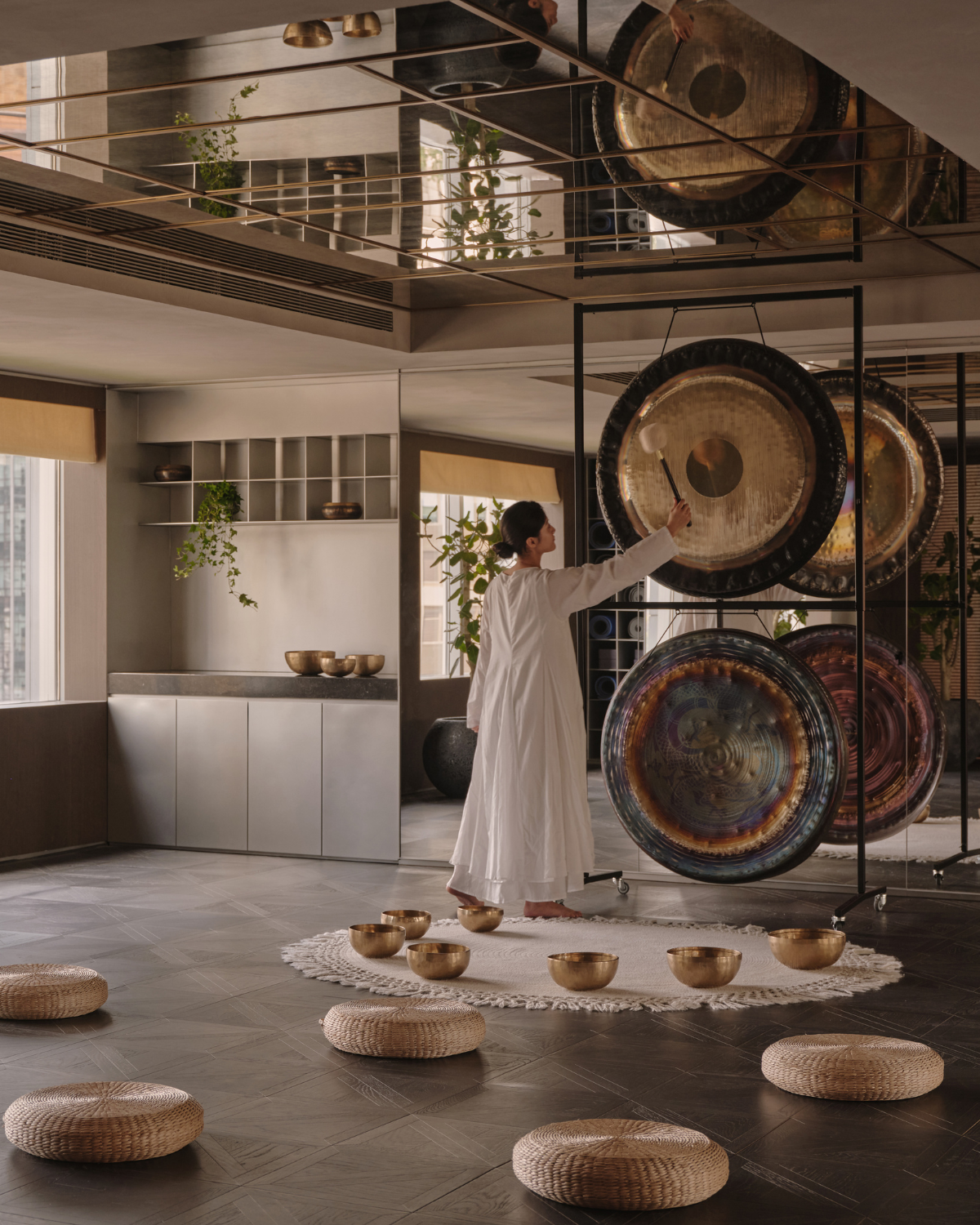
The hotel’s connection to local culture continues inside. Gong sound bath sessions are offered twice daily in the mornings and evenings, while an evening ritual introduces regional Shanghai delicacies served at the restaurant each night. Under Executive Chef Chuck Xing, the hotel’s four restaurants and bars embody a farm-to-table philosophy, highlighting seasonal ingredients from local producers—organic where possible—alongside menus inspired by regional culinary traditions and small batch wine selections. Environmental accountability is integrated into the property’s operations through EarthCheck’s Building Planning and Design Standard, alongside rainwater harvesting, sustainable construction materials, energy-conserving systems, and kitchen waste reduction practices. The result is a hotel that reflects Shanghai’s rich history while responding to the evolving demands of its vibrant future.
Alila Villas Uluwatu
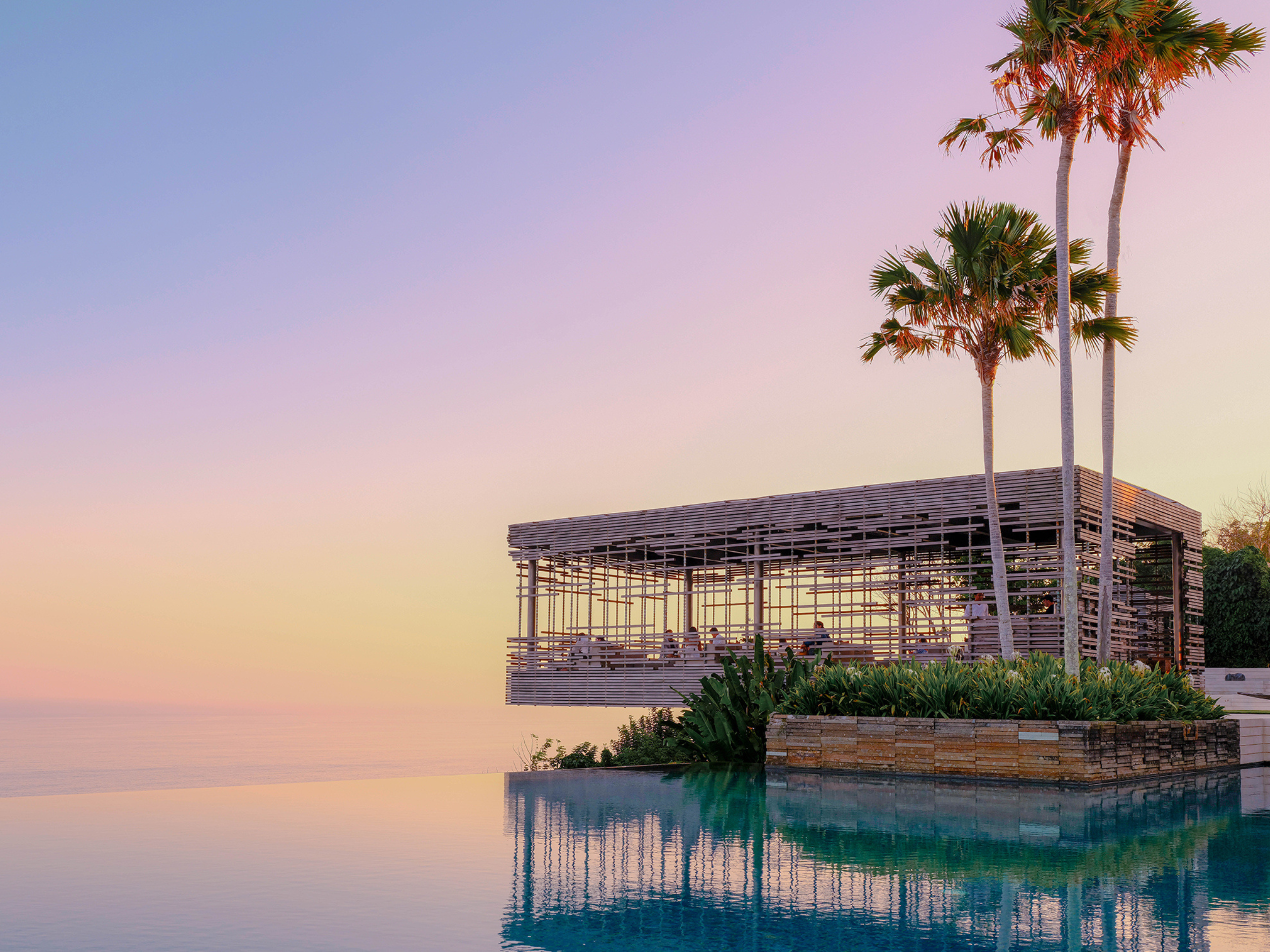
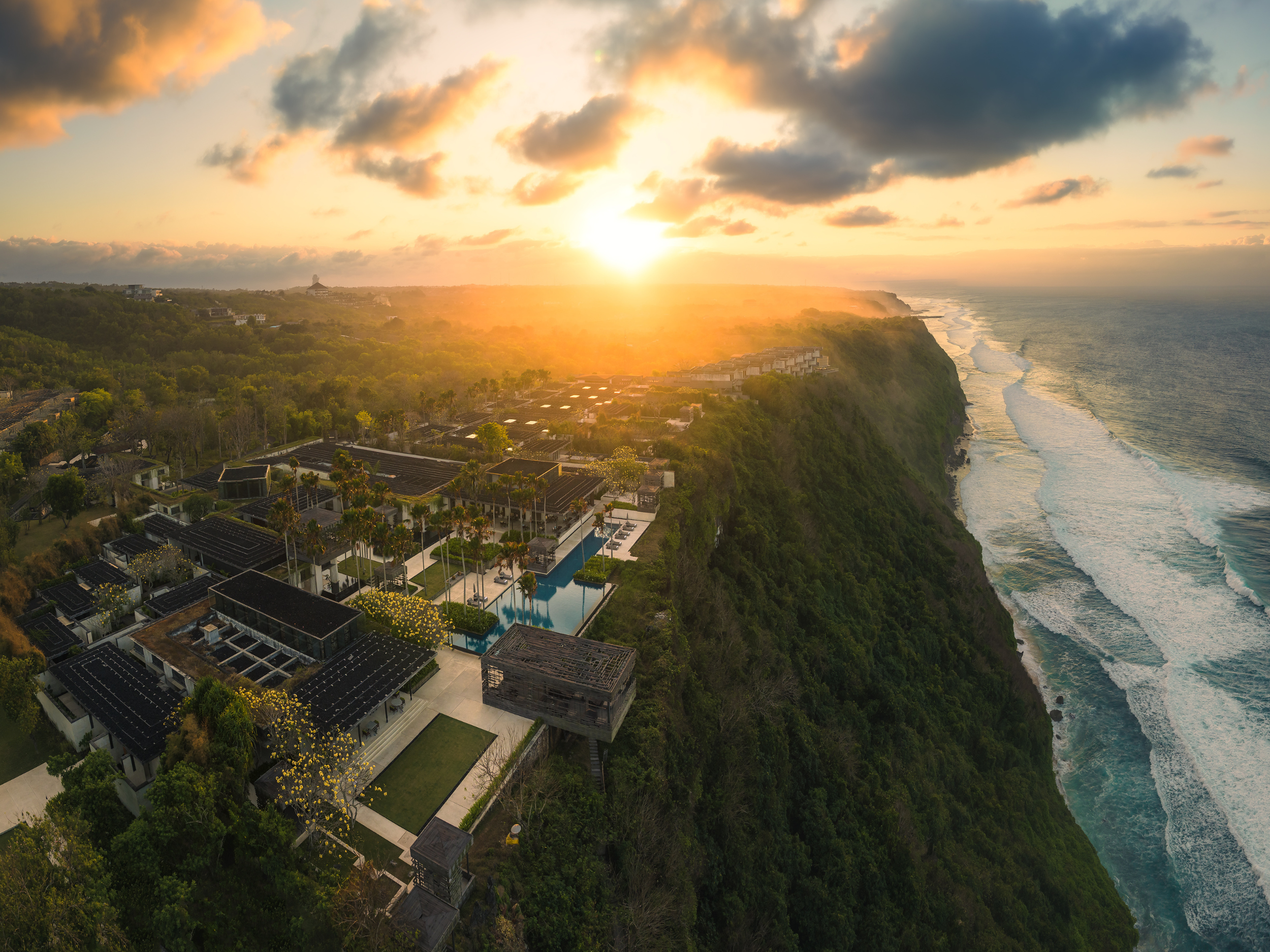
Perched on the limestone cliffs of the Bukit Peninsula, Alila Villas Uluwatu overlooks the Indian Ocean, with the surf breaks of Padang Padang and Bingin visible along the coastline below. Designed by WOHA, the Singapore-based architecture firm known for climate-responsive design, the property’s sixty-five villas are arranged to maximize natural ventilation, daylight, and ocean views. Open-air pavilions allow sea breezes to move through the spaces, while locally sourced Bali lava stone, bamboo ceilings, and native landscaping anchor the contemporary architecture to the island’s volcanic landscape.
…the property’s sixty-five villas are arranged to maximize natural ventilation, daylight, and ocean views.
Each villa includes a private pool and expansive indoor-outdoor living areas, with the Panoramic One-Bedroom Pool Villa offering one of the property’s most secluded settings above the cliffs. Sustainability is integrated into the original design through passive cooling strategies, rainwater harvesting, wastewater treatment, energy-efficient systems, and landscaping that preserves native vegetation across the site.
One of the property’s signature Alila Moments introduces a more local perspective on the Bukit Peninsula through private experiences with community guides, including visits to family temples, traditional fishing villages, and coastal areas beyond Bali’s better-known landmarks. After sinking into these adventures, you’re sure to gain a deeper understanding of how dining can create that same connection to place. At CIRE, Mediterranean-inspired menus center on seasonal produce, vegetables, legumes, olive oil, and locally sourced seafood, including reef fish and line-caught tuna. The Warung offers traditional Balinese and Indonesian dishes in a more intimate setting, including Megibung, a communal feast that reflects the island’s culture of communal dining. Later in the evening, Batique Whiskey & Cigar provides a dramatic setting for rare spirits and conversation within its richly detailed interior. The result from these experiences is a holistic connection to Bali, from the smallest bite to every explored step.
Many Destinations, One Approach
Together, these five properties demonstrate the unique way in which Alila interprets the many singular destinations across Asia. One occupies a secluded coral island in the Maldives. Another rises above the rainforest of central Bali or along the cliffs of the Bukit Peninsula. A third preserves an eighteenth-century fort in Rajasthan, while another reinterprets heritage within Shanghai’s Zhangyuan neighborhood.
The common thread isn’t a standardized design language or overly prescribed itinerary. It’s a commitment to appreciating each destination through the people who know it best: a Maldivian artisan demonstrating coconut leaf weaving, a Balinese guide explaining the subak irrigation system, a Rajasthani craftsperson preserving hand block printing, or an architectural guide tracing the evolution of Shanghai’s shikumen neighborhoods. Long after the journey ends, those encounters go deeper than photographs. They present a more enriched understanding of the landscapes, histories, and communities that still shape some of Asia’s most compelling destinations.